
10-Day Kenya & Tanzania Great Migration Safari: Serengeti, Maasai Mara & More

10 Days 9 Nights

A Kenya Tanzania Great Migration safari 10 days — crossing two of Africa's greatest wildlife ecosystems across six iconic destinations, from Lake Nakuru's rhino sanctuary to Amboseli's elephant plains, with all park fees included.

  • June – October (peak migration in Maasai Mara — Mara River crossings July–August); January – March (calving season, Serengeti south); year-round for Big Five at all other destinations
  • Not included — required; strongly recommended (medical evacuation cover essential for remote areas)
  • 4x4 safari vehicle with pop-up roof throughout; cross-border logistics managed by guide

Overview

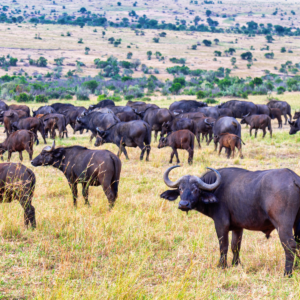
This Kenya Tanzania Great Migration safari 10 days itinerary is built around one of the most extraordinary natural events on the planet — the annual movement of approximately 2 million wildebeest, zebras, and gazelles in a continuous clockwise loop through the Serengeti-Mara ecosystem. It is not a single event with a fixed date; it is a year-round cycle driven by rainfall and grass availability, always in motion across 40,000 square kilometres of protected savannah that straddles the Kenya-Tanzania border.

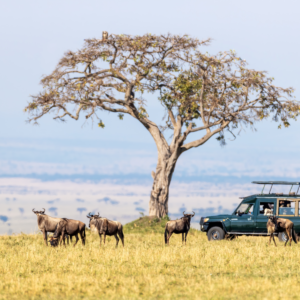
From June onwards, the herds push north from the Serengeti toward the Maasai Mara. By July and August they are concentrated on the Kenyan side, crossing the Mara River in columns of tens of thousands — a crossing attended by enormous Nile crocodiles and watched by lions from the bank. The crossings happen multiple times a day or not at all; no operator can guarantee the exact moment, but positioning your vehicle at the right river crossing point with a knowledgeable guide is the most reliable way to be there when it happens. From October the herds begin moving south again, crossing back into Tanzania for the calving season on the Serengeti's southern plains (January–March). This circuit is designed to follow the migration through both halves of the ecosystem.

The itinerary visits six destinations across two countries: Lake Nakuru (Kenya's premier rhino sanctuary), Lake Naivasha (hippos, fish eagles, and the only park in Kenya where you can cycle among wildlife at Hell's Gate), the Maasai Mara (Kenya's most celebrated reserve), the Serengeti (Tanzania's most iconic park, stretching endlessly in every direction), Ngorongoro (a volcanic caldera with one of the highest wildlife densities on earth), Tarangire (famous for elephant concentrations around ancient baobabs and the Tarangire River), and Amboseli (elephant herds beneath the summit of Kilimanjaro). All park and conservancy entry fees are included across both countries.

The circuit can be run in either direction depending on your flight itinerary — starting from Nairobi (NBO) or Kilimanjaro International Airport (JRO). The NBO-start itinerary described below runs the Kenya circuit first before crossing into Tanzania, then re-entering Kenya via Namanga for Amboseli at the end. Confirm your preferred start airport with your TripGenius Travel agent.

Trip Highlights

  • Witness the Great Wildebeest Migration Mara River crossings — columns of wildebeest leaping into crocodile-infested water between July and October
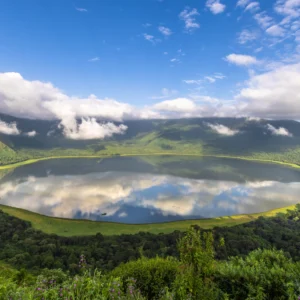
  • Descend into the Ngorongoro Crater — 260 km² volcanic caldera with one of the highest wildlife densities on Earth, including black rhinos, lions, cheetahs, and flamingos
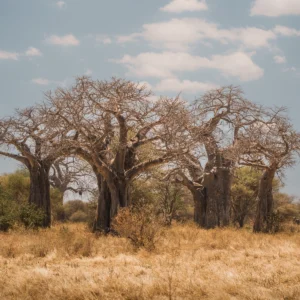
  • Track massive elephant herds against ancient baobab trees and the Tarangire River in Tarangire National Park
  • Spot black and white rhinos at Lake Nakuru — Kenya's most important rhino sanctuary
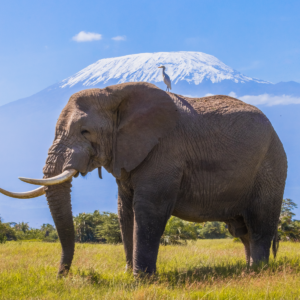
  • Photograph elephant herds with Mount Kilimanjaro rising 5,895 metres on the horizon in Amboseli
  • Cross the Kenya-Tanzania border and experience two countries' wildlife ecosystems on a single continuous safari
  • All park and conservancy entry fees included across all six destinations

Your 10-Day Kenya & Tanzania Migration Safari

  • Day
    01

    Arrive Nairobi — Drive to Lake Nakuru

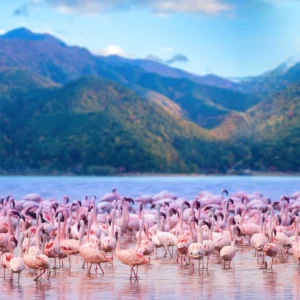
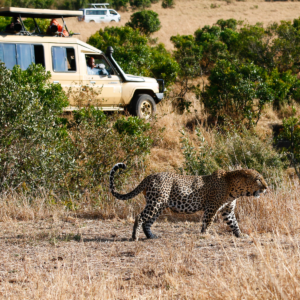
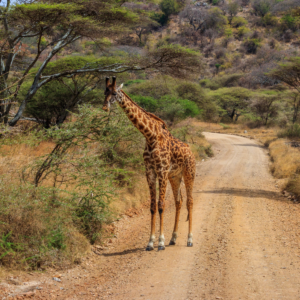
    Your guide meets you at Jomo Kenyatta International Airport in the morning and drives northwest on the A104 highway to Lake Nakuru National Park. Arrive for lunch and begin an afternoon game drive through Kenya's most important rhino sanctuary. Nakuru's 188 km² fully fenced park is home to both black and white rhinos, Rothschild's giraffes, lions, leopards, and flamingos along the alkaline lakeshore. Flamingo numbers are currently variable due to rising lake water levels affecting algae concentrations — your guide will advise on current status. Dinner and overnight near the park.

  • Day
    02

    Lake Nakuru to Lake Naivasha

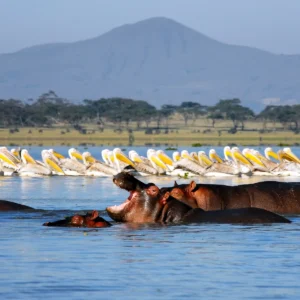
    After a morning game drive exit through Nakuru, drive south to Lake Naivasha (approximately 1.5 hours). Lake Naivasha is a freshwater Rift Valley lake rimmed with yellow fever acacias and papyrus reeds, home to over 400 bird species. A 1-hour boat safari passes hippo pods surfacing alongside the hull, African fish eagles calling from fig trees, pelicans, and cormorants. Optional: a visit to Hell's Gate National Park adjacent to Naivasha — one of Kenya's only parks where you can cycle or walk freely among zebras, buffalos, and giraffes through the volcanic gorge terrain. Dinner and overnight at a lakeside lodge.

  • Day
    03

    Naivasha to Maasai Mara — First Game Drive

    Drive south from Naivasha through Narok and into the Maasai Mara (approximately 3–4 hours). Arrive in the early afternoon and begin your first game drive across 1,510 square kilometres of open savannah where the full ecosystem of the Mara-Serengeti is on display. From July to October, the Great Wildebeest Migration is at its peak on the Kenyan side — large herds move through the reserve and the Mara River crossings happen in multiple waves. Your guide positions the vehicle at key crossing points as radio intelligence from other guides in the field tracks herd movements. Dinner and overnight at camp.

  • Day
    04

    Full Day in Maasai Mara — Mara River Focus

    Spend the full day inside the Maasai Mara, maximising time at the Mara River corridor where the migration crossings concentrate. The river holds year-round pods of hippos and Nile crocodiles in numbers that make it a compelling stop in any season. When crossings happen, columns of wildebeest mass on the Tanzanian bank for hours, testing the water, before leaping in together — a sustained, chaotic spectacle of noise, crocodile predation, and sheer animal volume. A picnic lunch is taken inside the reserve. The afternoon drive continues the search for big cats — lions, leopards, and cheetahs are all active in the Mara year-round. Return to camp for dinner and overnight.

  • Day
    05

    Maasai Mara — Cross into Tanzania — Serengeti

    After breakfast, cross the Kenya-Tanzania border at Isibania/Tarakea (approximately 2.5–3 hours from the Mara). Your guide manages the border formalities. Enter Serengeti National Park from the western Ndabaka Gate and begin an afternoon game drive across the Serengeti plains. The Serengeti is Africa's most famous wildlife ecosystem — 14,750 km² of open grassland, riverine forest, and kopje-studded savannah where every part of the predator-prey relationship plays out at scale. Dinner and overnight at a Serengeti camp.

  • Day
    06

    Full Day in Serengeti National Park

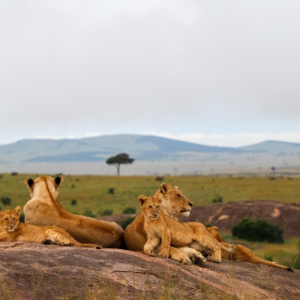
    Spend the entire day inside the Serengeti. The park's northern Mara region (near the border crossing) is the prime area for migration herds and river crossings from June to October; the central corridor and the Seronera area provide year-round concentration of lions, leopards, cheetahs, and hyenas. A picnic lunch is taken inside the reserve. The Serengeti has no fence — wildlife moves freely across all 14,750 km². The landscape, the scale, and the sense of pure wilderness are distinct from the Mara's more controlled environment. Return to camp for dinner and overnight.

  • Day
    07

    Serengeti to Ngorongoro Crater

    After breakfast, drive east from the Serengeti toward the Ngorongoro Conservation Area (approximately 3–4 hours). The road rises through farmland and forest to the crater rim at 2,286 metres — on a clear day, the view from the rim down into the 260 km² caldera floor reveals the entire enclosed ecosystem below. Descend into the crater for an afternoon game drive. Ngorongoro Crater is a collapsed volcano that has become one of Africa's most densely populated wildlife areas: approximately 30,000 animals — lions, elephants, hippos, buffalo, zebra, wildebeest, hyenas, and one of Kenya/Tanzania's most reliable black rhino populations — are resident year-round with no way out. Flamingos line the alkaline Lake Magadi on the crater floor. A crater service fee of USD 295/vehicle applies (shared across the group). Ascend to the rim for dinner and overnight with views over the crater at dawn.

  • Day
    08

    Ngorongoro to Tarangire National Park

    After breakfast, drive south and east from Ngorongoro toward Tarangire National Park (approximately 4–5 hours via Makuyuni). Tarangire is one of Tanzania's most underrated parks: the Tarangire River acts as a dry-season magnet for wildlife across northern Tanzania, concentrating enormous elephant herds — often numbering in the thousands — among ancient baobab trees that can live for over 1,000 years. The park's miombo woodland, open savannah, and swamp zones host lions, leopards, cheetahs, fringe-eared oryx, and over 550 bird species. Arrive in time for an afternoon game drive focusing on the riverside elephant concentrations. Dinner and overnight near the park.

  • Day
    09

    Tarangire — Cross into Kenya — Amboseli

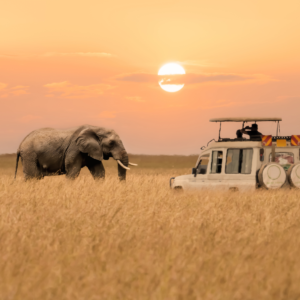
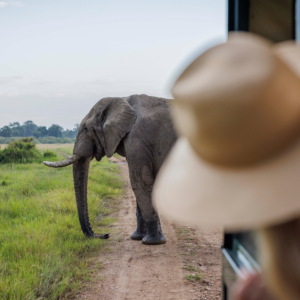
    After an early breakfast, drive north toward the Namanga border crossing (approximately 2.5–3 hours from Tarangire). Cross back into Kenya at Namanga and continue to Amboseli National Park (approximately 2 hours from the border). Arrive for lunch, rest briefly, and then depart at 4:00 p.m. for an afternoon game drive. Amboseli's defining feature is Mount Kilimanjaro — at 5,895 metres the highest mountain in Africa and the world's tallest free-standing peak — rising from the Tanzanian side of the border directly behind the park's elephant herds. Amboseli's open swamp and dry lakebed support some of East Africa's most studied elephant populations, with large bulls carrying long tusks visible across the open plains. Dinner and overnight near the park.

  • Day
    10

    Full Day Amboseli — Return to Nairobi or JRO

    Rise early for a sunrise game drive with the best light for Kilimanjaro photography and predator sightings before the heat builds. Return for breakfast and checkout. Drive to Nairobi JKIA (approximately 4–5 hours) or continue to Kilimanjaro International Airport (JRO) via the Namanga border (approximately 5–6 hours). Your guide manages the return routing based on your onward flight. This concludes the 10-day Kenya and Tanzania Great Migration safari.

The Cost Includes

  • Professional English-speaking wildlife guide for all 10 days
  • 4x4 safari vehicle with pop-up roof throughout
  • All meals as specified in the itinerary (B/L/D full board; picnic lunches on full game drive days)
  • Bottled water in vehicle throughout
  • Airport pickup (NBO or JRO, Day 1) and drop-off (NBO or JRO, Day 10)
  • All park and conservancy entry fees across both countries
  • Cross-border logistics management (Isibania/Tarakea border Day 5; Namanga border Day 9)
  • 9 nights accommodation (Silver and Gold packages only — Bronze excludes accommodation)
  • 24/7 TripGenius Travel support

The Cost Excludes

  • 9 nights accommodation (Bronze Package — book and pay independently)
  • Kenya eTA: USD 34.09 per person — apply at etakenya.go.ke before travel
  • Tanzania eVisa: USD 50 per person (single entry) — apply at visa.immigration.go.tz before travel
  • Note: The East Africa Tourist Visa (EATV) does NOT cover Tanzania. Both visas must be obtained separately.
  • International flights to/from Nairobi (NBO) or Kilimanjaro (JRO)
  • Travel insurance (required — include medical evacuation cover for remote safari areas)
  • Tips and gratuities for guide and lodge staff (recommended: USD 15–20/person/day for guide)
  • Hot air balloon safari — Serengeti or Maasai Mara (~USD 440–600/person — must be pre-booked)
  • Personal alcoholic beverages at lodges
  • Personal items and laundry
  • Yellow fever vaccination certificate (required when entering Tanzania if arriving from a yellow fever-endemic country; check current entry requirements with your national health authority before travel)