
Thailand in Pictures
Temples in the morning. Beaches in the afternoon. Street food all night. Thailand works at every pace and every budget.
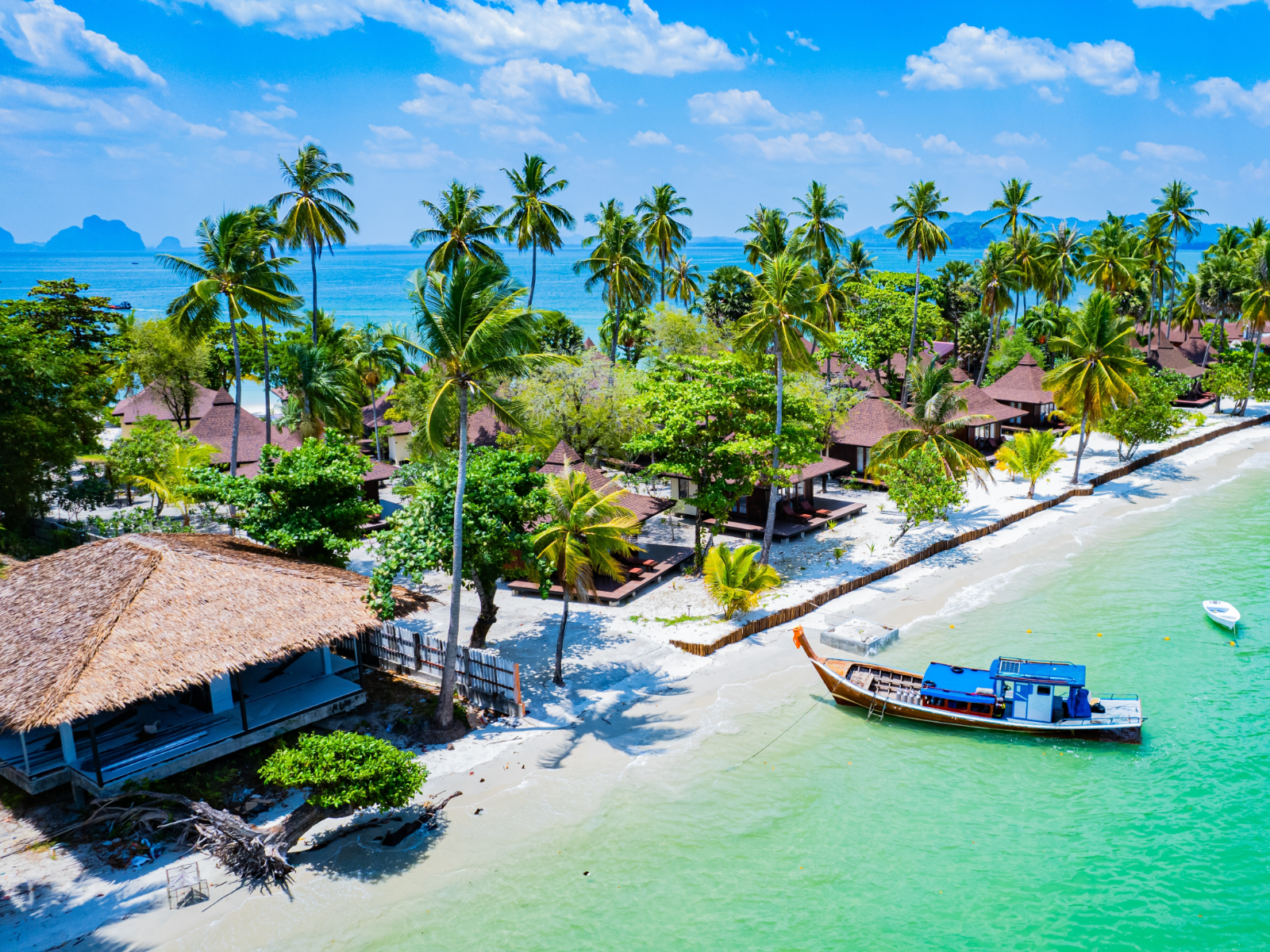
Getting to Thailand from Nairobi
Around nine hours in the air, with one smooth connection. Well worth the journey.
There are no direct flights from Nairobi to Thailand, but the route is well-served through Middle Eastern and Asian hubs. Most travellers fly into Bangkok's Suvarnabhumi Airport (BKK), which is Thailand's main international gateway and connects easily to the rest of the country. Phuket (HKT) and Chiang Mai (CNX) also have international connections if Bangkok is not your first stop.
The most popular routing for Kenyan travellers to Thailand. Emirates connects through Dubai to both Bangkok and Phuket with strong daily frequency. If your trip is beach-focused, the direct DXB–Phuket option saves you the Bangkok connection entirely. Dubai Airport is comfortable and easy to transit.
Qatar Airways connects through Doha to Bangkok, Phuket, and Chiang Mai. Hamad International is a world-class transit hub and the QR product is consistently excellent for long-haul travel. A strong option if you are flying Business or Premium Economy.
Thailand's national carrier connects extensively within Thailand once you land. If a TG routing is available from Nairobi at a competitive price, it simplifies domestic connections to Chiang Mai, Phuket, Koh Samui, and Krabi significantly through their Bangkok hub.
Ethiopian Airlines connects through Addis Ababa to Bangkok. Not the fastest routing but often one of the most affordable entry points to Thailand from Nairobi. A familiar and reliable carrier for East African travellers.
Once you land, Thailand's domestic transport options are excellent. Bangkok to Chiang Mai: 1.5-hour domestic flight or a comfortable 12-hour overnight sleeper train (a genuine experience in itself). Bangkok to Phuket or Krabi: 1.5-hour domestic flight. Island hopping between Koh Samui, Koh Phangan, and Koh Tao: regular ferries and speedboats. Domestic flights with AirAsia Thailand, Bangkok Airways, and Nok Air are affordable and frequent. We'll build all internal transfers into your itinerary.
Entry Requirements for Thailand
What Kenyan travellers need to know before they fly.
Kenyan passport holders are eligible for a Thai Visa on Arrival (VOA) at Suvarnabhumi Airport (Bangkok) and other major international entry points. The VOA grants 30 days, extendable once for a further 30 days at an immigration office within Thailand. Complete a form, submit a passport photo, pay the fee (currently THB 2,000, approximately USD 55), and receive your stamp. Allow 30–60 minutes for the VOA queue on arrival during peak periods.
Alternative: Thailand's e-Visa (Tourist Visa) can be applied for online in advance — grants 60 days and avoids the arrival queue. Worth considering for longer stays.
Your passport must be valid for at least 6 months from your date of entry into Thailand. Thai immigration is strict on this — travellers with less than 6 months validity have been denied boarding or entry. Check your expiry well before you book.
Thai immigration requires proof of an onward or return ticket — checked strictly at the airline check-in counter in Nairobi and at immigration in Bangkok. Book your return flight before you travel. If your plans are flexible, a refundable onward ticket or a cheap onward booking to a neighbouring country is acceptable.
Thai immigration may ask for evidence that you can support yourself during your stay. The official requirement is THB 10,000 per person or THB 20,000 per family. A bank card with sufficient funds or a recent bank statement is typically accepted.
1 USD ≈ 35 THB. Thailand is excellent value for money — your budget stretches significantly further than in Europe or the Middle East. Cards are accepted in hotels, malls, and most restaurants. Cash is preferred at markets, street food stalls, temples, and smaller towns. ATMs charge a foreign withdrawal fee of around THB 220 per transaction — take larger amounts at once to minimise this. Exchange at authorised desks, not hotels.
The cool and dry season (November–April) is the best time to visit Bangkok, Chiang Mai, and the Gulf Coast islands. The Andaman Coast (Phuket, Krabi, Phi Phi) peaks slightly earlier. The rainy season (May–October) brings heavy afternoon showers — the country is still visitable and significantly cheaper, but some islands see rough seas. Songkran, the Thai New Year water festival, falls in mid-April and is one of the most exuberant celebrations in Southeast Asia.
Thailand's temples are active places of worship, not tourist attractions. Dress modestly when visiting — cover your shoulders and knees, and remove your shoes before entering. Most temples provide sarongs at the entrance if needed. Thailand also has strict laws regarding comments about the royal family — this applies to tourists as well as residents. The lèse-majesté law carries serious consequences. Neither of these things will affect your holiday in any meaningful way as long as you're aware of them.