
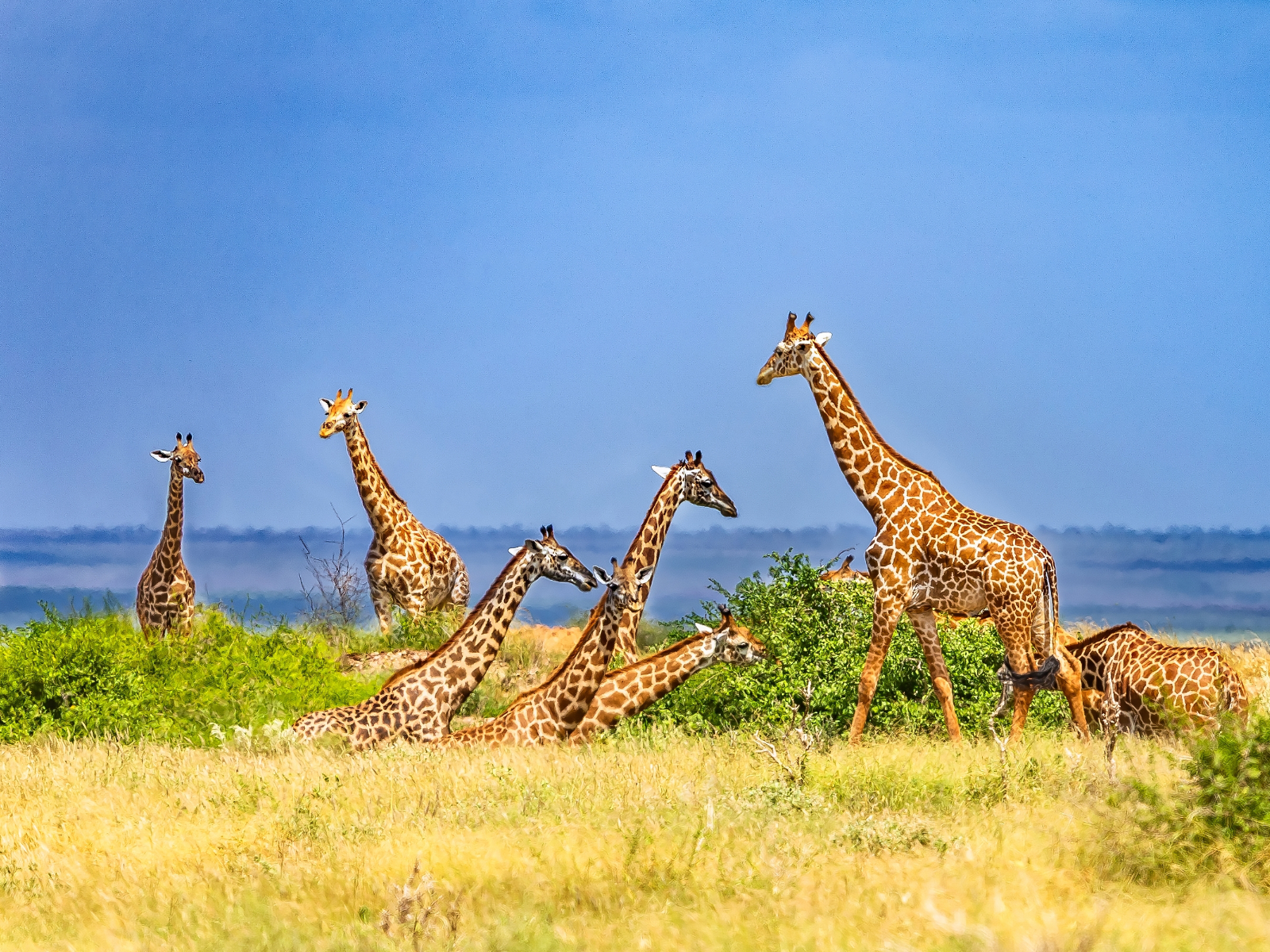
A three-country east africa itinerary is the most ambitious journey on most travellers’ bucket lists — and for good reason. Nowhere else on earth can you track endangered mountain gorillas in a dense rainforest one week, watch half a million wildebeest stampede across the Mara River the next, and stand at the rim of the Ngorongoro Crater two days after that. Kenya, Tanzania, and Uganda each deliver headline wildlife experiences on their own. When you string them together into a single journey, you get the full picture of what East Africa actually is.
This guide covers everything you need to make that trip work in 2026: the smartest routing options, the real visa situation (which catches most travellers off guard), current park fees across all three countries, how to time your visit for maximum wildlife action, what to realistically budget, and why gorilla permits should be the very first thing you book — not the last.
Why These Three Countries Belong on the Same East Africa Itinerary
Most first-time safari travellers choose one country — usually Kenya or Tanzania — and save the others for future trips. That is a completely reasonable approach and one we support. But for travellers who want to experience East Africa comprehensively, combining all three countries unlocks a level of wildlife and landscape diversity that no single country can match on its own. The ecosystems, habitats, and flagship species in Kenya, Tanzania, and Uganda are genuinely different, not just variations on a theme.
What Each Country Brings to the Table
Kenya is the classic safari gateway. The Maasai Mara National Reserve is one of the most famous wildlife areas on the planet — dense with big cats, massive elephant herds, and the most dramatic stretch of the Great Migration between July and October. Amboseli National Park adds a different texture entirely: large breeding herds of elephants moving against the snow-capped silhouette of Kilimanjaro. Kenya is also your most likely international entry point, which makes it the natural logistical anchor for any combined east africa itinerary.
Tanzania controls the largest share of the Great Migration circuit and hosts some of the continent’s most iconic protected areas. The Serengeti’s 14,763 square kilometres of open savannah are unmatched in scale and wildlife density — see our Serengeti National Park destination guide for a detailed breakdown of zones, camps, and the seasonal movement of the herds. The Ngorongoro Crater then adds a completely different kind of wildlife viewing: a 260-square-kilometre caldera floor with one of the highest concentrations of large mammals in Africa, including all of the Big Five within a single enclosed ecosystem.
Uganda is the element that turns a great safari into an unforgettable one. Bwindi Impenetrable National Park protects roughly half of the world’s remaining mountain gorillas — a population of fewer than 1,100 individuals. Spending an hour with a habituated gorilla family in the forest is an experience that sits in a different category from any game drive or balloon flight. Uganda also offers chimpanzee tracking in Kibale Forest, tree-climbing lions in Queen Elizabeth National Park, and Murchison Falls — where the entire volume of the White Nile is compressed through a seven-metre gap in the rock, producing one of the most powerful waterfalls in Africa.
The Visa Picture: What You Actually Need
This is where planning a combined Kenya, Tanzania, and Uganda trip becomes more complicated than most travellers expect — and where getting it wrong costs both money and time at the border.
The East Africa Tourist Visa: Coverage and Key Limitations
The East Africa Tourist Visa (EATV) is a shared multiple-entry visa valid for 90 days. It covers Kenya, Uganda, and Rwanda. It costs a flat USD 100 per person and you apply online through the immigration portal of the first country you plan to enter. If you arrive via Nairobi, apply through Kenya’s eCitizen portal. If Entebbe is your entry point, apply through Uganda’s e-visa portal. Processing typically takes three to seven working days — apply at least two weeks before travel.
The single most important visa fact for a three-country east africa itinerary: the EATV does not cover Tanzania. Despite Tanzania being a member of the East African Community, it is not part of this joint visa arrangement as of 2026. If the Serengeti or Ngorongoro is part of your trip — and it should be — you need a separate Tanzania e-visa in addition to your EATV. As of 2026, the Tanzania e-visa costs USD 50 for most nationalities and is applied for online at Tanzania’s official immigration portal. US citizens pay USD 100.
One more rule worth understanding: if you exit the EATV zone entirely — for example by flying from Uganda into Tanzania mid-trip — the EATV does not automatically resume when you re-enter Kenya. Your 90-day clock is running regardless of where you are in the world. Plan your crossing sequence carefully and apply for the Tanzania e-visa before you leave home. Budget approximately USD 150 per person for combined visa costs on a standard three-country east africa itinerary.
The Two Most Practical Routing Strategies
There is no single correct order for a Kenya, Tanzania, and Uganda itinerary. However, two routings are consistently recommended by operators who run these trips regularly, and each has clear logic behind it.
Uganda First: Gorillas, Then Game Drives, Then the Crater
The most common routing for a multi-country east africa itinerary starts in Uganda. You fly into Entebbe, spend three to four days in Uganda (gorilla trekking in Bwindi plus one or two nights in Queen Elizabeth or Kibale), then fly to Nairobi. From Nairobi, you head to the Maasai Mara and Amboseli for five to six days of classic Kenya safari, then transition south into Tanzania — Tarangire, the Serengeti, and the Ngorongoro Crater — for a closing week.
The reason to start in Uganda is simple: gorilla permits must be booked three to six months in advance during peak season, and the trekking itself is physically demanding. Doing it while you are fresh, before days of game drives and long transfers have accumulated, makes the experience significantly better. Entebbe is also a convenient entry point for many international carriers.
Exit logistics: fly from Entebbe (EBB) to Nairobi (NBO) — approximately 90 minutes. From the Maasai Mara, cross into Tanzania via the Isebania border post overland (a full-day road transfer) or fly from Wilson Airport (WIL) to Kilimanjaro International (JRO) or directly to one of the Serengeti airstrips.
[H3]
Tanzania First: Calving Season Opening, Gorillas as the Finale
The alternative routing opens with Tanzania’s Northern Circuit — seven days across Tarangire, the Serengeti, and Ngorongoro — then pivots north into Kenya for the Maasai Mara, before closing in Uganda with gorilla trekking as the emotional finale of the trip. This sequence makes the most sense between January and March, when the southern Serengeti hosts the Great Migration’s calving season. Hundreds of thousands of wildebeest give birth on the short-grass plains, attracting extraordinary predator activity from lions, cheetahs, and hyenas.
The challenge with this routing is managing two visa applications simultaneously: your Tanzania e-visa for entry into Tanzania, and your EATV applied through Kenya (since you enter Kenya before Uganda). Make sure you apply for both in parallel before departure.
[H2]
How Much Time Do You Actually Need?
Be realistic here. A three-country east africa itinerary covers roughly 2,000 kilometres of terrain across different ecosystems, transport modes, and border formalities.
Fourteen days is the realistic minimum. At this length, you get approximately three to four days per country — enough for one anchor experience per destination with minimal breathing room. This is achievable, but it is a fast trip that leaves you wishing for more time.
Eighteen to twenty-one days is the comfortable zone for a multi-country east africa itinerary. This length gives you five to six days in Uganda (gorilla trekking plus one additional activity), five to six days in Kenya (Maasai Mara plus Amboseli or Lake Nakuru), and seven days in Tanzania (Serengeti plus Ngorongoro, with an optional three-night Zanzibar beach extension to close the trip). This pace lets you absorb each destination rather than just transit through it.
As a rule, plan for at least one full travel day between each country crossing, whether by road or air. Three international transitions in three weeks means three buffer days already accounted for before you look at any specific wildlife viewing.
[H2]
When to Go: Timing the Three Countries Together
The best overall window for a combined Kenya, Tanzania, and Uganda east africa itinerary is July to October. This single window aligns three different seasonal peaks simultaneously: dry-season gorilla trekking conditions in Uganda (more manageable trails, better visibility through the forest), the Maasai Mara’s Great Migration river crossings in Kenya, and concentrated wildlife viewing in Tanzania’s dry-season Serengeti. September is particularly underrated — crowds thin slightly from the August peak, the migration crossings continue, and conditions across all three countries remain excellent.
January and February offer a strong alternative. The southern Serengeti’s calving season produces some of the most dramatic predator scenes on the continent, gorilla trekking is comfortable during Uganda’s short dry season, and the Maasai Mara — while quieter — delivers consistently strong big cat sightings year-round. This window works well for travellers who want value without sacrificing wildlife quality, as accommodation rates are often lower than the July to October peak.
Avoid April, May, and most of November if you are planning a road-based multi-country trip. These are the long and short rains across East Africa. Gorilla trails in Bwindi become extremely muddy and slippery, and Serengeti roads can become impassable for standard 4×4 vehicles. Travellers with tight itineraries should avoid these months, or budget for fly-in safaris throughout.
[H2]
Your Anchor Experiences and What They Cost in 2026
Each country has one experience that defines the trip and that everything else is built around. Understanding the current costs lets you budget accurately from day one.
[H3]
Maasai Mara Entry Fees, Kenya
Entry to the Maasai Mara is managed and collected by the Narok County Government. The reserve operates on a per-person, per-day conservation fee structure with seasonal pricing. In 2026, non-resident adult fees are USD 100 per day during the low season (January through June) and USD 200 per day during the high season (July through December). Children aged 9 to 17 pay USD 50 per day.
For a three-day stay during peak season, you are looking at USD 600 in park fees per person before a single dollar of accommodation, game drives, or transfers. When budgeting a peak-season east africa itinerary, the Mara fees are a significant line item. For camp placement strategy, the northern Mara — close to the river crossings — is critical between July and October. Southern camps are more affordable and still excellent for big cat sightings but will not put you at the crossings.
[H3]
Serengeti and Ngorongoro Fees, Tanzania
Serengeti entry for non-resident adults in 2026 runs approximately USD 71.80 per person per day, VAT inclusive, as set by TANAPA. Overnight stays inside the park carry an additional concession fee of approximately USD 59 per person per night. The Ngorongoro Crater carries separate NCAA conservation fees and a vehicle descent fee of USD 295 per vehicle per descent — worth every dollar, but worth planning for.
Where you stay within the Serengeti matters enormously. The park spans over 14,000 square kilometres. For the river crossings and northern migration (July to September), camps near Kogatende in the far north are the target. For the calving season (January to February), the southern plains around Ndutu are where you want to be.
[H3]
Gorilla Trekking Permits, Uganda
Gorilla trekking is the single largest fixed cost in any Uganda-inclusive east africa itinerary, and the permit booking should happen before you book your flights.
As of July 2025, the Uganda Wildlife Authority (UWA) charges USD 800 per person for gorilla trekking permits in Bwindi Impenetrable National Park and Mgahinga Gorilla National Park. This covers one hour with a habituated gorilla family. As of March 2026, UWA reintroduced discounted permits at USD 600 per person for the green season months of April, May, and November. There are 152 permits available daily across 19 habituated gorilla families in Bwindi, plus eight daily permits at Mgahinga.
Peak season permits (June to September, December to February) routinely sell out three to six months in advance. Book the gorilla permit first, then build everything else around those dates. Working through a licensed operator is the most reliable way to secure permits, particularly for popular dates.
[H2]
Getting Between the Three Countries
Nairobi serves as the natural hub for a three-country east africa itinerary. Jomo Kenyatta International Airport (NBO) is well connected to both Entebbe (EBB) in Uganda (approximately 90 minutes by air) and Kilimanjaro International Airport (JRO) in Tanzania (approximately 55 minutes). Regional carriers including Kenya Airways, RwandAir, and Precision Air run these routes daily.
Between the Maasai Mara and the Serengeti, some operators run overland crossings via the Isebania–Sirari border post — a full-day scenic road transfer that works well as a dedicated travel day and can include game viewing along the way. For tighter schedules, light aircraft from Wilson Airport (WIL) in Nairobi to Serengeti airstrips like Seronera or Kogatende cuts the journey to under two hours and is the preferred option during peak season.
Within Uganda, most travellers fly from Entebbe to an airstrip near Bwindi (Kihihi or Kisoro) to avoid the six- to eight-hour road journey. Budget for these domestic or regional flights — they add up but they protect your time on the ground.
[H2]
What a Three-Country East Africa Trip Actually Costs
Mid-range budget — shared safari vehicles, mid-tier tented camps, a mix of road and light aircraft transfers — budget USD 5,000 to USD 8,000 per person for 14 to 18 days, excluding international flights. This accounts for accommodation at USD 150 to USD 300 per person per night, park fees across all three countries, the gorilla permit at USD 800, and inter-country transfers.
Luxury budget — private 4x4s, exclusive lodges, fly-in safaris throughout — starts at USD 15,000 per person and rises steeply for the same duration. Top-tier properties in the Serengeti and Maasai Mara peak at USD 1,000 to USD 2,000 per person per night between July and October.
Regardless of travel style, treat these as fixed costs that apply before you compare accommodation: EATV visa (USD 100), Tanzania e-visa (USD 50), gorilla permit (USD 800), international flights, and travel insurance with medical evacuation coverage for the region.
[H2]
Plan Your East Africa Itinerary with TripGenius Travel
TripGenius Travel plans Kenya, Tanzania, and Uganda as our home ground. We secure gorilla permits before anything else, position you in the right camps for the right season, and design an east africa itinerary that moves at a pace where you actually take in what you are seeing — rather than spending half the trip in a vehicle or waiting at borders.
Whether you want a focused 14-day sprint through all three countries or a more generous three-week journey with time to settle into each ecosystem, we build it around your dates, your priorities, and your budget. Get in touch with our team and tell us which three experiences matter most to you — gorilla trekking, the river crossings, the calving season, or all of the above — and we will build the rest around them.