
Estimated reading time: 14 minutes
Table of contents
- Why an East African Safari Packing List Is Different
- Clothing — The Heart of Your Safari Packing List
- Camera and Photography Gear
- Health and Medical Essentials
- Documents and Money
- Electronics and Power
- Luggage — What Bag Should You Bring?
- Country-Specific Additions
- What You Don’t Need to Bring
- Plan Your East African Safari with TripGenius Travel
- Final Word
Most safari packing lists you find online are written by people who have never been on a bush flight in East Africa. They tell you to bring “neutral colours” and “sunscreen,” then leave out the things that actually matter — the 15-kilogram luggage limit on bush flights, the fact that camouflage clothing is illegal in Tanzania, the colour rules that determine whether tsetse flies leave you alone or feast on you, and the specific gear differences between a Kenya safari and a Uganda gorilla trek.
This safari packing list covers what to actually bring on an East African safari in 2026 — and just as importantly, what to leave at home. If you have already booked a trip to Kenya, Tanzania, or Uganda, work through this list before you start packing. It will save you weight, money, and at least one uncomfortable encounter with a tsetse fly.
Why an East African Safari Packing List Is Different
A safari packing list is not a beach holiday checklist with different clothes. Three real constraints shape what goes in your bag, and missing any of them creates problems that no amount of repacking on the day fixes.
Bush Flight Luggage Limits
If your safari includes any internal flights — between Nairobi and the Maasai Mara, between Amboseli and Samburu, between Arusha and the Serengeti — you will be on a Cessna Caravan or similar light aircraft. East African bush flight luggage allowances are strictly 15 kilograms (33 pounds) per person, including hand luggage. Some carriers cap at 12 kilograms.
This is the single biggest packing constraint. The limit is enforced strictly because overloaded aircraft are a safety risk. If your bags exceed the limit, you will be asked to either book a freight seat (at significant extra cost) or leave bags behind to follow on a later flight.
Soft-Sided Duffel Bags Only
The same bush flights require soft-sided duffel bags with no frame, no rigid structure, and either no wheels or very small wheels. Hard suitcases physically do not fit into the cargo pods on light aircraft. Maximum bag dimensions are roughly 60 by 30 by 25 centimetres (24 by 12 by 10 inches).
If you arrive at Wilson Airport with a hard-sided suitcase, you will be repacking on the tarmac. Bring a soft duffel from day one.
Clothing Colour Rules
This is the constraint most first-time visitors get wrong. Wildlife and tsetse flies both respond to colour in ways that matter on safari. Bright colours (red, orange, yellow, neon) make you conspicuous to animals and reduce sighting quality. Dark colours (blue, black, denim) attract tsetse flies — and tsetse traps are deliberately made of blue cloth specifically because of that attraction.
The colour rules also matter legally. Camouflage clothing is illegal for civilians in Tanzania and several other East African countries; wearing it can get you stopped by authorities. The next section covers what to wear instead.
Clothing — The Heart of Your Safari Packing List
The clothing section of any honest safari packing list does more work than people expect. A typical 7 to 10-day safari needs less clothing than you think — most camps and lodges offer same-day or next-day laundry, often free. Pack light and let the laundry service handle the rest.
Colour Rules
Stick to neutral, earthy colours. Khaki, beige, olive green, light brown, tan, taupe, and light grey are the safari standard for a reason. They blend with the savannah, don’t attract tsetse flies, and don’t show red African dust the way white does.
Avoid blue and black entirely — including denim jeans, which combine the worst of both. Tsetse flies will find you in either colour, and the bites are painful and persistent. Avoid bright colours like red, orange, and neon. Avoid white because it gets filthy within hours. Avoid camouflage entirely — it is illegal for civilians in Tanzania.
Daytime Clothing
For a 7-day safari, pack three to four long-sleeved shirts in lightweight breathable fabric (cotton-poly blends or technical safari shirts work best), two to three pairs of safari trousers or zip-off convertibles, two pairs of shorts for hot afternoons at the lodge, and four to five pairs of underwear and socks.
Long sleeves matter for two reasons — sun protection during midday game drives and reduced tsetse fly bite area in the bush. Roll the sleeves up when it’s hot, button them down in tsetse country. Your guide will warn you when you enter a tsetse hotspot.
Evening Clothing
Most lodges do not require formal dinner attire, but evenings get cool — especially at altitude (the Mara, Aberdare, Mount Kenya, the Ngorongoro Highlands all sit at 1,500 metres or higher). Pack a fleece or lightweight insulated jacket, one or two pairs of long trousers separate from your safari trousers, and a long-sleeved shirt or two for evening wear.
A thin waterproof jacket or windbreaker is useful in shoulder and low season for the occasional shower.
Footwear
Two pairs are usually enough. Closed-toe walking shoes (lightweight hiking shoes or sturdy trainers) for game drives, walking safaris, and gravel airstrips. Open sandals or flip-flops for the lodge and the pool. If your safari includes a walking component (Hell’s Gate, conservancy walks, Mount Kenya, Kilimanjaro), bring proper hiking boots with ankle support.
Avoid bringing new boots straight from the box. Break them in for at least two weeks of walking at home before flying.
Other Clothing Essentials
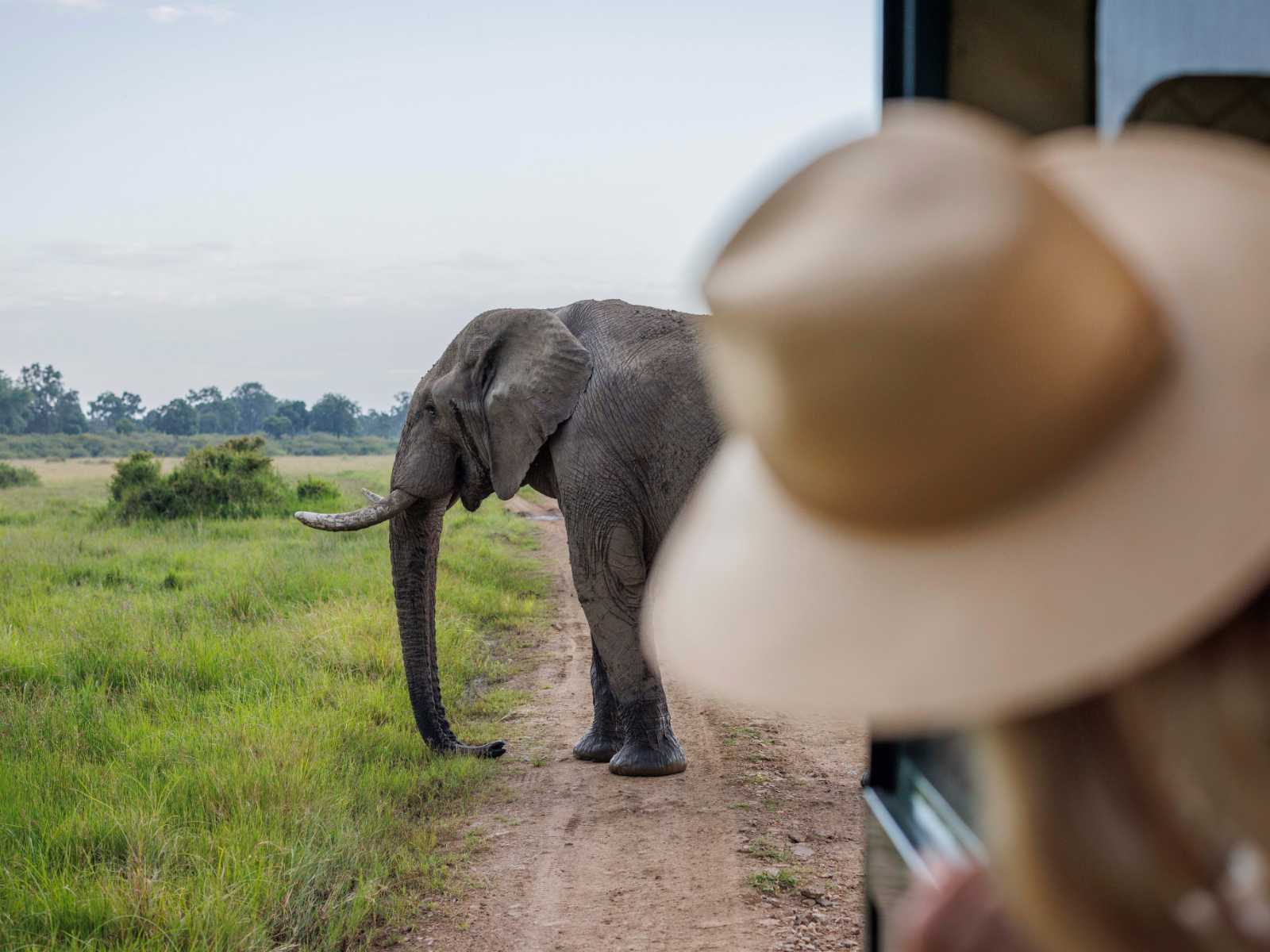
A wide-brimmed hat (better than a baseball cap for sun and tsetse fly protection on the neck). A lightweight buff or scarf for dust and chilly mornings. Swimwear for lodge pools. A sarong or light pareo for ladies — versatile for the lodge, pool, or as a light cover-up.
Camera and Photography Gear
The camera section is the part of any safari packing list where small choices make the biggest difference on the ground. A safari is one of the few trips where the camera gear genuinely changes the experience. The difference between snapshots and memorable images comes down to focal length and steadiness.
Camera Body and Lenses
A DSLR or mirrorless camera with a telephoto lens is the standard safari setup. The minimum useful focal length for wildlife is 200 millimetres. Better is 300 to 400 millimetres. Serious wildlife photographers bring 500 to 600 millimetres. Most rental kits in Nairobi offer Canon and Nikon options if you don’t want to fly with your own.
A second lens at 24 to 70 millimetres or 24 to 105 millimetres covers landscapes, lodges, and people shots. Smartphones work for snapshots but cannot reach wildlife at safari distances — accept that going in.
Accessories and Power
Bring more memory cards than you think you need. A 7-day safari can easily generate 5,000 to 10,000 images. SD cards are widely available in Nairobi but stocking up at home is cheaper.
Spare batteries are essential. Cold mornings drain camera batteries faster than expected, and you may not have lodge power between drives. Two or three spares minimum. A lens cleaning kit (microfiber cloth, blower, lens pen) handles the constant red dust. A bean bag or window mount stabilises long lenses in the safari vehicle better than any tripod.
Health and Medical Essentials
The bush is a long way from a pharmacy. Pack the medical layer of your safari packing list deliberately, not as an afterthought.
Prescription Medications
Bring enough of any prescription medication for the full trip plus a 7-day buffer in case of delays. Keep medications in original labelled containers and pack them in your carry-on, not your checked luggage. Bring a copy of any relevant prescriptions in case customs asks questions.
Malaria and Yellow Fever
Malaria prophylaxis is strongly recommended for almost all of East Africa except Nairobi city centre and high-altitude areas. Consult a travel health clinic 6 weeks before departure — most antimalarial regimens start before you fly and continue after you return. Common options include Malarone, doxycycline, and Lariam, each with different side effects.
Yellow fever vaccination is mandatory for entry into Uganda. It is also required if arriving in Kenya, Tanzania, or Rwanda from a country at risk of yellow fever transmission, or transiting one for more than 12 hours. Carry the International Certificate of Vaccination (the yellow booklet) at all times.
Travel First-Aid Kit
A basic kit covers most safari issues. Antihistamines for insect bites and allergic reactions. Hydrocortisone cream for tsetse bites and stings. Anti-diarrhoeal medication (Imodium or equivalent). Oral rehydration salts. Painkillers (paracetamol and ibuprofen). Plasters for blisters. Antiseptic wipes. Tweezers for splinters and thorns.
If you take regular medication, bring it. If you have a known allergy, bring an EpiPen and tell your guide on day one.
Sun Protection and Insect Repellent
Sunscreen at SPF 50 or higher is non-negotiable. The equatorial sun is much stronger than most visitors expect, and you will be in open vehicles for hours each day. Lip balm with SPF protects against cracking in the dry air. Sunglasses with proper UV protection are essential.
For insect repellent, choose one with 30 percent or higher DEET. Picaridin-based alternatives work for travellers who prefer to avoid DEET. Apply liberally on exposed skin, especially at dawn and dusk when mosquitoes are most active. Permethrin-treated clothing adds an extra layer of protection in malaria zones.
Documents and Money
The bureaucratic layer of any safari packing list. Sort it before you fly, not at the immigration counter.
Travel Documents
Passport valid for at least 6 months beyond your departure date, with at least one blank page. Printed copy of your Kenya eTA, Tanzania eVisa, or Uganda eVisa as relevant. Printed return flight confirmation. Printed hotel and lodge booking confirmations for each leg of the trip.
Travel insurance policy details, including the 24-hour emergency contact number. Yellow fever certificate if your itinerary requires it. Two printed copies of your passport stored separately from the original.
Travel Insurance and Medevac
Comprehensive travel insurance covering medical evacuation is non-negotiable for an East African safari. Medical evacuation from the Mara, Serengeti, or Bwindi to a major hospital can cost USD 3,000 to USD 8,000 without coverage.
AMREF Flying Doctors emergency evacuation membership at around USD 25 per week is the most cost-effective medevac-specific cover. Combine it with a standard travel insurance policy covering trip cancellation, lost luggage, and medical treatment.
Cash and Cards
USD cash in small denominations (5s, 10s, 20s) is the most useful currency for tips, curio shopping, and local extras. Bring USD 200 to USD 500 per person for a 7-day safari depending on tipping habits and shopping plans.
Most lodges and camps accept Visa and Mastercard. American Express is less widely accepted. ATMs in Nairobi, Arusha, and other major towns work with international cards. Notify your bank of travel dates to avoid card blocks.
Note that USD bills must be from 2009 or newer to be accepted in most East African countries — older bills are often refused due to counterfeiting concerns.
Tipping Money
A common guideline is USD 15 to USD 20 per person per day for your safari guide, plus USD 10 to USD 15 per person per day pooled for camp and lodge staff. A 7-day safari for two travellers needs roughly USD 400 to USD 500 in tip cash. Bring this in advance — it is harder to source small USD bills locally.
Electronics and Power
The electronics layer of a safari packing list is shorter than most travellers expect. The bush still has Wi-Fi, mostly. The plug standard is universal across East Africa.
Plug Adapters and Voltage
Kenya, Tanzania, and Uganda all use the Type G three-pin plug (the same as the UK). Voltage is 240V at 50Hz. Most modern electronics (laptop chargers, phone chargers, camera chargers) accept 100 to 240V automatically — check the small print on your charger. Older hair dryers and electric razors may need a voltage converter.
Bring at least two plug adapters per traveller. A multi-port USB charger or compact power strip lets you charge multiple devices from a single outlet.
What to Charge Each Night
The realistic charging list each evening: phone, camera batteries (two or three spares), camera and headlamp batteries, power bank, and laptop or tablet if you brought one. Bring a power bank with at least 10,000 mAh capacity for game drives where you may want to charge the phone away from the lodge.
Wi-Fi at lodges is generally adequate for messaging and email but rarely fast enough for video calls or large file uploads. Buy a Safaricom SIM card at Jomo Kenyatta International Airport for affordable data — about KES 1,000 (USD 7) buys 5 to 10 GB depending on the package.
Luggage — What Bag Should You Bring?
Three bags total: a soft duffel, a day pack, and a small camera bag.
The Main Bag — Soft Duffel Only
For East African bush flights, a soft-sided duffel of around 60 to 90 litres is the right size. Brands like Patagonia Black Hole, Eagle Creek Migrate, and Osprey Transporter are popular safari duffel choices. Bags should have no rigid frame and either no wheels or small inline wheels.
Pack with a target weight of 12 to 13 kilograms to stay safely under the 15-kilogram limit including hand luggage. Compression cubes save serious space.
Day Pack
A 20 to 30-litre day pack for game drives carries water, sunscreen, camera, spare battery, hat, light fleece, and any documents. It should be small enough to sit at your feet in the safari vehicle. Some travellers use a camera bag for this purpose.
Camera Bag
If you bring serious camera gear, a dedicated padded camera bag protects the lenses during transit. Soft cases work better than hard cases on bush flights. The bag should fit inside or alongside your day pack.
Country-Specific Additions
Most of your East Africa safari packing list applies to Kenya, Tanzania, and Uganda equally. A few specifics differ enough to matter.
Kenya
Standard safari packing list applies. If your itinerary includes a coastal extension to Diani, Watamu, or Lamu, add swimwear, light cotton clothing for the humidity, and reef-safe sunscreen for snorkelling. The coast is hot and humid year-round, so add an extra change of clothes per day.
Tanzania (Including Kilimanjaro)
Camouflage clothing is illegal for civilians in Tanzania. Leave anything camo-patterned at home, including hats, jackets, and trousers. Tanzania also has stricter plastic bag regulations than Kenya — single-use plastic bags are banned, and bringing them in can lead to confiscation or fines.
For Kilimanjaro climbs, the packing list expands dramatically. Add proper waterproof hiking boots already broken in, multiple thermal layers, insulated down jacket rated to minus 10°C, waterproof shell jacket and trousers, gaiters, headlamp with spare batteries, gloves and liner gloves, balaclava or buff, glacier sunglasses, and trekking poles. Most climb operators provide tents, sleeping bags, and porters.
Uganda (Gorilla Trekking)
Gorilla trekking in Bwindi Impenetrable Forest requires specialist gear beyond standard safari. The trek is through dense, muddy, often steep rainforest. Add proper hiking boots (waterproof, broken in), gardening or work gloves for grabbing vegetation and protecting from nettles, long-sleeved shirt and trousers tucked into socks for protection from ants and insects, a rain jacket and rain cover for your day pack, and gaiters if available.
A walking stick is provided at the trailhead. Bring a face mask — gorillas are vulnerable to human respiratory illnesses, and masks are required by the Uganda Wildlife Authority. A face mask is also required if you have any cold symptoms, which is genuine grounds to be refused the trek that day.
What You Don’t Need to Bring
Most safari packing list articles tell you what to bring. The harder skill is knowing what to skip.
Skip These
Skip jeans and denim (heavy, slow to dry, and blue attracts tsetse flies). Skip cotton-heavy hoodies (slow to dry, dust magnets). Skip more than two pairs of shoes (you don’t need them). Skip a hard-sided suitcase (won’t fit on bush flights). Skip dressy formal wear (no lodge requires it). Skip excessive electronics (multiple cameras, drones in most parks are restricted or banned, laptops you won’t actually use).
Skip large bottles of toiletries — most lodges provide basic toiletries, and small travel-size bottles save serious weight. Skip a hairdryer (lodges provide them where electricity allows). Skip plastic bags (banned or restricted in Tanzania and increasingly in Kenya).
Drones are banned in all Kenya, Tanzania, and Uganda national parks without prior permits that are difficult to obtain. Don’t pack one without checking the rules first.
Plan Your East African Safari with TripGenius Travel
A clear safari packing list reduces pre-trip stress and leaves you with mental space to actually enjoy the safari itself. TripGenius Travel handles the logistics around the packing list — flights, lodges, ground transport, park bookings, and the bush flights that drive the weight limits.
For first-time safari planners, our Kenya safari destinations hub covers the full destination catalogue.
Useful Resources
Verify your medical and entry requirements before booking. The AMREF Flying Doctors site covers medical evacuation membership for safari travellers. The CDC travel health page for Kenya publishes current vaccine and prophylaxis recommendations. The WHO yellow fever information page lists current endemic countries.
Always confirm with your tour operator about specific bush flight weight limits, lodge laundry availability, and any unusual itinerary needs before finalising your packing.
Final Word
The shortest possible safari packing list: soft duffel, neutral colours, long lenses, sunscreen, antimalarial, and 13 kilograms of restraint. Almost everything else is optional.
The three things to get right when packing: stay under 15 kilograms total including hand luggage so the bush flight doesn’t become a problem, pick clothing colours that don’t attract tsetse flies and don’t make you conspicuous to wildlife, and bring the medical layer (prophylaxis, sun protection, basic first aid) that the bush itself can’t supply on short notice.
Get those three right and the rest — sunrise over the Mara, an elephant herd against Kilimanjaro, a silverback gorilla three metres away in the Bwindi rainforest — falls into place without you spending the trip worrying about your bag.
Last updated: May 2026. Bush flight weight limits, country-specific clothing regulations, and vaccination requirements change periodically. Always confirm current rules with your booking agent, airline, and a qualified travel health professional before flying.