A Diani dolphin snorkeling Kisite Mpunguti day trip on a traditional wooden dhow — sail to Kenya’s premier Blue Park marine reserve, snorkel the coral reefs, stop at a sandbank, and enjoy a Swahili seafood lunch on Wasini Island with a walk to the ancient coral garden.
Overview
Kisite-Mpunguti Marine National Park is Kenya’s finest snorkeling destination and the country’s first Blue Park — a gold-standard marine conservation designation awarded by the Marine Conservation Institute for exceptional reef management. The park sits 11 km off the Kenyan coast at Shimoni, south of Wasini Island in Kwale County near the Tanzanian maritime border. This Diani dolphin snorkeling Kisite Mpunguti day trip reaches it the traditional way: a wooden Arabic-style dhow departing from Shimoni Pier, sailing across the turquoise Indian Ocean on the southwest monsoon wind.
The park’s marine statistics are exceptional. Kisite-Mpunguti holds over 250 recorded fish species, 70 resident dolphins (spinner, humpback, and bottlenose), 56 coral genera, green and hawksbill sea turtles, seabirds in internationally significant nesting colonies, and seasonal humpback whales that migrate through July to December. The dolphins are the headline attraction — resident pods travel and feed through the park waters year-round, and the dhow commonly encounters them in the open water between Shimoni and the reef. On a good day, spinner dolphins surf the dhow’s bow wave; on an outstanding day, a humpback surfaces in the distance. The park’s entry fee is USD 17 per adult non-resident and USD 13 per child — included in all packages.
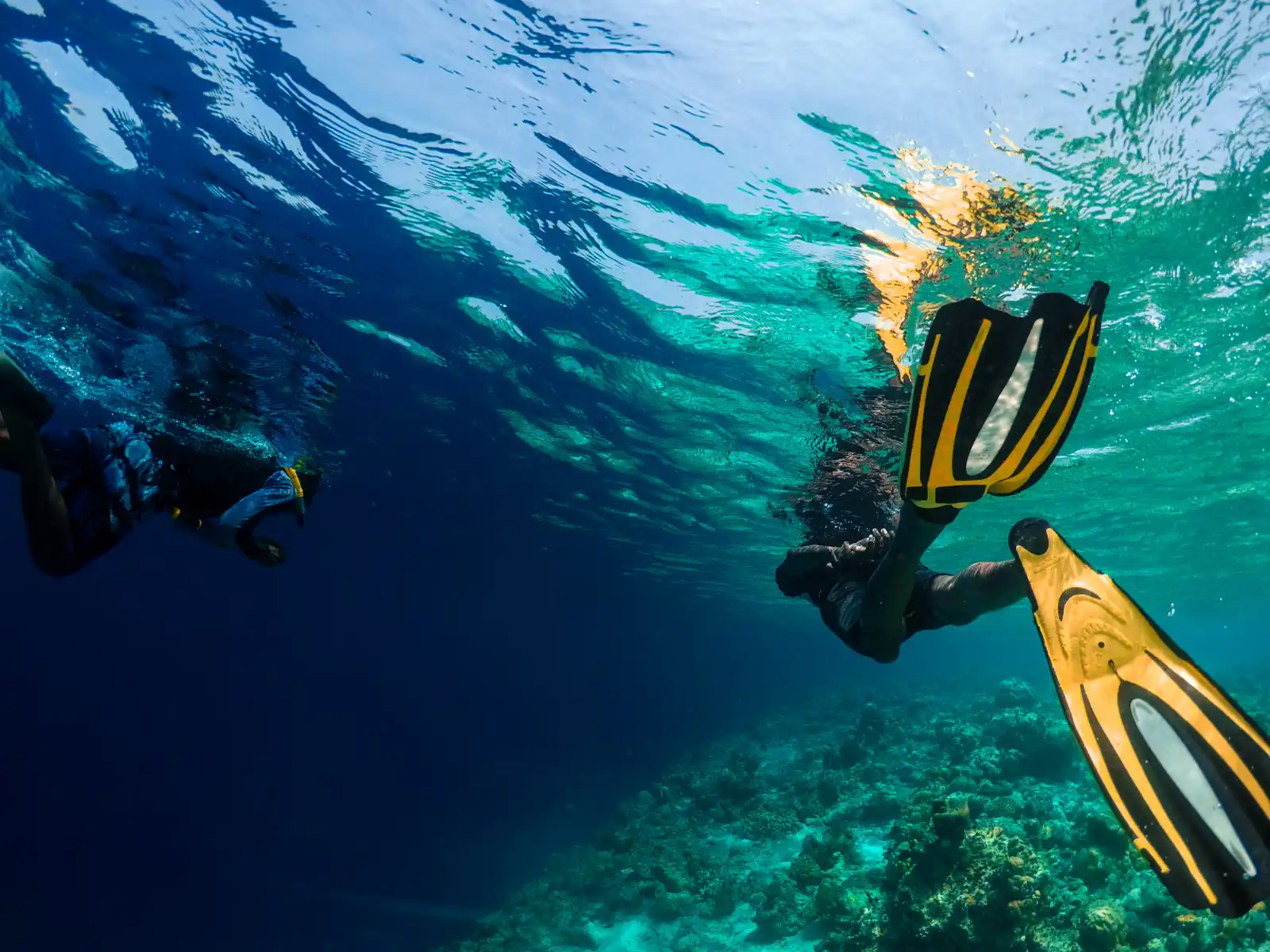
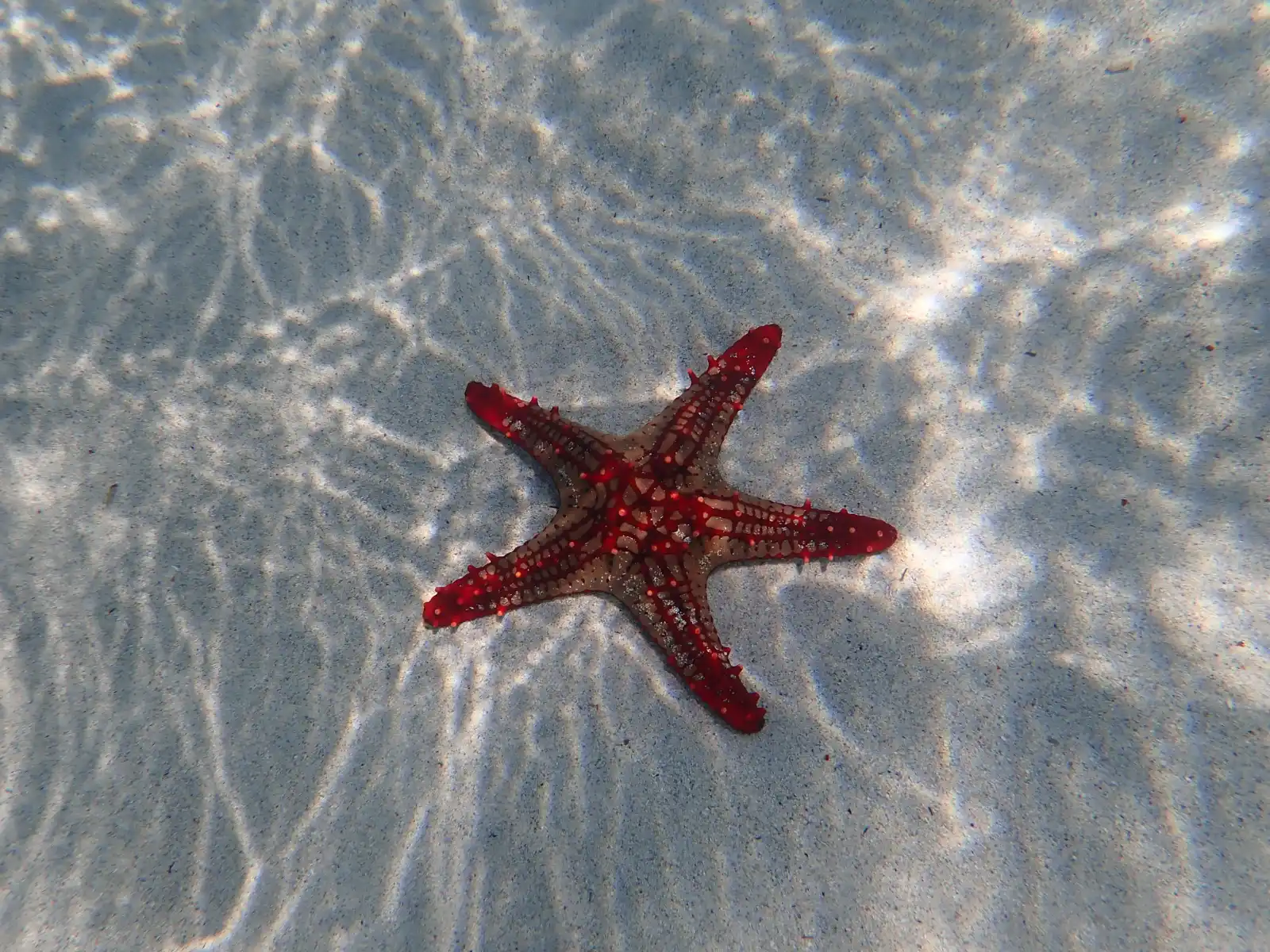
The snorkeling at Kisite is in an entirely different league from the standard Diani beach reef. The fringing reef systems around the Kisite and Mpunguti islands are among the healthiest in East Africa, protected from fishing and anchoring. Visibility of 10–20 metres is standard in the dry season. The water above the coral is rich with angelfish, parrotfish, grouper, moray eels, triggerfish, and — regularly — hawksbill sea turtles grazing on the table and staghorn coral.
After the snorkeling, the dhow sails to a sandbank (tide-dependent) — an exposed white sand bar surrounded by shallow turquoise water where you can walk in ankle-deep water with nothing but ocean in every direction. Wasini Island follows for a freshly prepared Swahili lunch served under a palm-thatch shelter: typically grilled whole fish or calamari from the morning’s catch, coconut-spiced sides, chapati, and tropical fruit. The afternoon includes a guided walk to the ancient coral garden managed by the Wasini Women’s Boardwalk group — a 2.5-acre meandering boardwalk through petrified coral formations that were once part of the living reef, now raised above sea level. An optional extension visits the Shimoni Slave Caves, a series of natural coral caves that were used to hold enslaved people before transportation across the Indian Ocean during the Arab-run East African slave trade in the 18th and 19th centuries.
Trip Highlights
- Sail on a traditional wooden Arabic dhow across the Indian Ocean from Shimoni Pier to Kisite-Mpunguti Marine National Park
- Watch spinner, humpback, and bottlenose dolphins in the open water — 70 resident dolphins in the park year-round
- Snorkel the crystal-clear coral reefs of Kisite — 250+ fish species, hawksbill sea turtles, moray eels, and vibrant coral in 10–20m visibility
- Walk an exposed Indian Ocean sandbank at low tide — white sand, ankle-deep water, open ocean in every direction
- Enjoy a traditional Swahili seafood lunch on Wasini Island — grilled fresh catch, chapati, coconut sides, and tropical fruit
- Walk the ancient coral garden on the Wasini Women's Boardwalk — petrified coral formations with a guided cultural and ecological explanation
- Optional visit to the Shimoni Slave Caves — a historically significant site from the East African Arab-run slave trade