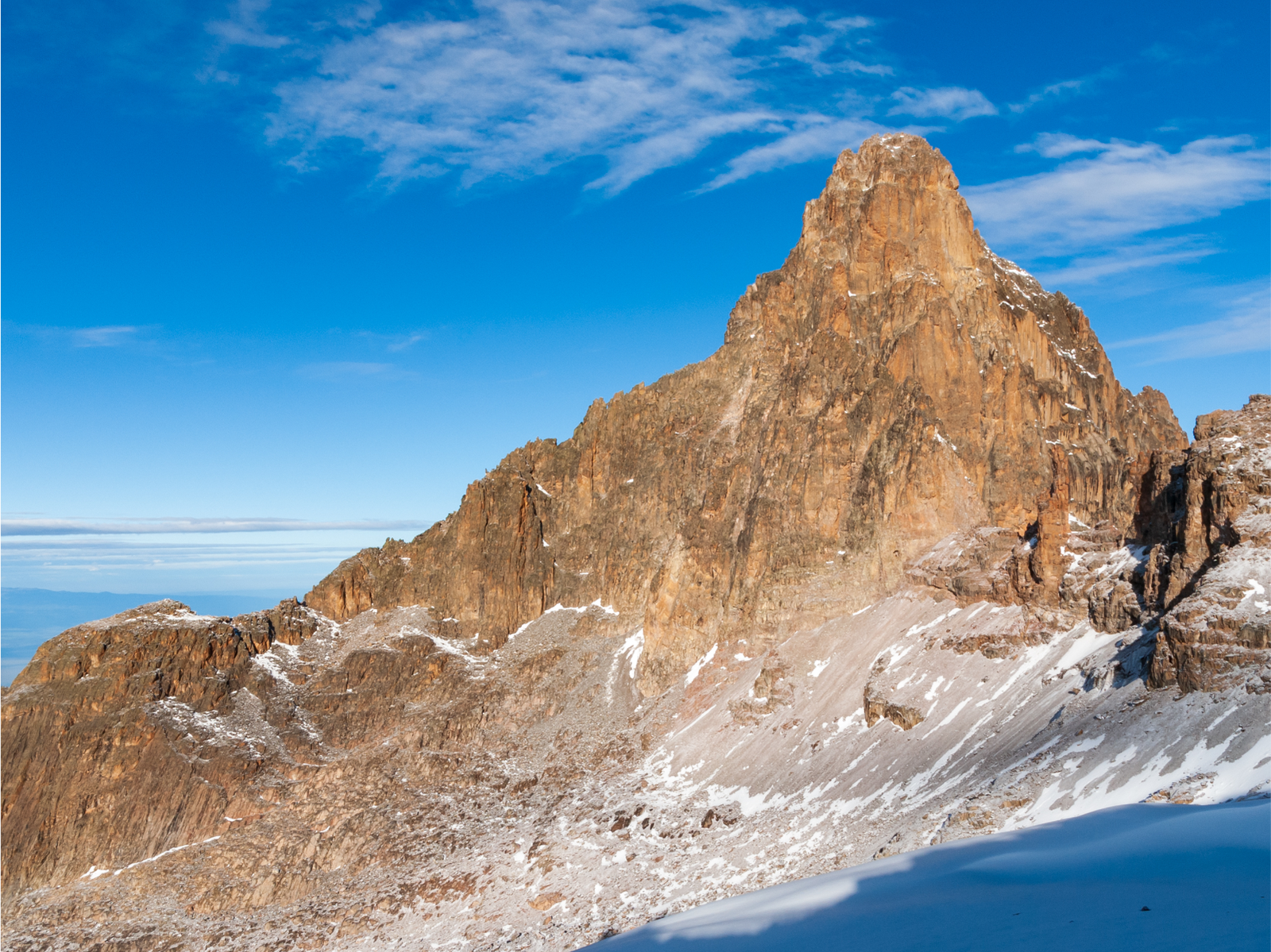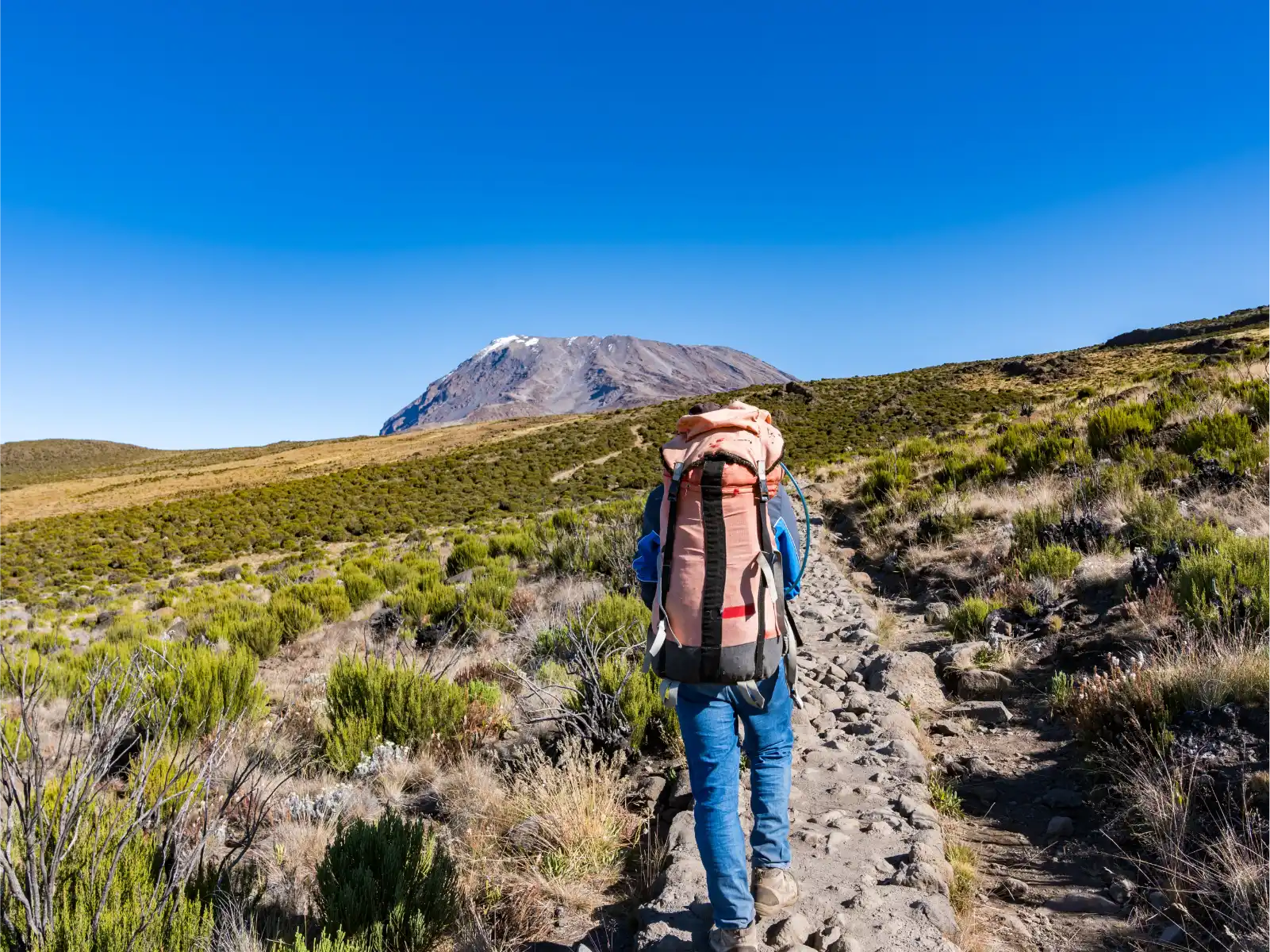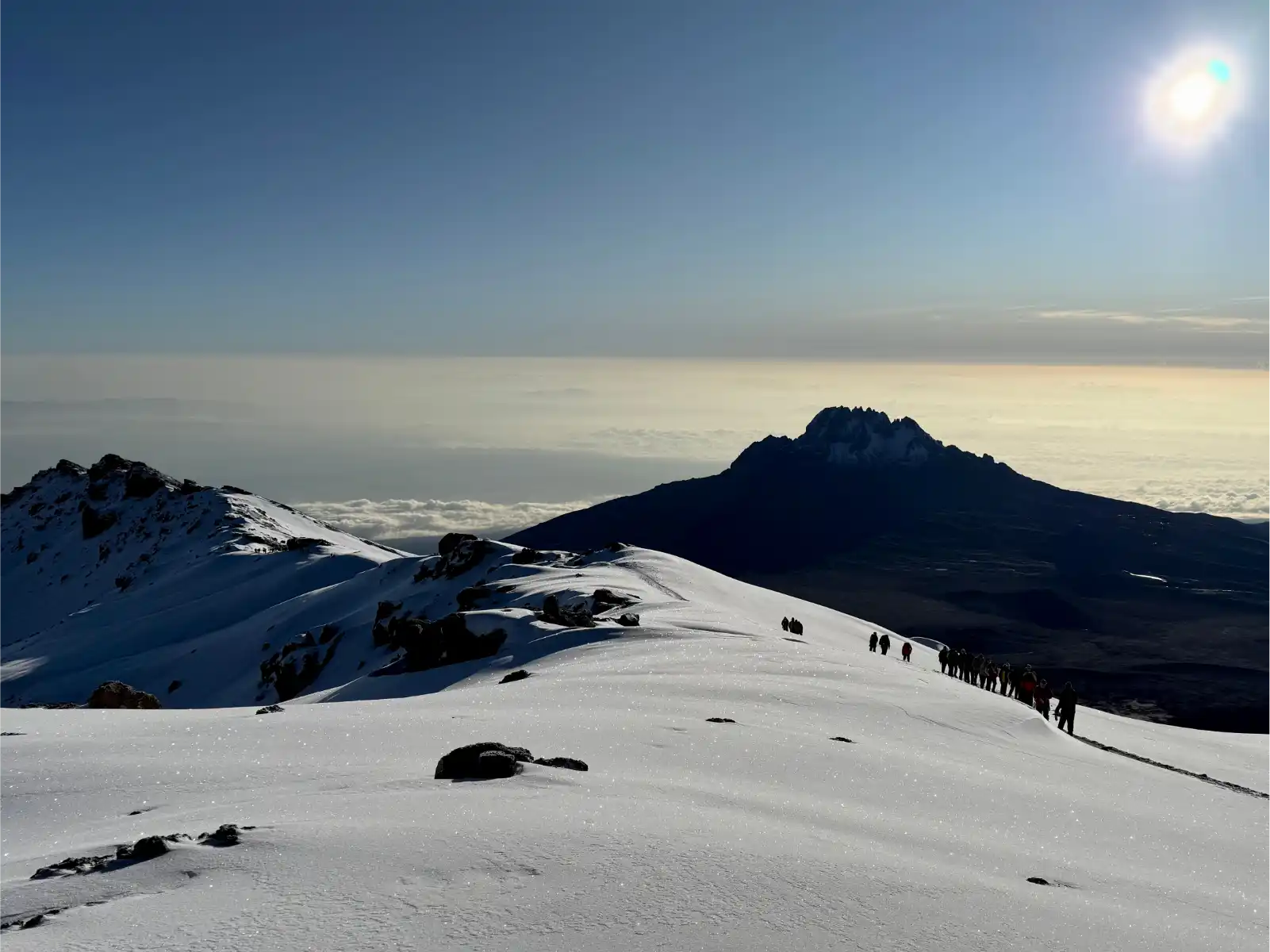
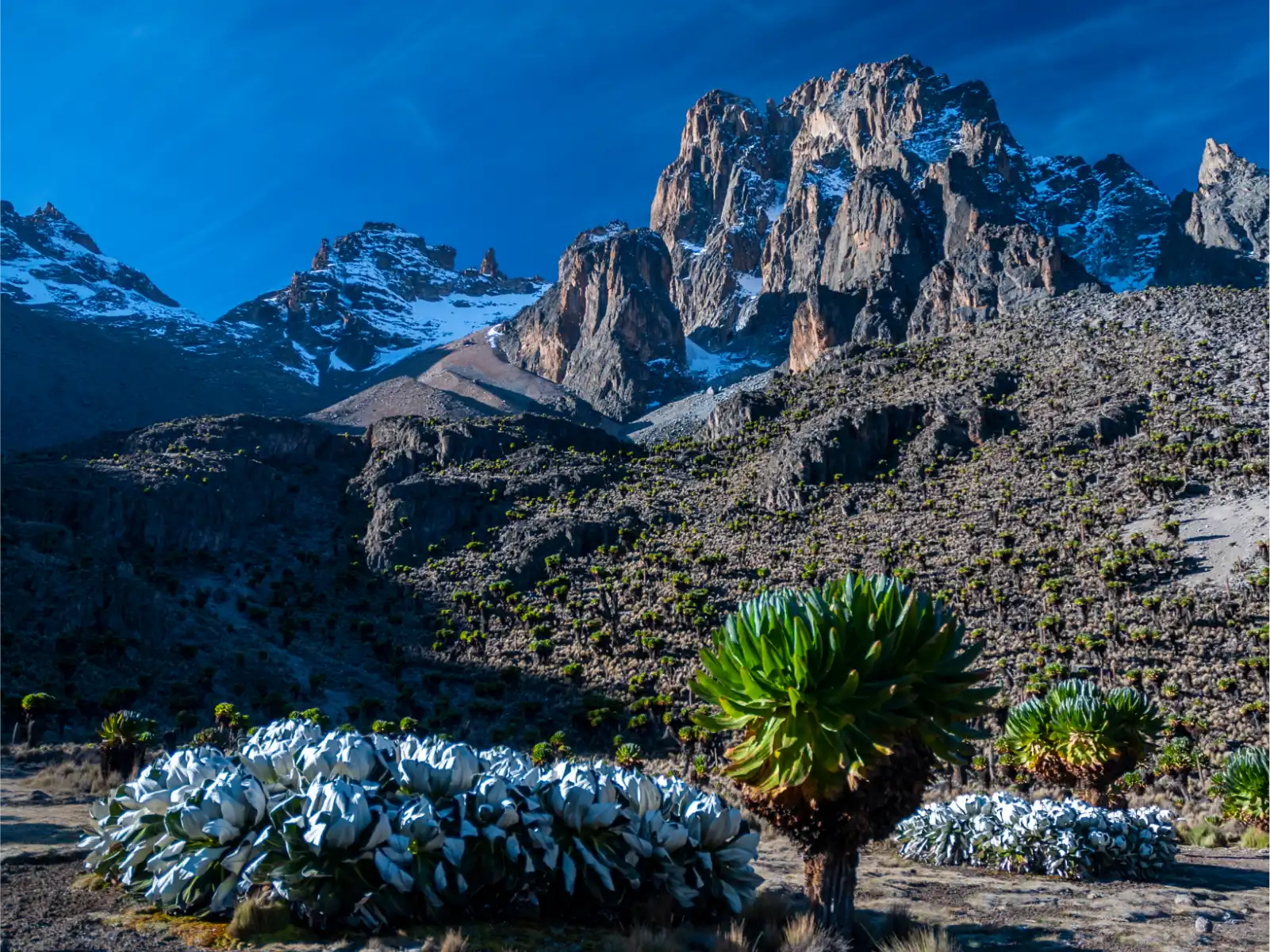
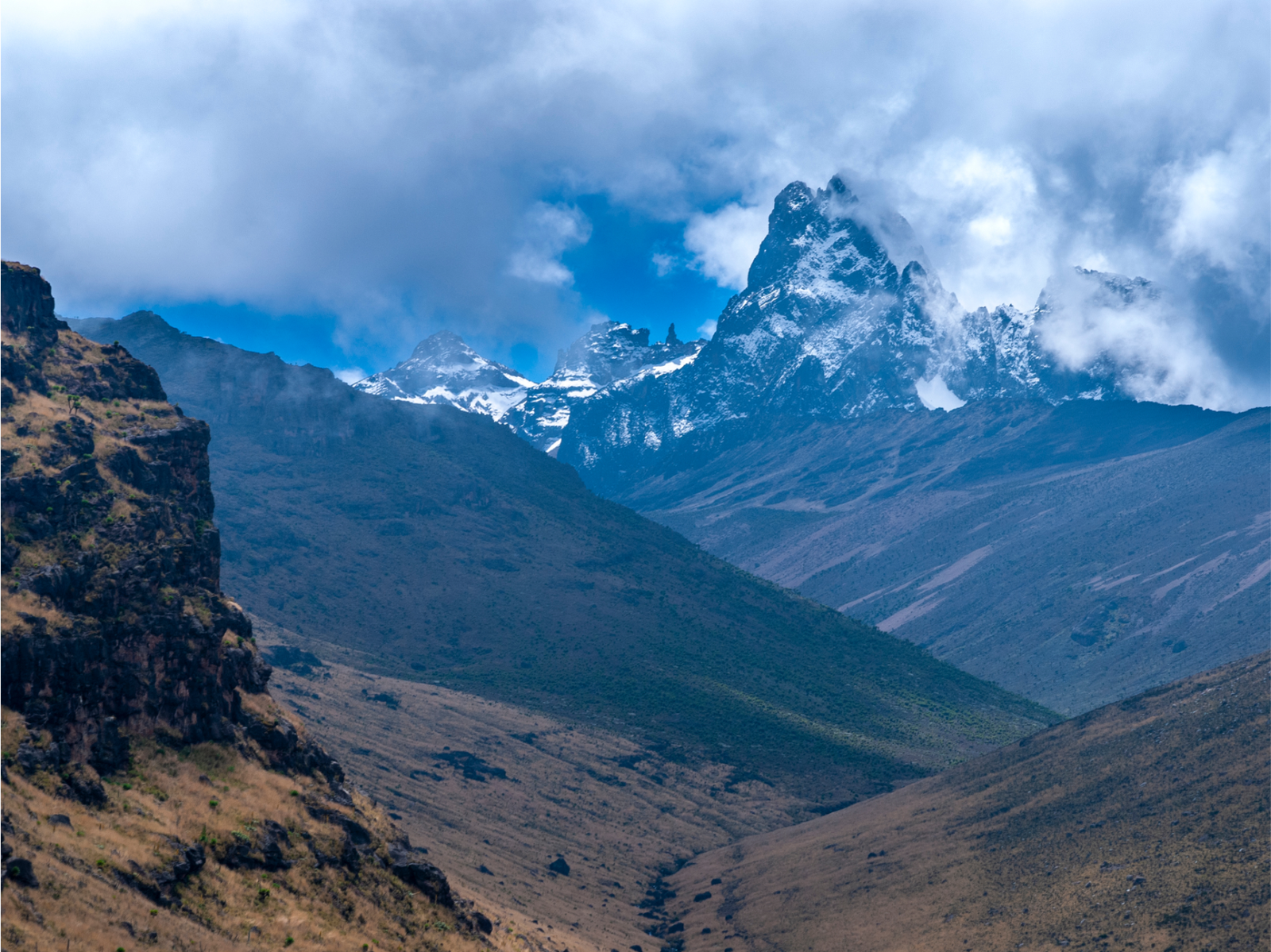
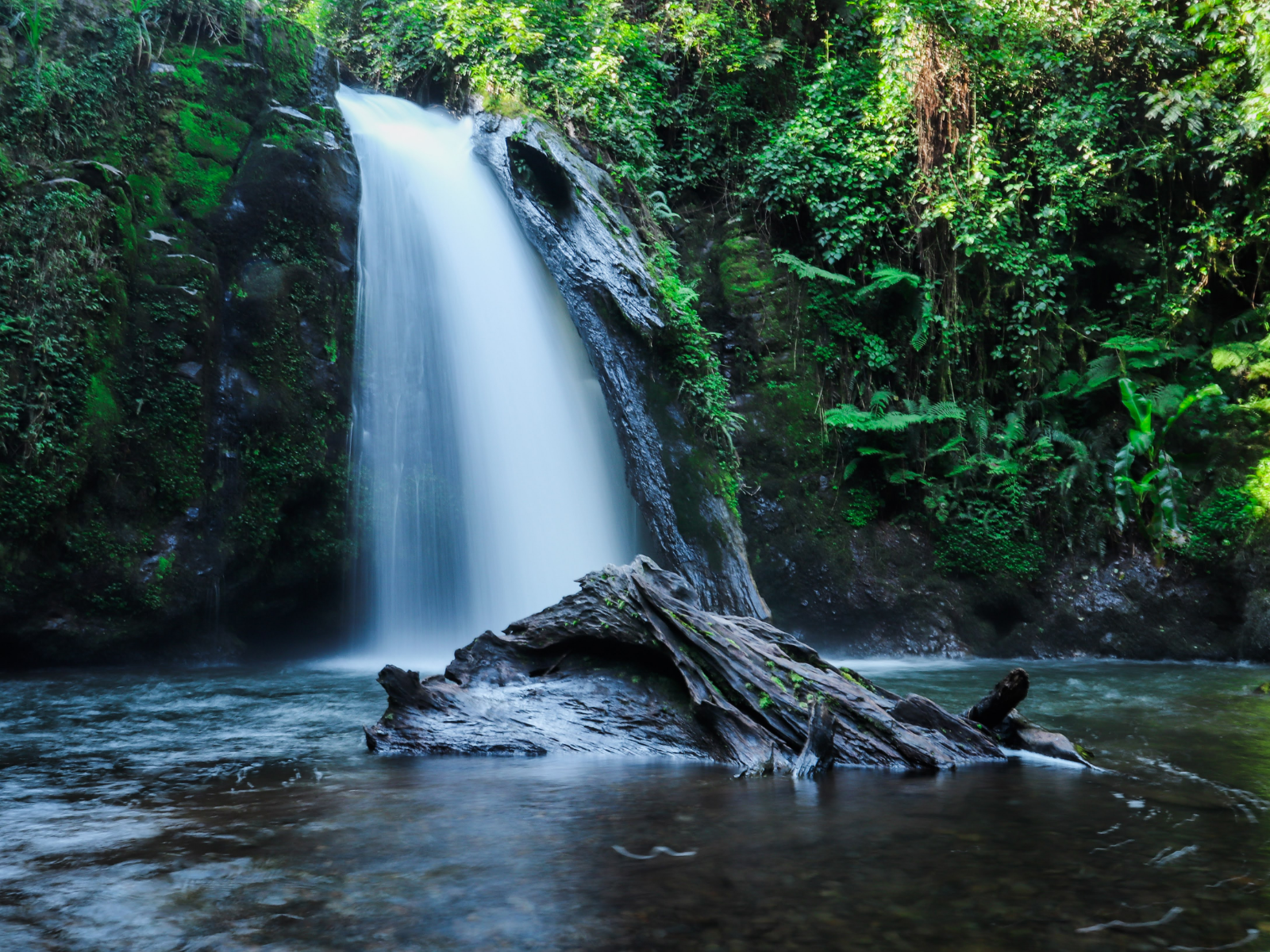
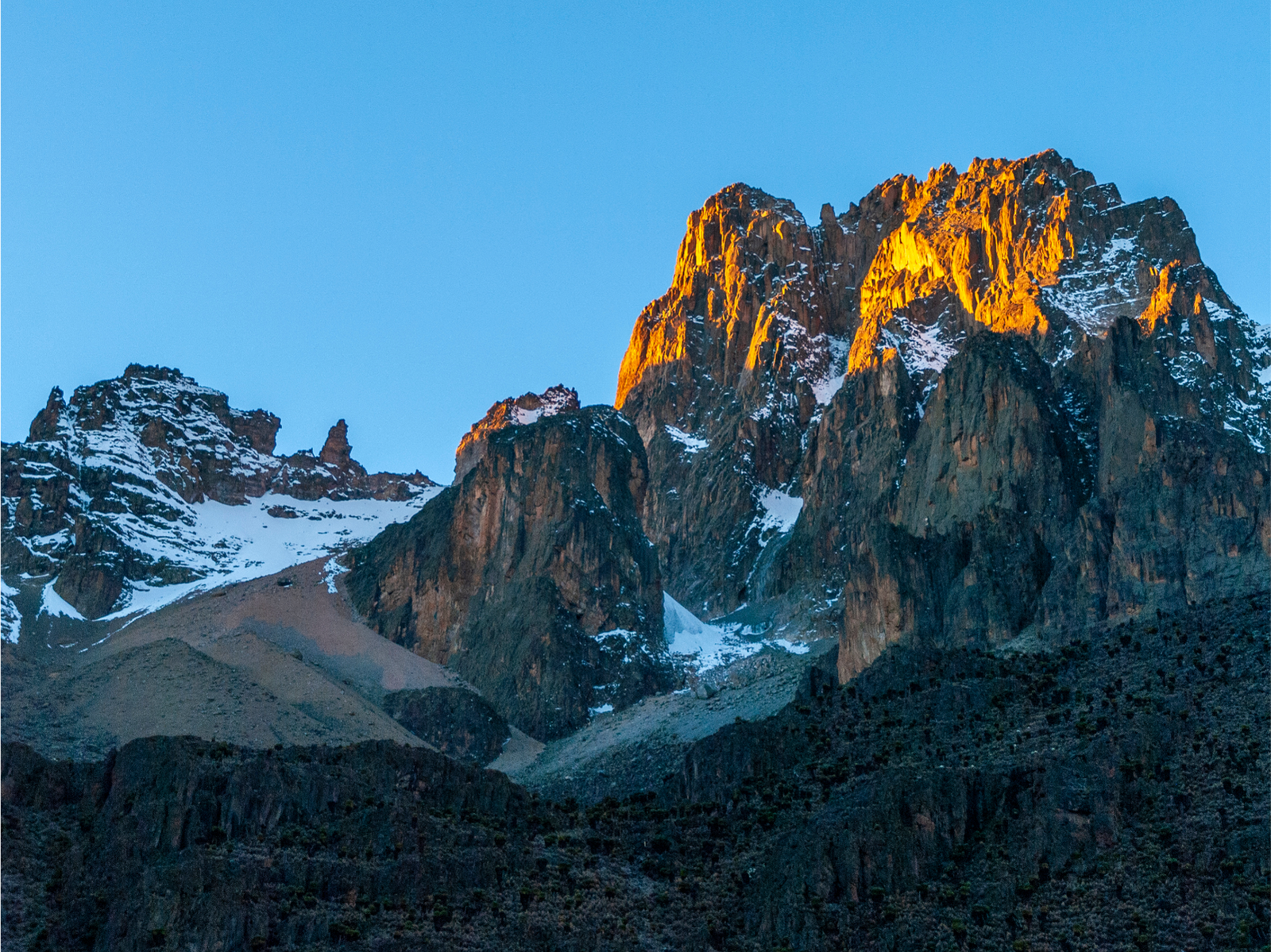
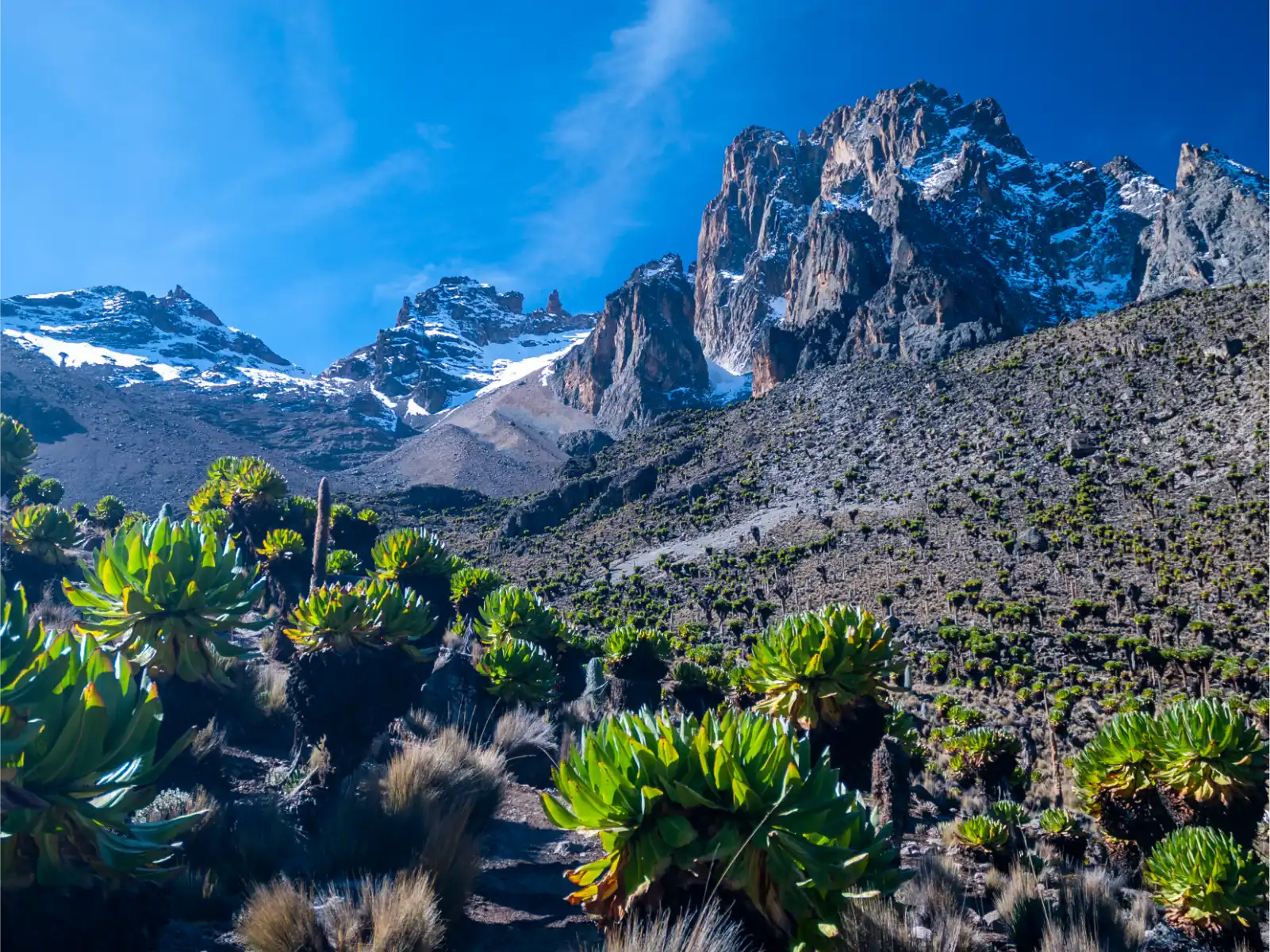
The Kamweti Route Mount Kenya is the least-visited of the mountain’s established approaches, beginning at Kamweti Gate on the southern slopes in Kirinyaga County. This long, forested route threads through undisturbed montane forest — one of the most pristine on the mountain’s southern aspect — before ascending to the Afroalpine moorland and connecting with the summit circuit. It requires a special KWS permit, full camping equipment, and a highly experienced local guide. It is not suitable for first-time trekkers.
ROUTE OVERVIEW
The Kamweti Route begins at Kamweti Gate on the southern slopes of Mount Kenya in Kirinyaga
County. It is the most remote gate access point on the mountain. The initial approach passes
through dense bamboo forest — a long, enclosed forest section that requires a guide with specific
knowledge of the southern approach.
Above the bamboo, the route ascends through giant heath and Hagenia forest before transitioning
into the Afroalpine moorland. The forest is historically significant — this was one of the primary
approaches used by early colonial-era climbers and scientists in the late 19th and early 20th
centuries, before the Sirimon and Naro Moru routes were developed.
Wildlife presence in the forest is exceptional. The southern corridor supports leopard, elephant,
buffalo, black-and-white colobus, and Sykes monkey. Because the route is so rarely used, wildlife
encounters are undisturbed and relatively frequent. The absence of other trekkers makes this one
of the most immersive wildlife experiences available on any mountain approach in Kenya.
The Kamweti Route connects with the main summit circuit at the Tooth Col area, from where the
ascent to Point Lenana follows the upper mountain. The recommended combination is a Kamweti
ascent with Chogoria descent — a full south-to-east traverse that covers two completely different
aspects of the mountain in 7–9 days. There are no established hut facilities on the southern
approach — full camping equipment is mandatory throughout.
ROUTE HIGHLIGHTS
- Dense bamboo and Hagenia forest on the southern approach — among the most intact montane forest on the entire mountain
- Historic route — one of the earliest used by colonial-era climbers before the northern approaches were established
- Leopard, elephant, buffalo, black-and-white colobus, and Sykes monkeys regularly encountered in the forest zones
- Total isolation — very few trekkers use this route, making wildlife encounters more frequent and undisturbed
- Connects with the summit circuit near Tooth Col — can be combined with Chogoria descent for a remarkable traverse
- Exceptional conservation value — the southern forest is a critical wildlife corridor that most trekkers never see