
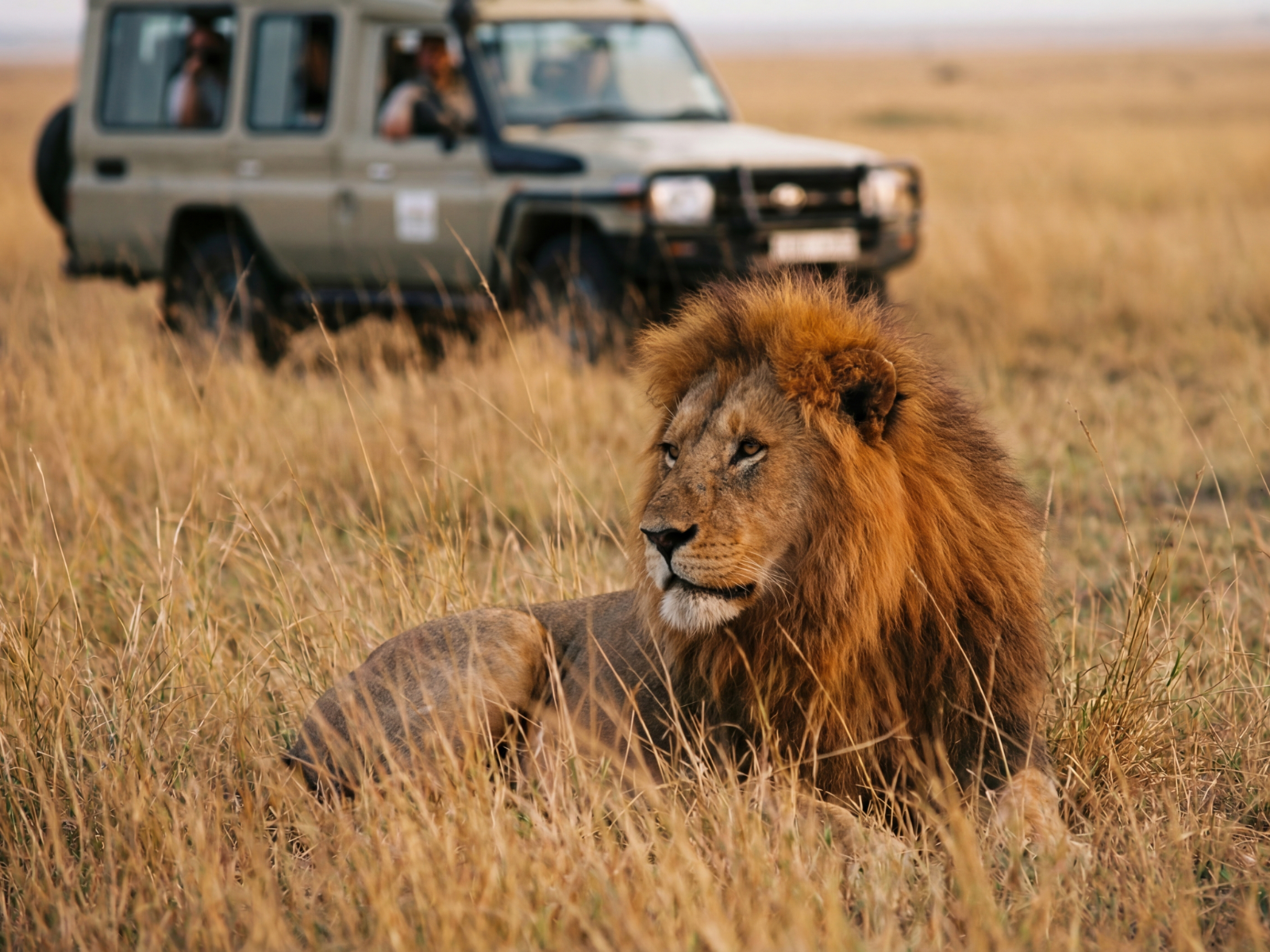
Planning a Big Five East Africa safari is one of the most exciting decisions a wildlife traveller can make. But there is a catch: not every park delivers every animal. Rhinos are critically endangered and confined to specific conservancies and protected zones. Leopards vanish into riverine thickets and spend their days draped invisibly across acacia branches. Even lions can be surprisingly hard to find if you are in the wrong park at the wrong time of year.
This guide breaks down exactly where to find each of the Big Five across Kenya, Tanzania, and Uganda — and which months give you the best odds of seeing them. Whether you are planning your first safari or returning for another, this is the intel that turns a good trip into a memorable one.
What Are the Big Five of East Africa?
The term “Big Five” originally came from big-game hunters, who used it to describe the five most dangerous animals to hunt on foot. Today, the phrase means something entirely different. For wildlife travellers, the Big Five — lion, leopard, African elephant, black rhino, and Cape buffalo — represent the pinnacle of a safari experience. East Africa is one of the most reliable regions in the world to see them all.
One important note before you plan: not every park has all five. The rhino has been pushed to conservancies and protected sanctuaries by decades of poaching. Some parks that look Big Five on paper may not deliver rhino sightings in practice. Others lack leopard in open, viewable numbers. This guide tells you where each animal genuinely lives so you book with realistic expectations and come home with the full list.
Lion — Africa’s Apex Predator
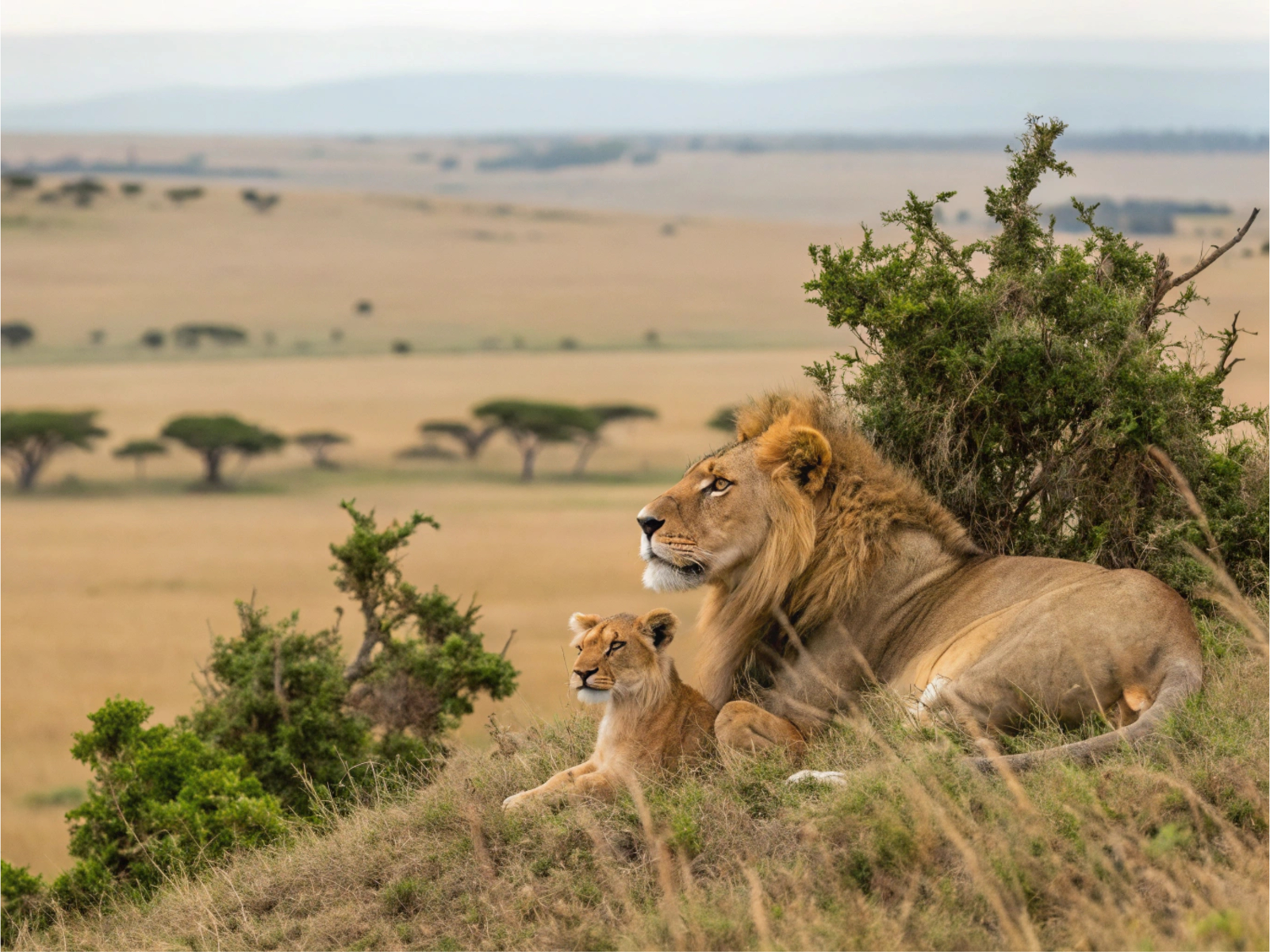
Lions are the most recognisable of the Big Five and, fortunately, among the most reliably spotted. They are social animals living in prides that rest through the heat of the day and become active in the early morning and late afternoon. Open savannah, abundant prey, and a well-positioned camp are the three keys to consistent lion sightings.
Best Parks for Lion Sightings in East Africa
The Maasai Mara National Reserve in Kenya is among the world’s top destinations for lion sightings. Large prides roam the open grass plains year-round, and during the Great Migration from July to October, predator activity spikes dramatically as wildebeest and zebra flood in from the Serengeti. The Mara’s private conservancies bordering the main reserve add value by allowing off-road driving and night game drives that increase your chances further.
Directly connected across the Tanzanian border, the Serengeti National Park carries the same predator density across a vastly larger area. Central Serengeti, particularly around Seronera, is the most reliable zone for consistent lion activity. The central woodlands and kopjes are pride territory, and experienced guides know exactly where to look.
Tanzania’s Ngorongoro Crater is exceptional. It holds one of Africa’s densest lion populations, with so-called super-prides of up to 30 individuals regularly seen on a single crater floor drive. Unlike most parks, the crater’s enclosed ecosystem means lions here are permanent residents with nowhere to migrate.
In Uganda, Queen Elizabeth National Park is famous for its tree-climbing lions in the Ishasha sector in the south. These are unusual behaviour sightings — lions draped across fig tree branches — and they are unique enough to justify the detour.
Best Time to See Lions in East Africa
The dry season from June to October is consistently the best period for lion sightings across all East African parks. Shorter grass and prey concentrated around water sources make prides far more visible and active. If dramatic predator-prey interactions are what you are after, July to September in the Mara is your best window. The Ngorongoro Crater produces good lion sightings year-round because the crater’s resident prey population does not leave.
Leopard — The Elusive One
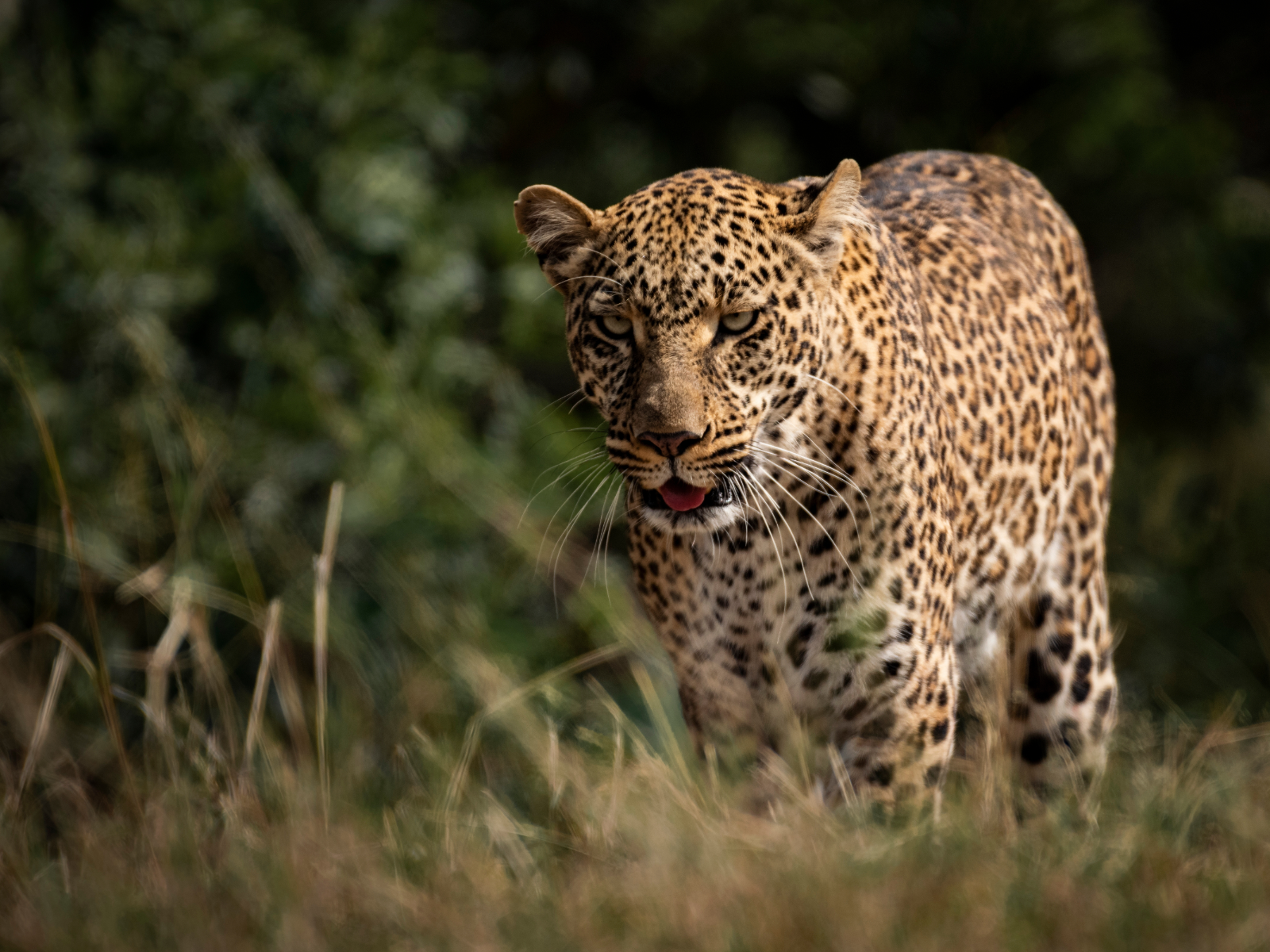
Of all the Big Five East Africa animals, the leopard is the one most likely to evade you. It is solitary, largely nocturnal, and has evolved to be essentially invisible in dense vegetation. Leopards haul kills up into trees to protect them from lions and hyenas — so experienced guides learn to scan upwards, not just across the bush. When you do see one, especially a female with a carcass draped across a branch, it is one of the most striking sights in all of wildlife travel.
Best Parks for Leopard Sightings in East Africa
Samburu National Reserve in northern Kenya has a well-earned reputation for leopard sightings, often outperforming the Mara for this specific animal. Rocky outcrops, thick riverine bush along the Ewaso Nyiro River, and fewer vehicles per sighting create conditions that favour patient, intimate leopard encounters.
The Mara–Serengeti ecosystem as a whole holds high leopard densities. In the Maasai Mara, leopard habitat concentrates along the riverine woodlands and rocky kopjes where the open plains give way to cover. The private conservancies adjacent to the main reserve — Mara North in particular — allow off-road and night driving, dramatically increasing your odds.
Tanzania’s Serengeti also delivers consistent sightings, particularly in the kopje-studded central section. The woodland borders provide the cover leopards prefer, and their presence alongside the migration herds gives the cats a reliable prey base.
In the Ngorongoro Crater, leopards are the least frequently seen of the Big Five on the crater floor. However, sightings along the forested rim and the edges of the Lerai Forest do occur, typically at dawn or just before dusk when they descend from their rest points.
If leopard sightings are your top priority, the Laikipia Plateau conservancies in central Kenya — including Ol Pejeta, Lewa, and Borana — offer guided night drives that consistently produce results.
Best Time to See Leopards in East Africa
The dry season (June to October) improves odds significantly. Sparse vegetation reduces the places leopards can conceal themselves, and they move more openly between prey areas and water. Early morning game drives — departing camp before 6:30 AM — are the highest-percentage play for leopard sightings across all parks.
African Elephant — The Gentle Giant
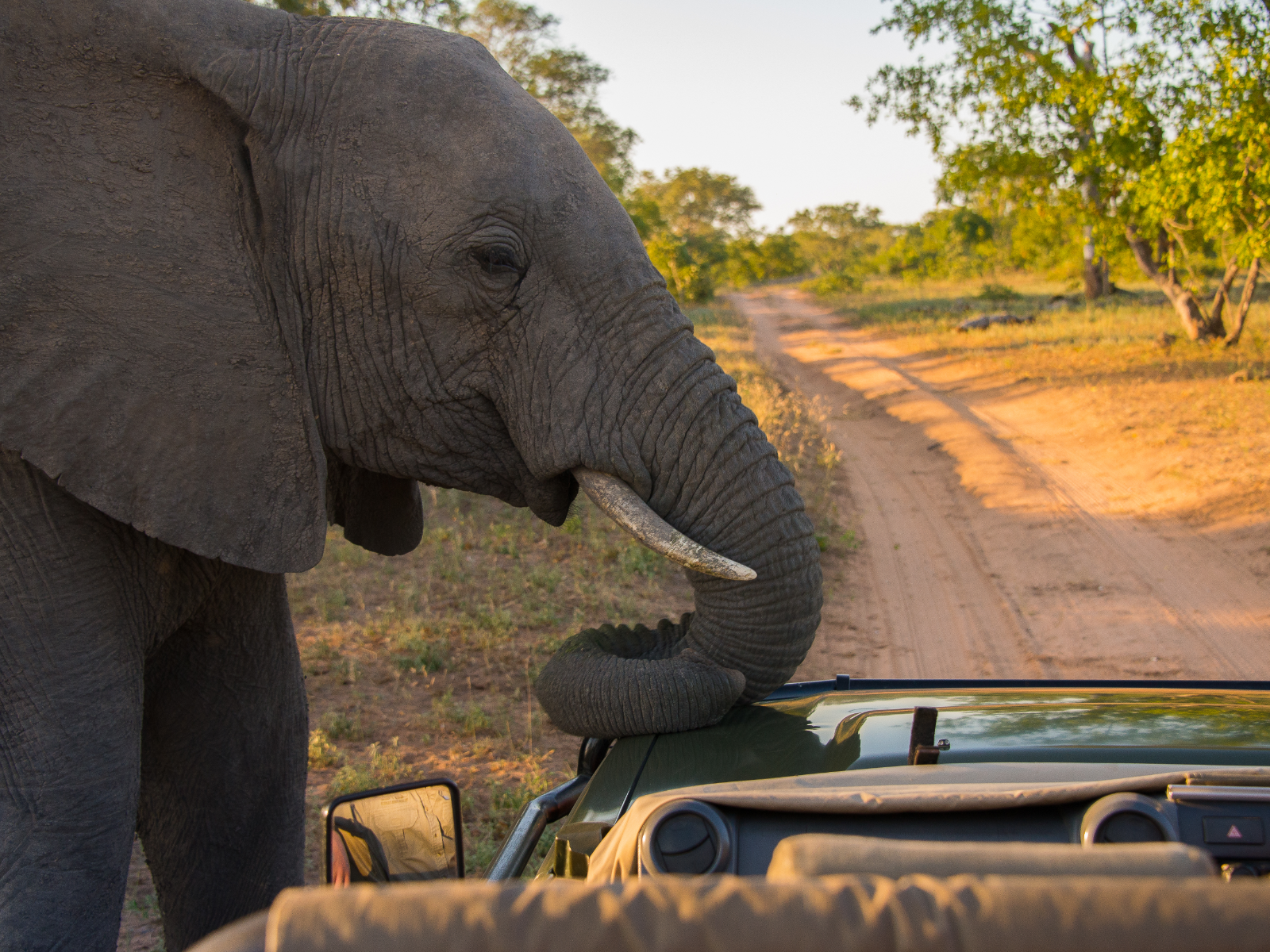
The African elephant is the largest land animal on Earth and one of the most emotionally compelling sightings in wildlife travel. Watching a matriarch lead a family herd across an open plain, or observing a calf stumbling through its first attempts to control its trunk, is the kind of thing people recall in precise detail years later. East Africa delivers elephant encounters that simply cannot be replicated elsewhere.
Best Parks for Elephant Sightings in East Africa
Amboseli National Park in Kenya is the undisputed champion for close, relaxed elephant encounters. Its flat, open terrain provides extraordinary visibility, and the Kilimanjaro backdrop behind the herds creates one of the most iconic wildlife images on the continent. As of early 2025, the Amboseli elephant population sits at approximately 1,870 individuals according to the Amboseli Trust for Elephants — one of the longest-running elephant research programmes in Africa. These animals are well habituated to vehicles and observed from remarkably close distances.
Tarangire National Park in northern Tanzania is exceptional, particularly in the dry season. Elephants converge on the Tarangire River in numbers that are genuinely extraordinary — herds of hundreds moving together toward water is a spectacle Tarangire does better than almost anywhere else.
The Ngorongoro Crater holds over 300 resident elephants, though here they are mostly older solitary bulls rather than the family herds you see in Amboseli. Their slow movement across the crater floor, often towards the Lerai Forest, has its own quiet drama.
For a more landscape-integrated elephant experience, the Maasai Mara delivers excellent sightings year-round, particularly around the Mara River forests and the seasonal swamps along the Talek and Sand rivers.
Best Time to See Elephants in East Africa
The dry season from June to October concentrates elephants at permanent water sources and makes them far easier to locate. Tarangire is at its most spectacular from July to October specifically. Amboseli is a year-round destination because its permanent swamps retain elephant populations through every season. If timing the migration is also a priority, combining Amboseli or Tarangire with the Mara in August or September gives you two categories of sighting in a single trip.
Black Rhino — The Rarest Big Five Sighting
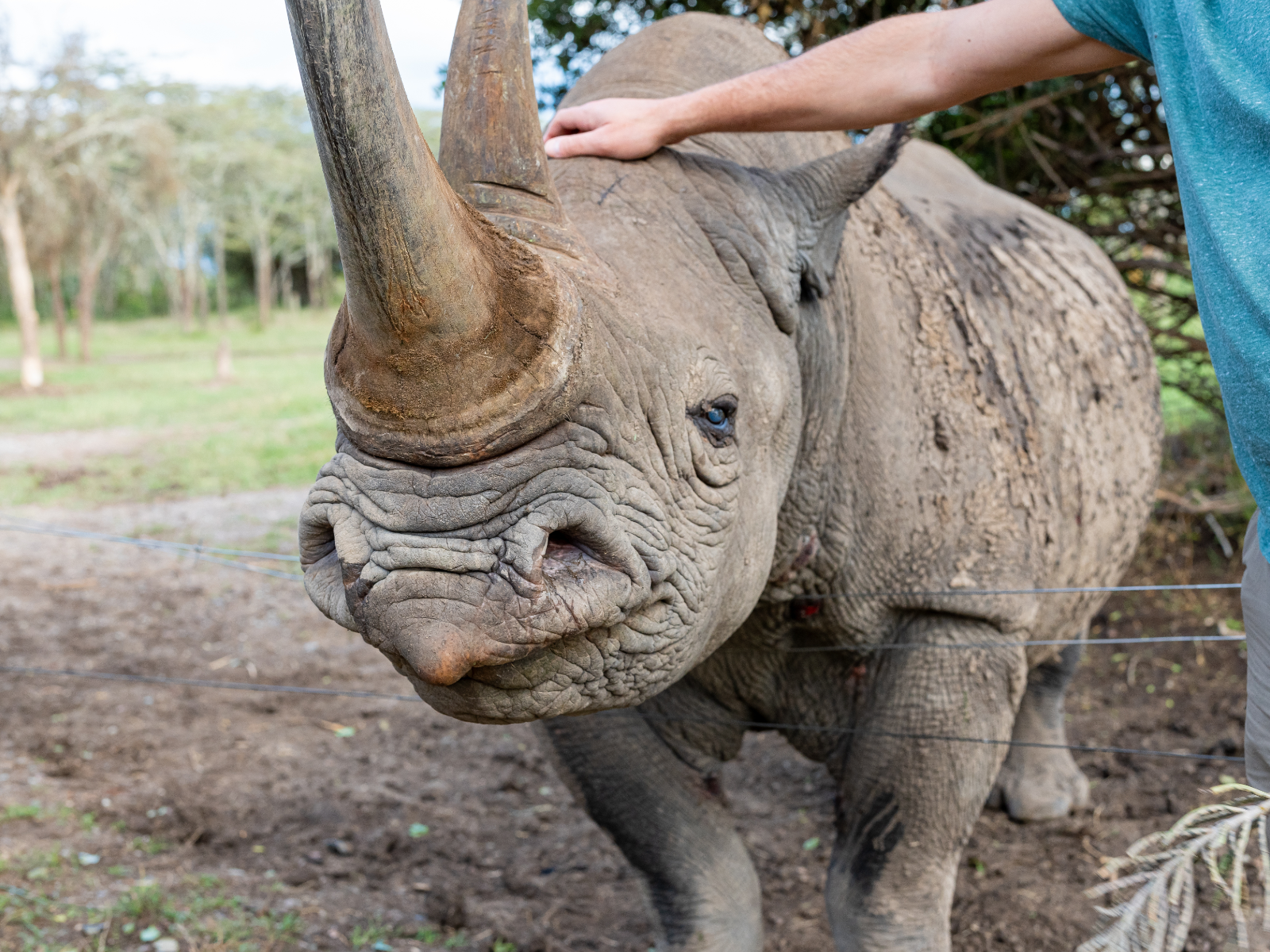
The black rhino is the hardest of the Big Five East Africa animals to find, and it is the most meaningful when you do. It is a critically endangered species that has been pulled back from functional extinction through extraordinary conservation investment. In the 1970s, Kenya had nearly 20,000 black rhinos. By the mid-1980s, relentless poaching had reduced that number to fewer than 400. Today the country holds approximately 1,000 black rhinos — a remarkable recovery, but one still far from secure.
Best Parks for Rhino Sightings in East Africa
Ol Pejeta Conservancy in Laikipia is the benchmark destination for black rhino viewing in East Africa. As of 2025, the conservancy’s black rhino population stands at 183 individuals — the largest in East Africa — following a remarkable multi-decade conservation programme that has become a global model. Sightings here are near-guaranteed on a full-day game drive, and the guided rhino tracking experiences on foot bring you into genuinely close, supervised proximity.
Ol Pejeta is also home to Najin and Fatu, the world’s last two remaining northern white rhinos. Both are female. They live under 24-hour armed protection. Visiting them — and understanding the IVF programme scientists are running to attempt to preserve the subspecies — is one of the most sobering wildlife experiences available anywhere in East Africa.
Nairobi National Park carries over 50 black rhinos within sight of Nairobi’s city skyline. It makes for a strong start or end to a Kenya circuit, especially for travellers with limited time. Lake Nakuru National Park, a KWS Premium Park with entry fees of USD 90 per adult per day, holds both black and white rhinos and is a reliable stop on the classic northern circuit between Nairobi and the Mara.
In Tanzania, the Ngorongoro Crater is the most accessible place to see wild black rhinos in the country. The enclosed crater floor increases your chances considerably compared to open parks. Sightings are not guaranteed on every visit, but they happen consistently enough that Ngorongoro remains one of only a handful of East African destinations where a spontaneous wild rhino encounter is genuinely possible.
The Maasai Mara carries between 35 and 50 naturally occurring black rhinos, but the reserve’s size makes sightings rare. Do not bank on the Mara for your rhino tick.
Best Time to See Rhinos in East Africa
Black rhinos are present year-round at dedicated conservancies. Dry season (June to October and December to March) improves visibility as vegetation thins. Rhinos are most active in the cool morning hours, and local guide knowledge suggests that tracking fresh prints near water sources between 6:30 AM and 8:30 AM gives the best results. Guided tracking walks at Ol Pejeta are available and are worth booking in advance.
Cape Buffalo — The Underestimated One
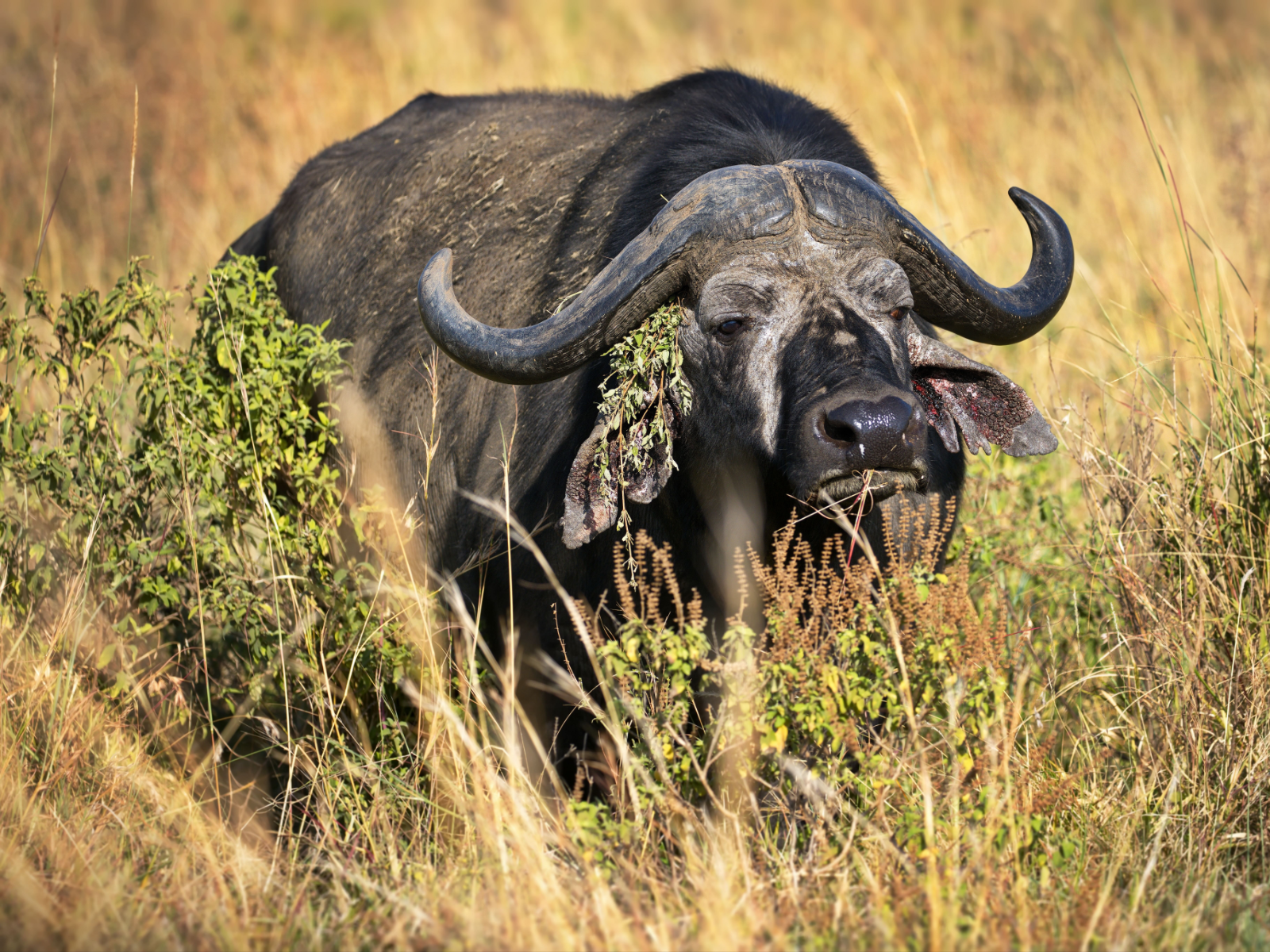
Buffalo rarely top anyone’s wish list before a first safari. They tend to come last. But once you have watched a herd of a thousand animals moving as a single, dust-raising, ground-shaking entity across an open plain, you understand immediately why hunters once considered them the most dangerous of the five. Old solitary bulls — known as dagga boys — are particularly hazardous and are seen standing their ground with an aggression that feels almost personal.
Best Parks for Buffalo Sightings in East Africa
Cape buffalo are widespread across most East African parks and are, on average, the most straightforward of the Big Five to find. The Serengeti, the Maasai Mara, the Ngorongoro Crater, and Queen Elizabeth National Park in Uganda all hold large, permanent herds. The Ngorongoro Crater floor regularly features massive buffalo concentrations grazing across open grassland — some of the largest aggregations visible from a single viewpoint anywhere in the region.
In Kenya, the Mara’s resident buffalo population is year-round and reliable. South of the Mara River, large herds graze the open plains and are often seen in the company of lions that follow the herds closely. The southern Serengeti also holds permanent resident buffalo populations independent of migration movement.
Best Time to See Buffalo in East Africa
Buffalo are accessible year-round in most East African parks. The dry season concentrates herds around water and open grazing areas, making them easier to locate and observe. During the wet season, herds spread widely into vegetation-rich areas and become harder to predict. For the best combined Big Five East Africa experience, the dry season delivers consistent buffalo sightings alongside better overall wildlife visibility.
The One Park That Gives You the Best Shot at All Five in One Drive
If maximising Big Five odds in a single destination is the priority, the Ngorongoro Crater is the most reliable answer in East Africa. The crater is a collapsed volcanic caldera, roughly 260 square kilometres, containing an estimated 25,000 large mammals in a self-contained ecosystem. Unlike open parks, most animals cannot easily leave — which means the concentration of wildlife here is consistently extraordinary.
Ngorongoro holds all five: resident lion prides, elusive leopards along the forested rim, large elephant bulls, a small but present black rhino population, and substantial buffalo herds across the crater floor. A full day drive on the crater floor routinely delivers four of the five. The black rhino is the variable — present, but never guaranteed. The dry season from June to October offers peak visibility and the best overall sighting rates for all five species.
The Maasai Mara comes close and excels at lion, elephant, leopard, and buffalo. But rhino sightings there are genuinely rare. Pair the Mara with Ol Pejeta Conservancy and you cover all five across a Kenya circuit with high confidence.
Building a Big Five East Africa Safari: Two Proven Circuits
A well-planned Big Five East Africa safari typically covers more than one park. The animals are spread across different ecosystems, and no single location covers all five at the same level of reliability.
Kenya Big Five Circuit: Open at Ol Pejeta Conservancy for black rhino, plus lion, elephant, leopard, and buffalo in the same park. Then move to the Maasai Mara for two to three nights — lion, leopard, elephant, and buffalo at their most accessible. Nairobi National Park works well as an entry or exit point for a final rhino sighting within 20 minutes of the airport.
Tanzania Big Five Circuit: Combine the Serengeti (lion, leopard, elephant, buffalo) with Ngorongoro Crater (all five in a compact, high-density setting). Add Tarangire National Park if you have extra days — the elephant concentrations there in dry season are unlike anything in the northern circuit.
Uganda Big Five Circuit: Queen Elizabeth and Murchison Falls national parks cover most of the Big Five. Rhino is the gap — Ziwa Rhino Sanctuary, located en route to Murchison Falls, is Uganda’s dedicated rhino conservation site and fills it directly.
Plan Your Big Five East Africa Safari with TripGenius Travel
Every park has a best window. Booking without accounting for seasonal timing, park entry fees, and current wildlife concentration data is the most common reason safaris underdeliver. At TripGenius Travel, we build itineraries around what is actually happening in the parks — not just calendar dates. We know which conservancies are producing rhino sightings right now, which Mara camps position you best for leopard country, and how to structure a Tanzania circuit so you land in Ngorongoro when conditions are at their sharpest.
Our Kenya and Tanzania safari packages cover the full range of the Big Five and can be tailored to your dates, your priorities, and how much time you have.
Get in touch and we will put together an itinerary built around the animals you actually want to see.
Final Word
The Big Five East Africa experience is unlike anything else in wildlife travel. But it is not a guaranteed checklist — it is a living, unpredictable encounter with wild animals in vast, complex ecosystems. The rhino in particular is a sighting you earn, not one you are handed. Get the parks right, get the timing right, and the odds move heavily in your favour. This guide gives you the framework. The wildlife will do the rest.