
Estimated reading time: 9 minutes
Table of contents
A Kruger National Park safari is the easiest way to see Africa’s Big Five without breaking the bank. South Africa’s flagship reserve is roughly the size of a small country, packed with wildlife, and set up so you can explore it on almost any budget. That mix of access and abundance is why it pulls some of the heaviest safari search traffic on the continent.
This guide covers the parts that actually shape your trip: what to expect on the ground, when to go, how much it costs, and how to get there. Whether you are flying in from Nairobi, London, or New York, the planning logic stays the same.
What to Expect on a Kruger National Park Safari
Kruger National Park is huge. It stretches across nearly two million hectares of the Limpopo and Mpumalanga provinces in northeastern South Africa, sharing a long border with Mozambique. That scale means varied landscapes, from open savannah to riverine forest, and one of the densest concentrations of wildlife anywhere on the continent.
The park is also unusually accessible. A tarred road network lets ordinary cars reach most of the southern and central regions, which is why self-drive safaris are so popular here. You do not need a guide or a 4×4 to find animals, though both certainly help. For an overview of routes and packages, see our Kruger National Park safaris.
The Big Five and Beyond
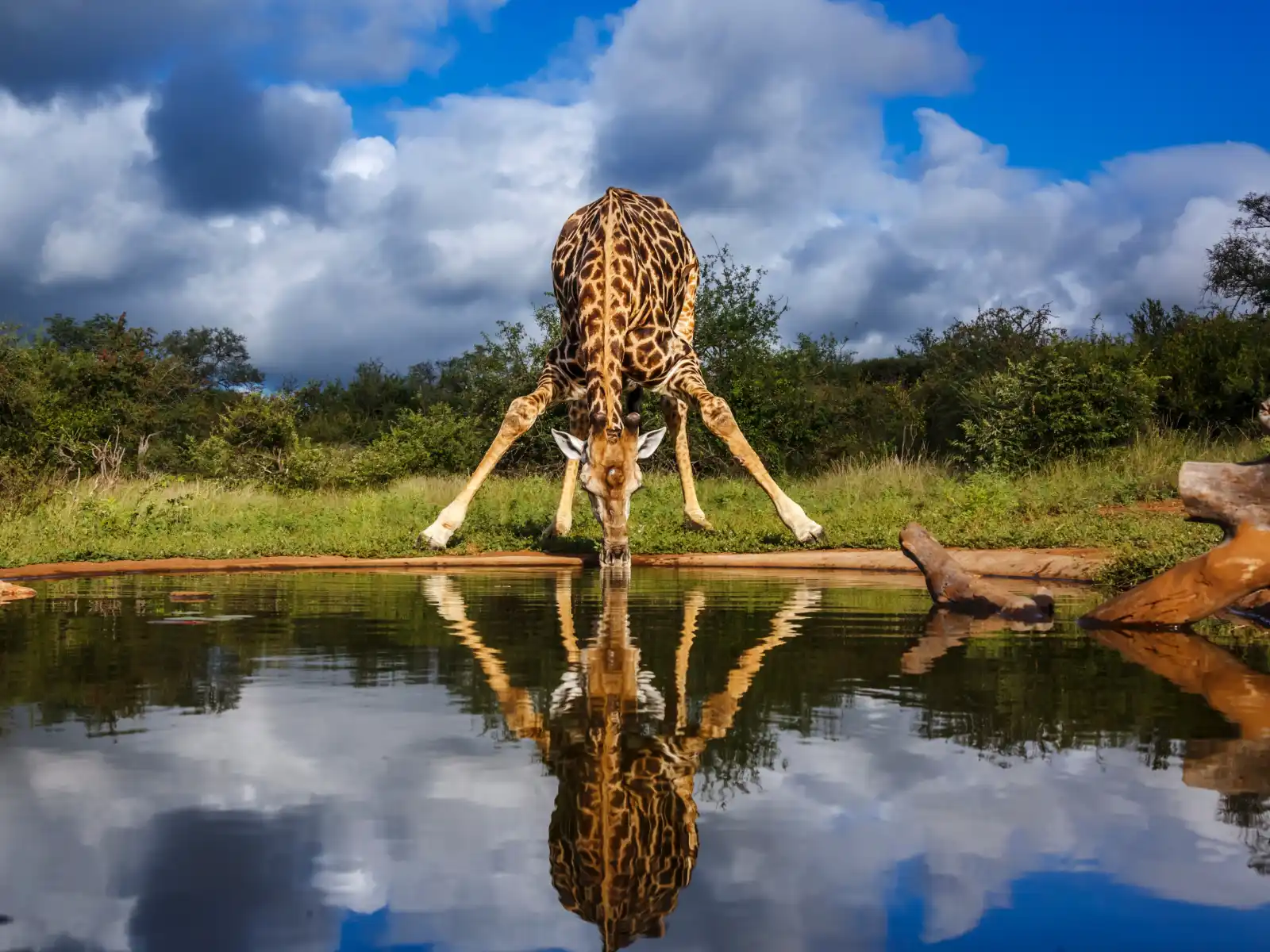
Kruger National Park holds all of the Big Five: lion, leopard, elephant, rhino, and buffalo. Beyond them, you will likely see giraffe, zebra, hippo, wildebeest, and several antelope species on a single drive. The park is also a serious birding destination, with well over 500 recorded species.
Sightings are never guaranteed, which is rather the point. Unlike a zoo, the animals roam free across an enormous wilderness. Patience and timing matter, and the thrill comes precisely because nothing is staged.
Choosing Your Region
The park splits roughly into three zones, and each feels different. The south is the busiest and most popular, thanks to high game density, good roads, and easy access from the southern gates. The central region around Satara is open grassland and prime big-cat country, so lion and cheetah sightings are common here.
The north, beyond the Olifants River, is the quietest and wildest part of the park. You will share the roads with far fewer cars, and the reward is huge elephant herds, baobab-studded scenery, and some of the best birding in the country around Pafuri and Punda Maria.
Self-Drive or Guided: Two Very Different Trips
Your first big decision is how you want to experience the park. A self-drive safari gives you total freedom. You set your own pace, stop where you like, and pay very little beyond fuel and park fees. The trade-off is that you do your own spotting, with no expert reading the bush for you.
A guided safari, usually based at a private lodge bordering the park, flips that around. Trained rangers and trackers find the animals for you, often off-road and after dark. It costs far more, but the hit rate on big cats and rare sightings is much higher. Many visitors, sensibly, do both.
Best Time to Visit Kruger National Park
Kruger National Park is a year-round destination, but the season you choose changes the trip completely. The park runs on two clear rhythms: a dry winter and a wet summer. Each one rewards a different kind of traveller.
Dry Season (May to September)
For classic game viewing, the dry winter months are hard to beat. Vegetation thins out, water becomes scarce, and animals gather around the remaining rivers and waterholes. As a result, they are far easier to find and photograph.
The dry season also brings a lower malaria risk, since mosquito activity drops in the cooler months. Days are mild and clear, though early-morning drives can be genuinely cold, so pack layers. The catch is crowds, because June to August is peak season. Book your camps and lodges well ahead.
Wet Season (October to April)
The summer rains transform the park into a lush, green landscape. This is the best window for birding, as migrant species arrive in force, and for seeing newborn animals across the plains. Photographers, in particular, love the dramatic afternoon thunderstorms.
There are trade-offs, however. Thick vegetation makes wildlife harder to spot, and the wet months carry a higher malaria risk. Even so, rates are lower and the crowds thinner, which suits travellers who value affordability over guaranteed sightings. April and November sit in between, offering a balance of both seasons.
How Much a Kruger Safari Costs
This is where a Kruger National Park safari really stands out. Few major safari destinations stretch across so many budgets, from a few hundred Rand a day to the price of a small car.
Every visitor pays a daily conservation fee on top of accommodation. For the 2025/26 season, international adults pay R602 per person per day, while South African citizens pay R134 and SADC nationals pay R275. Note that Kenya is not a SADC member, so Kenyan and other East African visitors pay the international rate. Children pay roughly half, and infants under two enter free. A 1% community levy is added to accommodation and activities, and the gates are cashless, so carry a card. You can check current rates on the official SANParks site.
Accommodation is where the range really opens up. Self-catering huts and bungalows in the SANParks rest camps start from around R400 to R1,200 a night, which makes a self-drive trip the clear budget option. Mid-range lodges run roughly R2,000 to R6,000 a night, often including meals and some game drives. At the top end, all-inclusive luxury lodges in the private reserves can cost R10,000 to R25,000 or more per night.
As a rough planning guide, a budget self-drive trip runs from about R1,000 to R2,500 per person per day, all in. A mid-range lodge stay sits closer to R3,000 to R6,000. A luxury private-reserve safari starts well above that. If you plan to stay five days or more, a SANParks Wild Card can pay for itself by covering daily entry.
To put it together, a four-day self-drive trip for two, staying in rest-camp bungalows and self-catering, can land comfortably under R10,000 plus fuel and flights. The same four days at a luxury Sabi Sand lodge can easily run to several thousand US dollars per person. That gap is exactly why so many travellers mix the two, splitting their nights between a public camp and one or two nights of guided luxury.
How to Get to Kruger National Park
Almost every route runs through Johannesburg. From there, you either fly the last leg or drive. For East African travellers the connection is short, since Johannesburg is roughly a four-hour direct flight from Nairobi.
Flying In
The fastest option is to connect from Johannesburg’s O.R. Tambo International Airport to one of the small airports near the park. That hop takes about an hour. Skukuza Airport sits inside the park itself, Kruger Mpumalanga International serves the southern gates, and Hoedspruit and Phalaborwa cover the central and northern sections. Airlink runs most of these routes, and you can collect a hire car or a lodge transfer on arrival.
Self-Driving from Johannesburg
Driving is cheaper and gives you a car for the whole trip. The southern gates near Malelane and Numbi sit roughly 400 kilometres from O.R. Tambo, a drive of about four and a half to six hours on the good N4 highway. The park has nine entrance gates spread across Mpumalanga and Limpopo, so pick the one closest to your first camp. For a scenic detour, the route over the Long Tom Pass is one of South Africa’s prettiest.
Where to Stay in Kruger National Park
Inside the park, SANParks runs a network of rest camps that suit most budgets. The larger camps, such as Skukuza, Lower Sabie, and Satara, offer self-catering units, restaurants, shops, and fuel. Smaller bushveld and satellite camps trade those amenities for a quieter, more remote feel.
For a different experience, the private reserves bordering the park are the premium choice. Reserves like Sabi Sand, Timbavati, and Manyeleti share unfenced boundaries with Kruger, so wildlife moves freely between them. Their lodges offer guided drives, off-road tracking, and night safaris that the public camps cannot. Wherever you stay, book early, and try to avoid the South African school holidays in July, August, and December if you want fewer crowds.
Things to Do Beyond the Game Drive
A safari here is more than sitting in a vehicle. Guided morning bush walks let you explore on foot with an armed ranger, reading tracks and getting close to the smaller details most drivers miss. Night drives, run from the rest camps and lodges, use spotlights to find nocturnal animals like leopard, hyena, and genet that you rarely see by day.
The park also rewards slowing down. Several camps have bird hides and waterhole viewpoints where you can sit and let the wildlife come to you, which is often where the best sightings happen. History lovers can visit archaeological sites such as Thulamela and Masorini, which tell the older human story of the landscape long before it became a park.
What to Know Before You Go
A few practical points will smooth the trip. Entry rules depend on your nationality, and many travellers enter South Africa visa-free for tourism. Kenyan passport holders currently fall into that group, with visa-free stays commonly granted for up to 90 days, provided the passport is valid for at least six months and you can show proof of onward travel. Because immigration policy changes, confirm the current rules with the South African Department of Home Affairs before you book.
On health, remember that the park lies in a malaria zone. The risk is highest in the wet summer months, so speak to a doctor about prophylaxis, pack a good repellent, and cover up around dusk. The local currency is the South African Rand, cards are widely accepted, and the entrance gates take card only. It is also worth arranging travel insurance that covers safari activities and medical evacuation, since the park sits some distance from major hospitals. Finally, pack neutral-coloured clothing, warm layers for winter drives, and binoculars, and always return to camp before the gates close for the night.
Plan Your Trip with TripGenius Travel
Reading a Kruger National Park guide is the easy part. Turning it into a smooth, well-priced trip is where we come in. At TripGenius Travel, we build South Africa safari packages that handle the moving parts: the Nairobi-to-Johannesburg flights, the connection to the park, the right camp or lodge for your budget, and the conservation fees and transfers in between.
We can also pair Kruger National Park with the rest of the region. Many travellers add a few days in Cape Town or a side trip to Victoria Falls for a fuller southern Africa itinerary.
Tell us your dates and your budget, and we will send you a plan you can actually book. Explore our South Africa packages today.
Final Word
Three things make Kruger National Park easy to plan. First, it works on any budget, from a self-drive camping trip to an all-inclusive luxury lodge. Second, the timing is simple: go in the dry season from May to September for the best game viewing, or the green season for birds, babies, and lower rates. Third, getting there is straightforward through Johannesburg, by air or by road.
So decide how you want to travel, behind your own wheel or in a ranger’s vehicle, pick your season, and book early for the winter peak. The Big Five will do the rest.