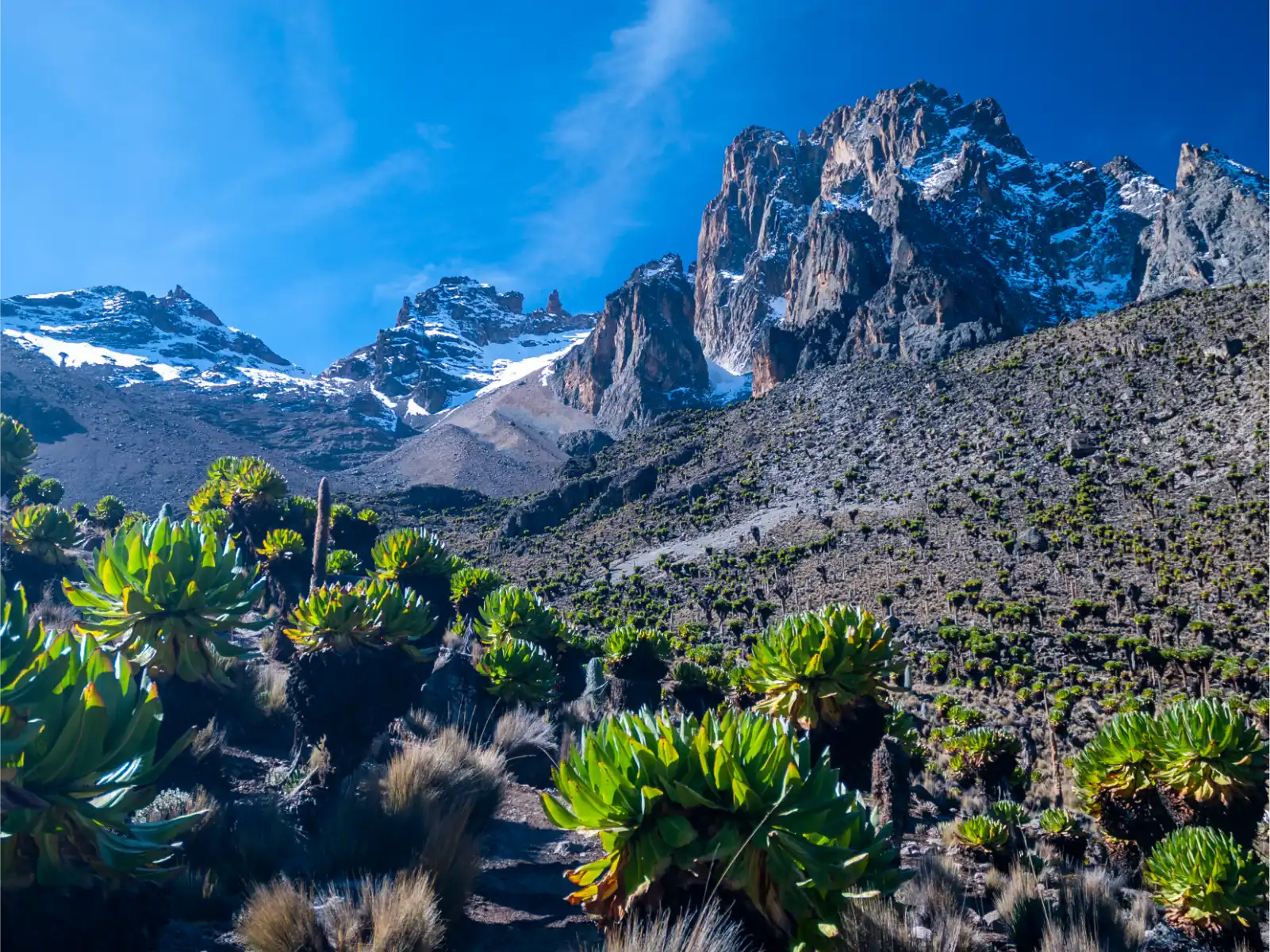
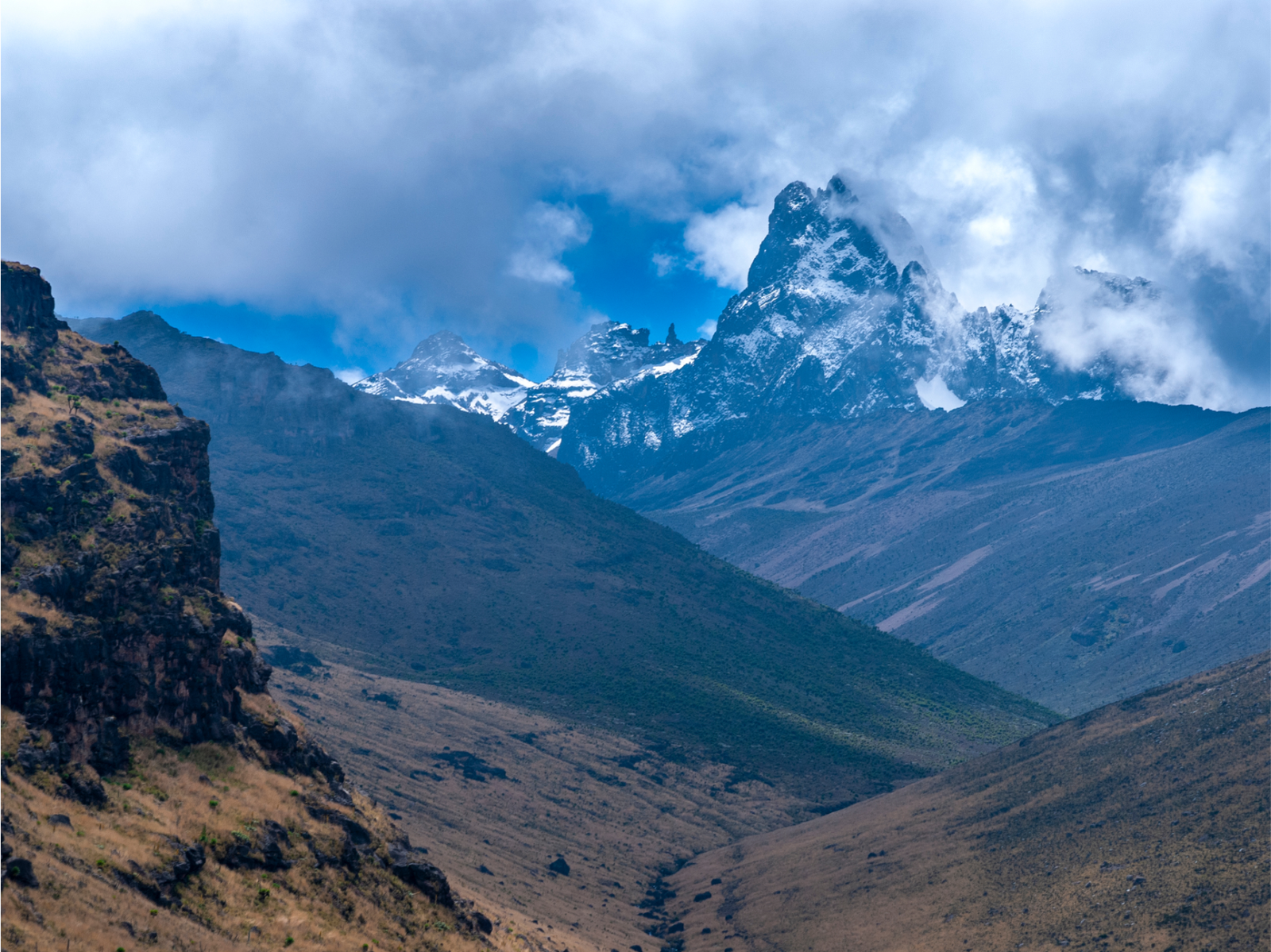
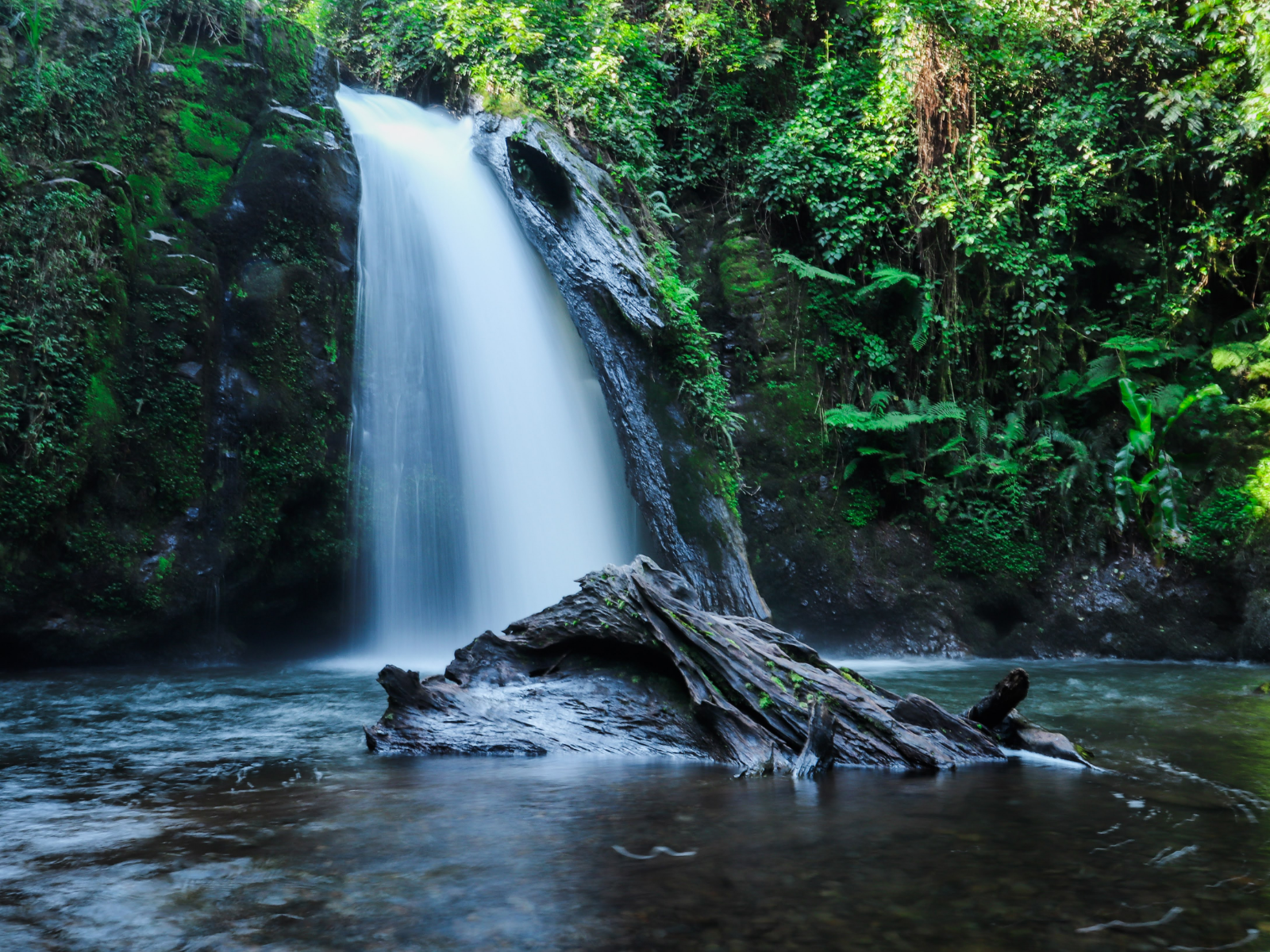
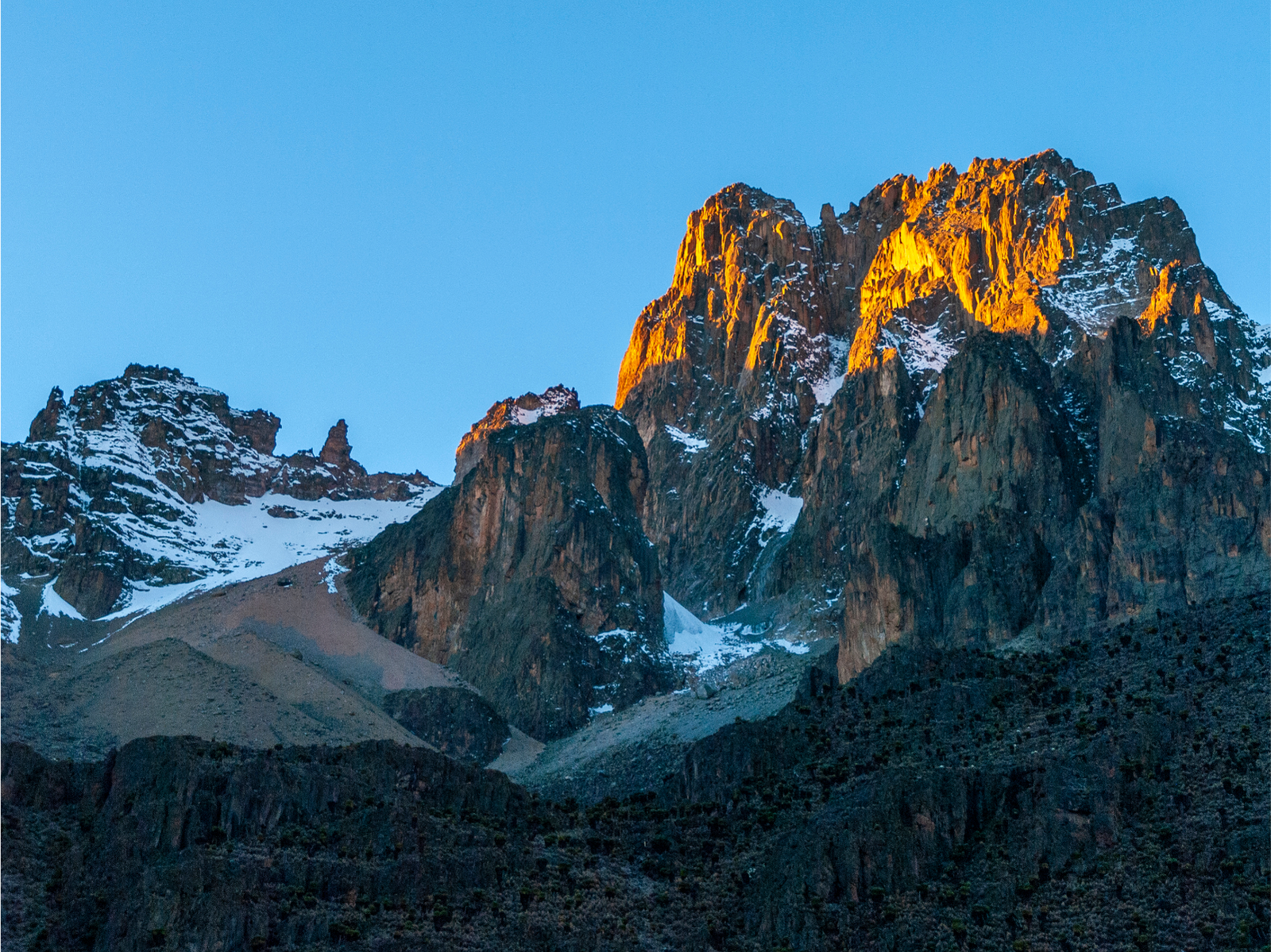
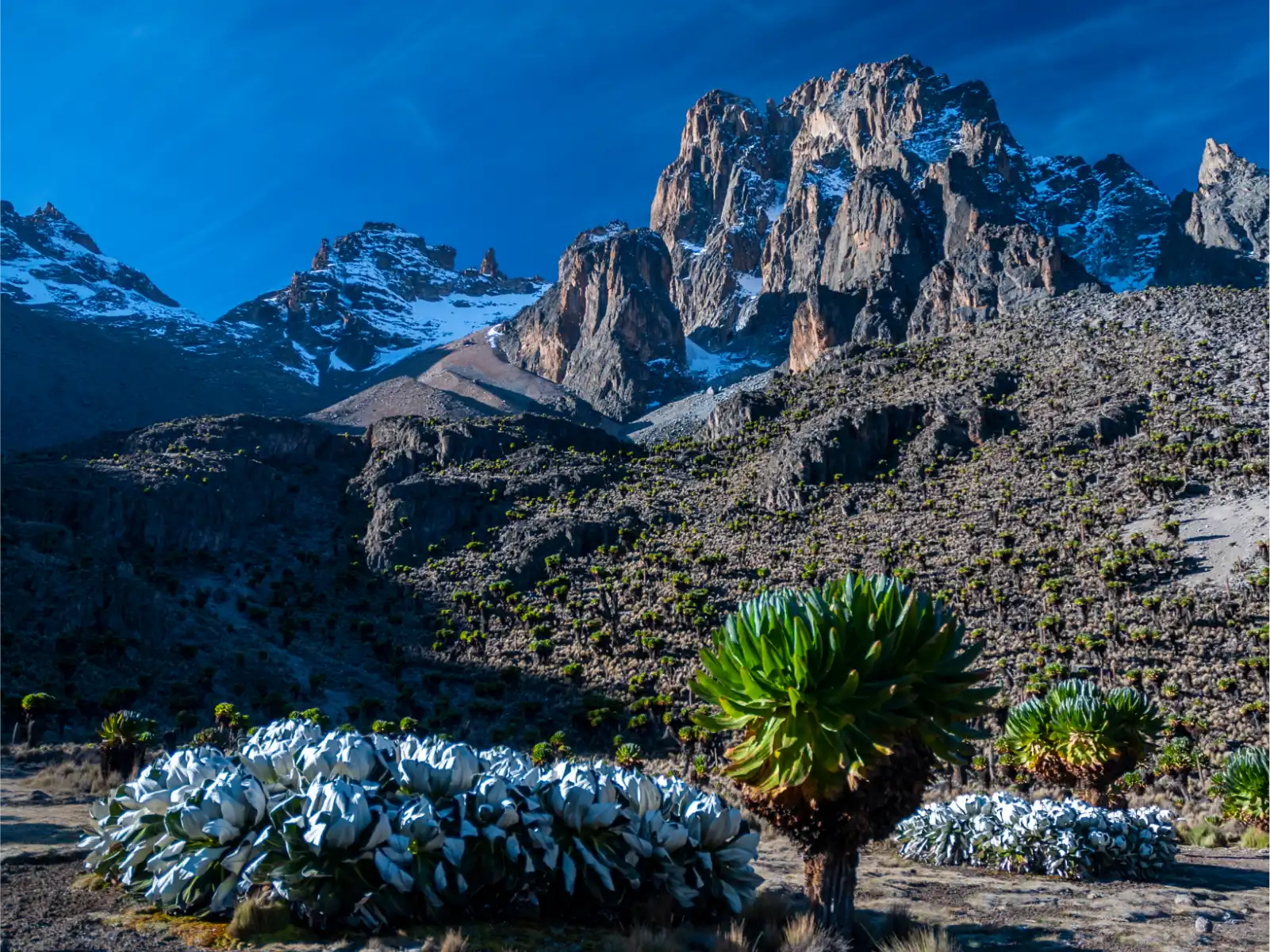
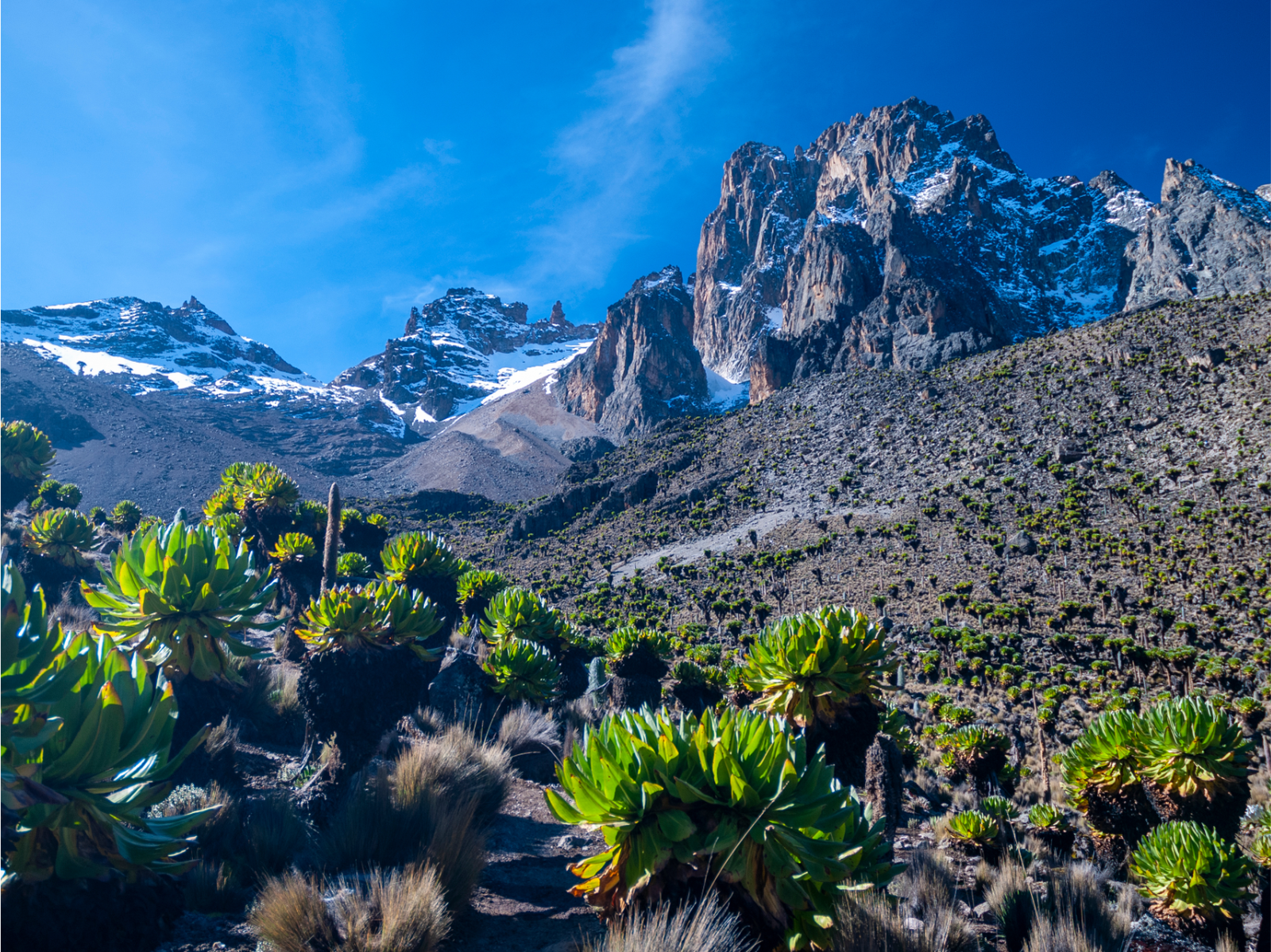
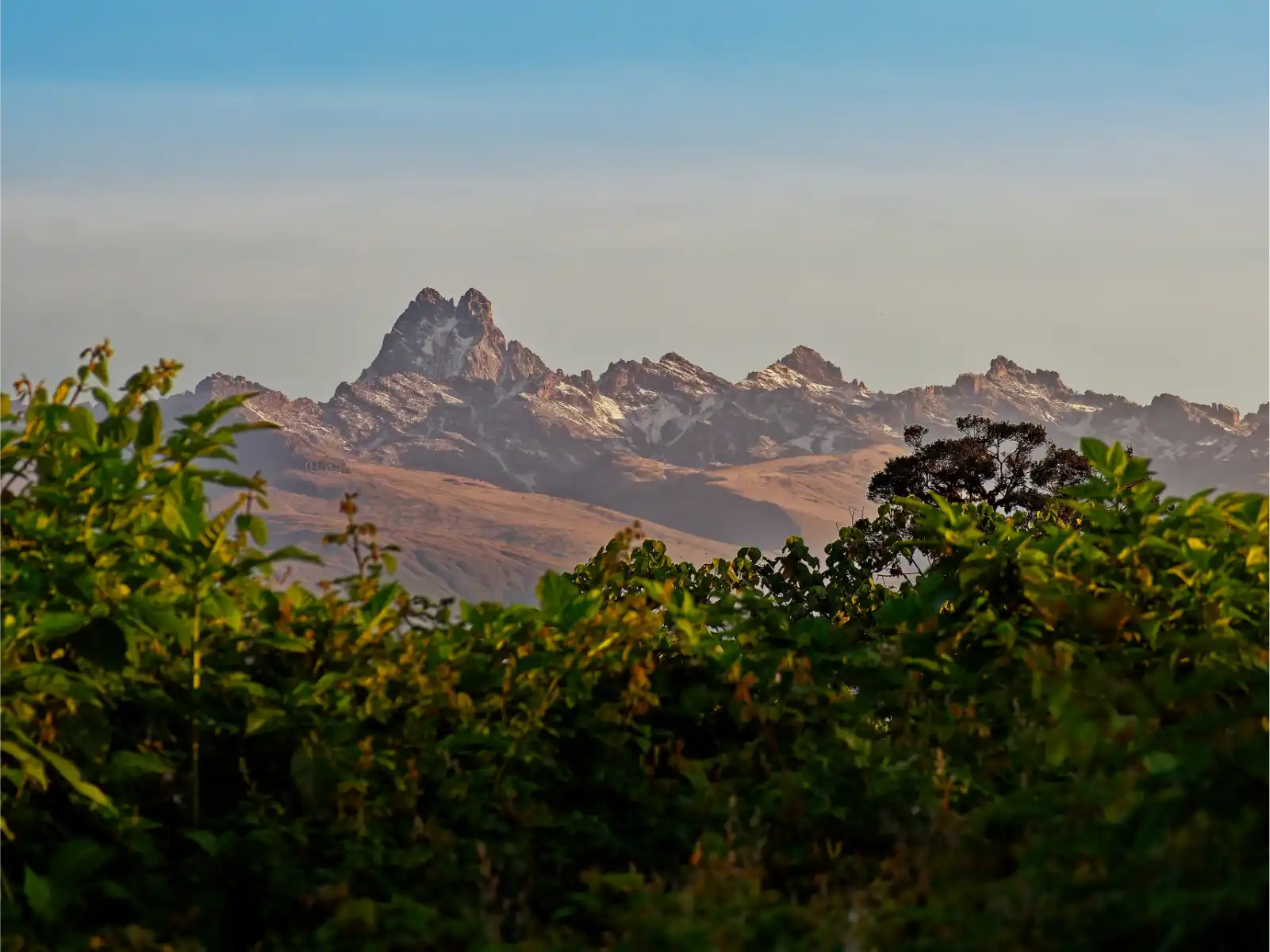
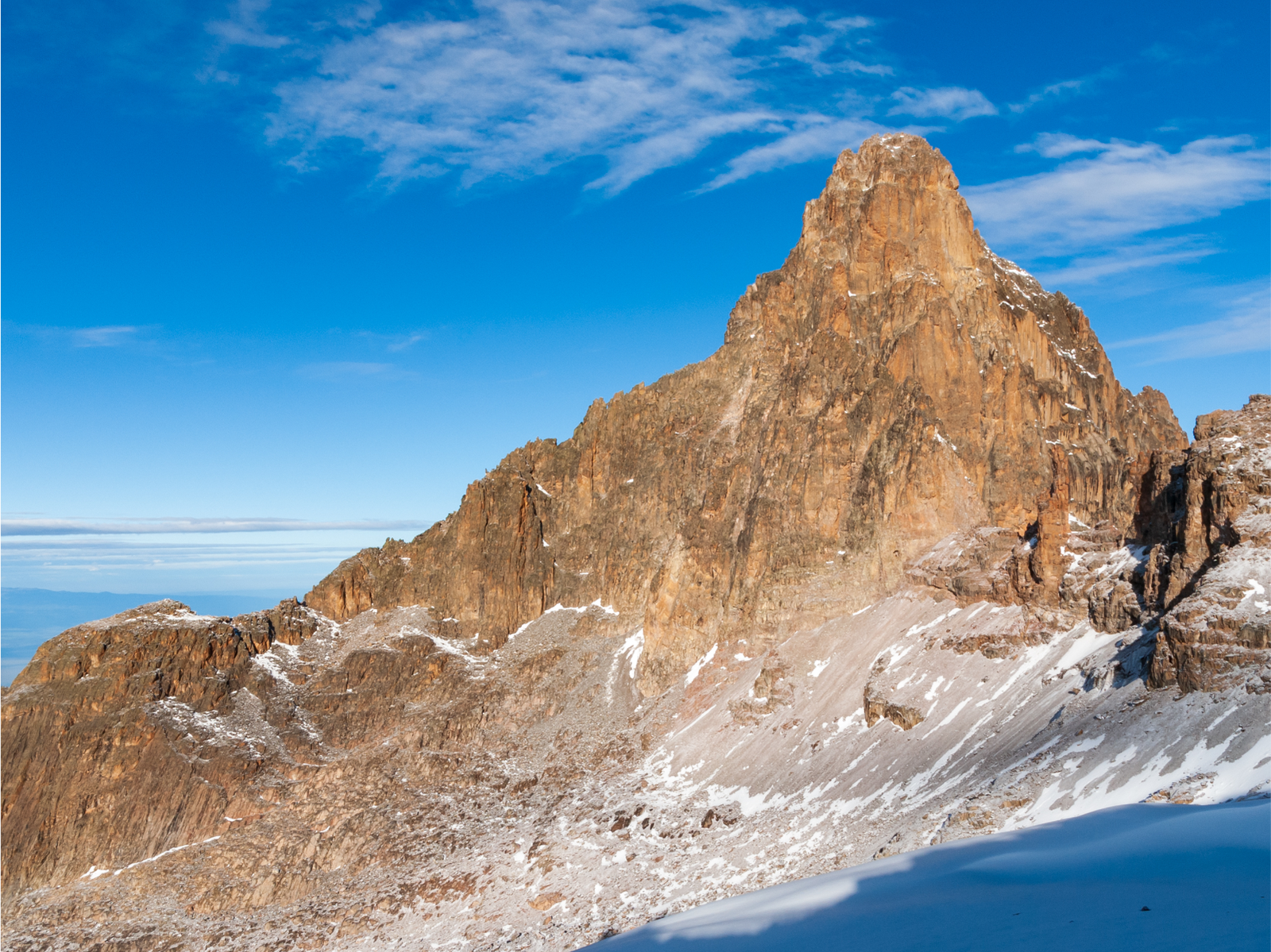
Mount Kenya National Park trekking attracts climbers and nature lovers from across the world to Africa’s second-highest mountain. The park is a UNESCO World Heritage Site, gazetted in 1997 for its exceptional biodiversity and dramatic alpine scenery. Mount Kenya rises to 5,199 metres at Batian Peak, with permanent glaciers on its upper slopes — one of the few equatorial mountains in the world with permanent snow. Mount Kenya National Park trekking routes range from the accessible Sirimon and Naro Moru tracks to more technical ascents requiring mountaineering skills. Point Lenana at 4,985 metres is the highest point reachable by non-technical trekkers and rewards hikers with sweeping views of the central highlands. Below the snowline, the park protects a striking range of habitats: bamboo forests, giant heathlands, and afro-montane grasslands supporting buffalo, elephant, leopard, black-and-white colobus, and over 130 bird species including the scarlet-tufted malachite sunbird. The lower slopes are dotted with cedar and podocarpus forests. Nanyuki town on the northern side of the mountain serves as the main base for Mount Kenya National Park trekking expeditions.