• 7 days · 6 nights
  • Tanzania
  • Hiking and Trekking
  • Challenging
  • Adjustable

7-Day Kilimanjaro Climb: Machame Route

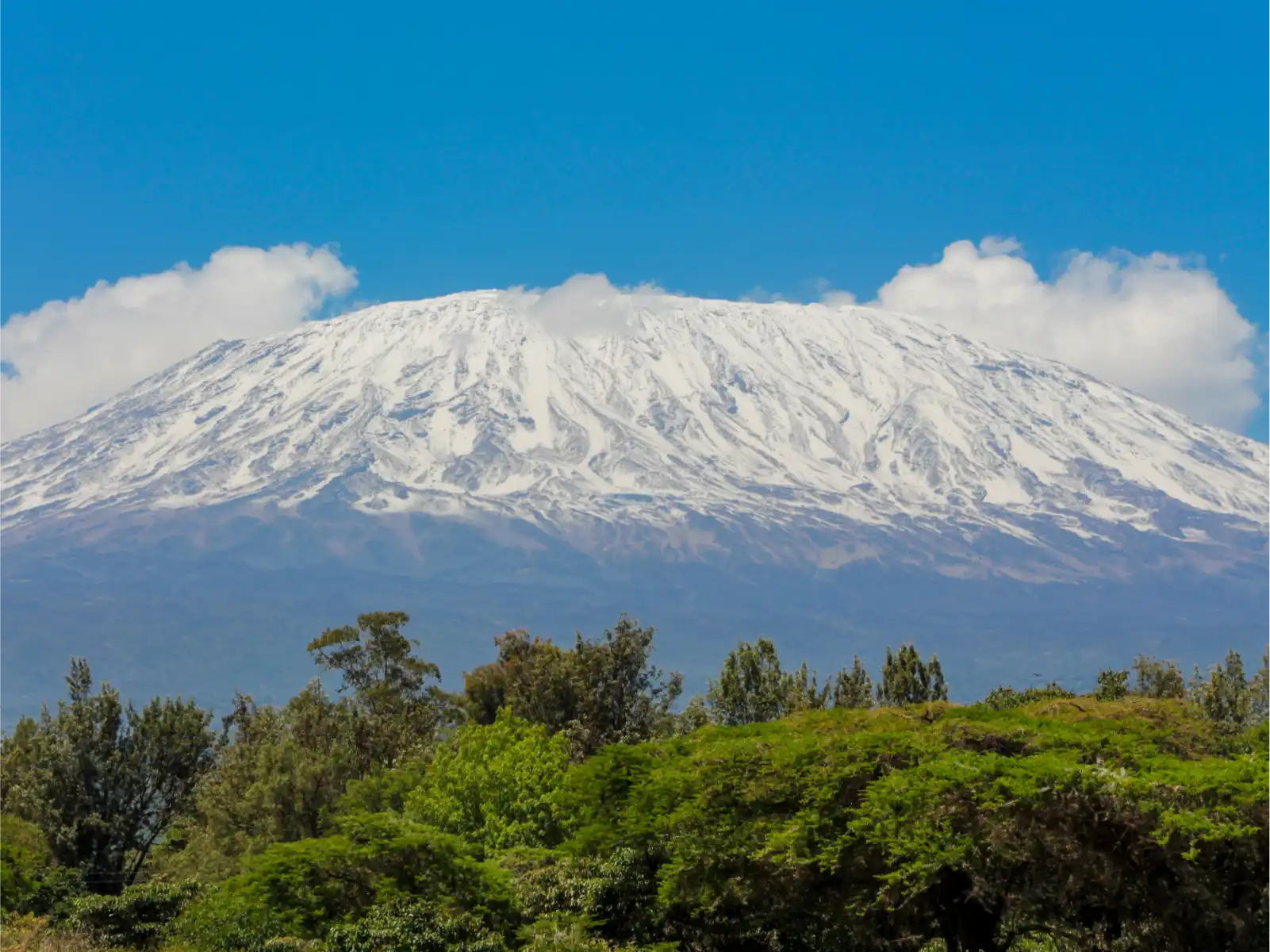
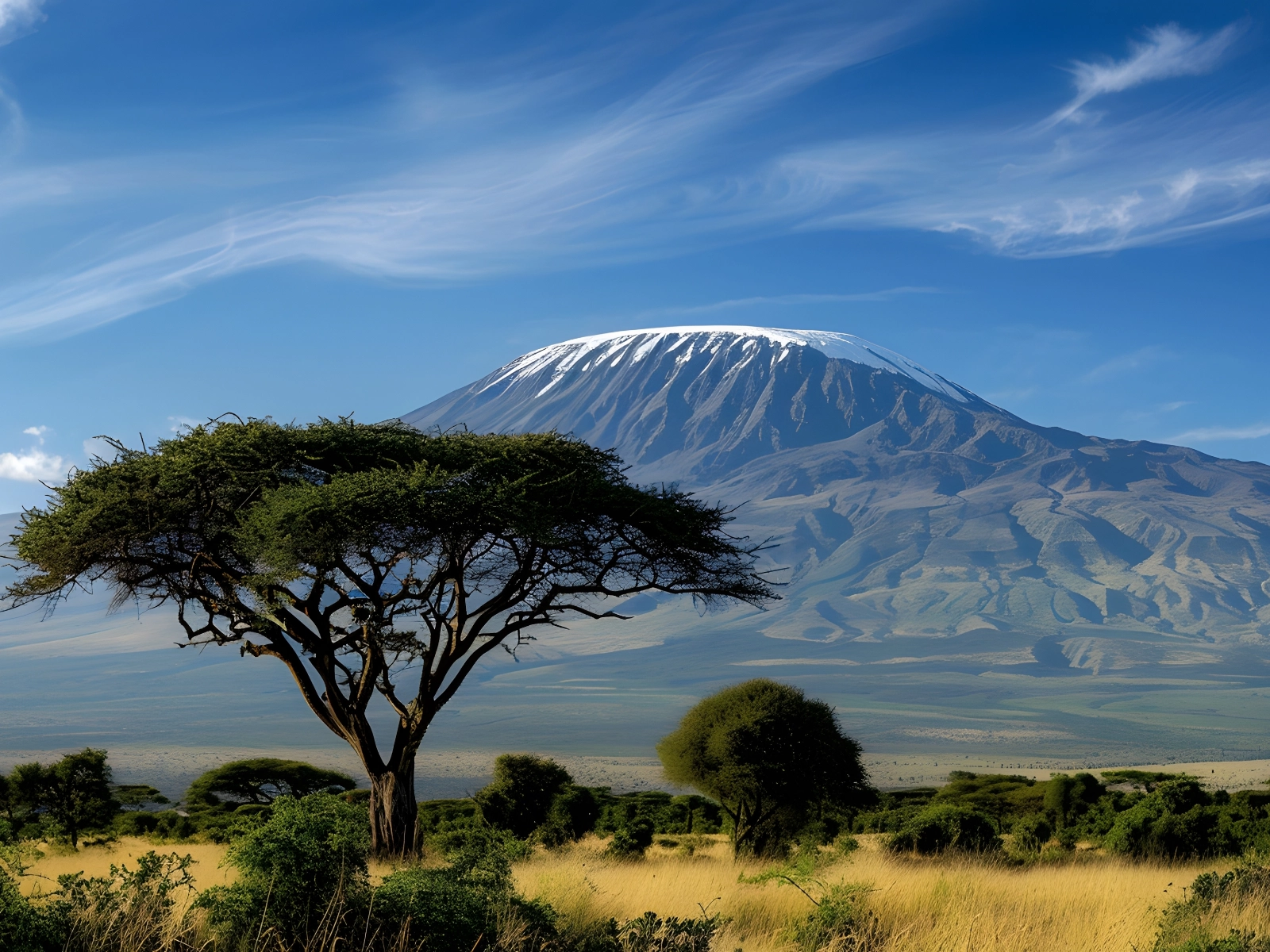
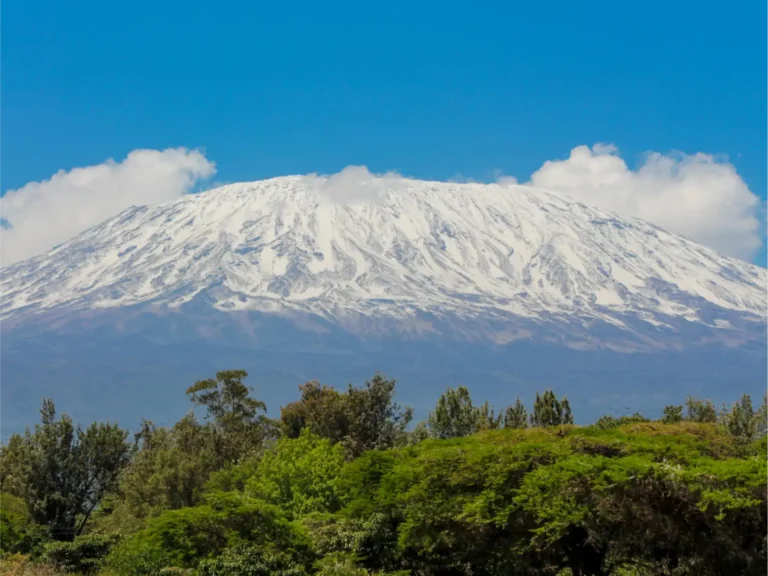
The most popular camping route on Kilimanjaro: seven days from Machame Gate through rainforest and moorland to the Shira Plateau, a "climb high, sleep low" day at Lava Tower, the Barranco Wall scramble and the summit at Uhuru Peak (5,895 m), descending by the Mweka Route.

Route: Moshi to Moshi, by way of Mount Kilimanjaro

from · per adult · Bronze Package US$ 2,200

About this trip

The Machame Route begins at Machame Gate (1,640 m), approximately 30 km from Moshi. Day one is a 5 to 7 hour climb through dense rainforest, the tallest trees on the mountain, with colobus monkeys and tropical birds audible throughout. Camp is at Machame Camp (2,980 m) in the heath zone.

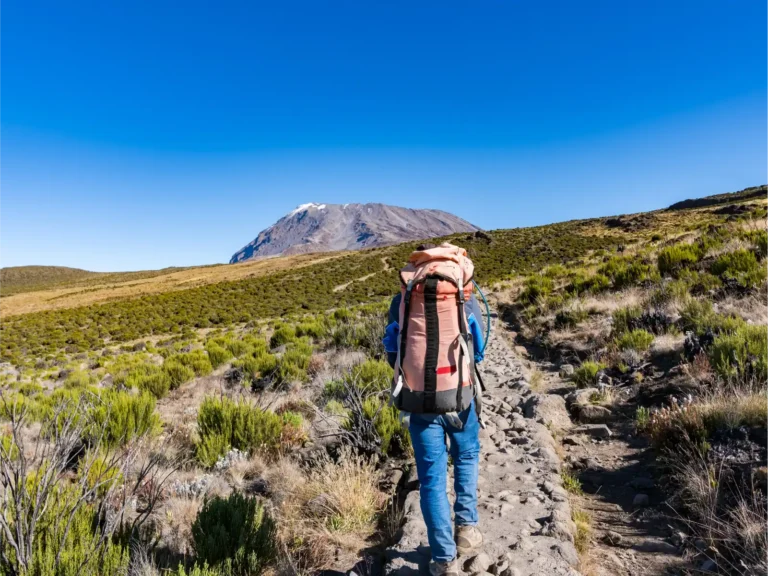
Day two climbs through open moorland and heather onto the Shira Plateau edge, with the first clear views of the Kibo summit cone. Day three makes the critical acclimatisation move: climb to Lava Tower (4,600 m) for lunch before descending to Barranco Camp (3,976 m). This "climb high, sleep low" day is the heart of what makes Machame successful: your body acclimatises to 4,600 m while you sleep at 3,976 m.

Day four begins with the Barranco Wall, a steep, hands-and-feet scramble up a rocky buttress about 250 m high that is one of Kilimanjaro's most memorable moments. No ropes are required but full concentration is. The day continues along the southern circuit to Karanga Camp (4,035 m) or straight to Barafu Camp (4,673 m) on the 6-day version.

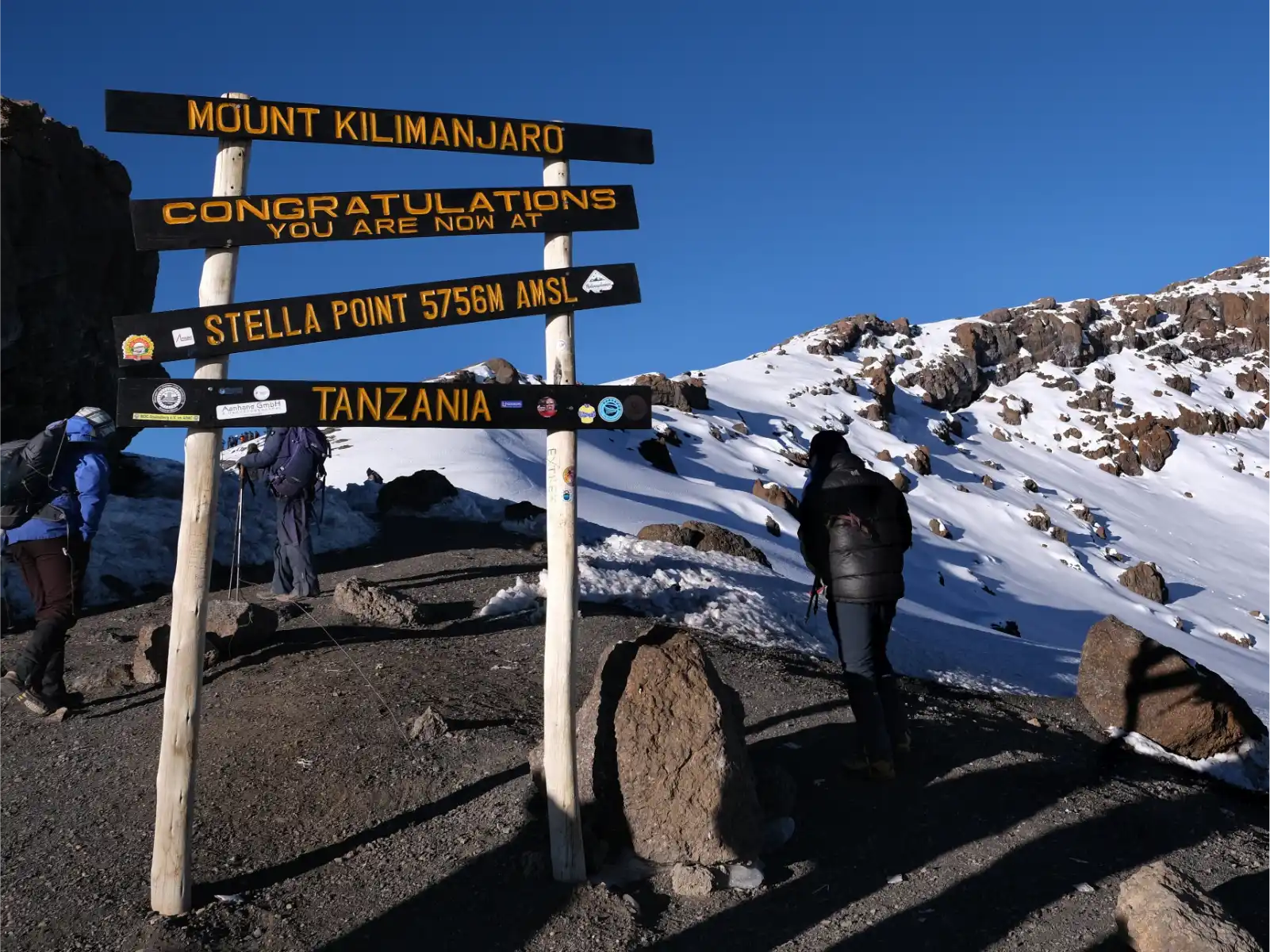
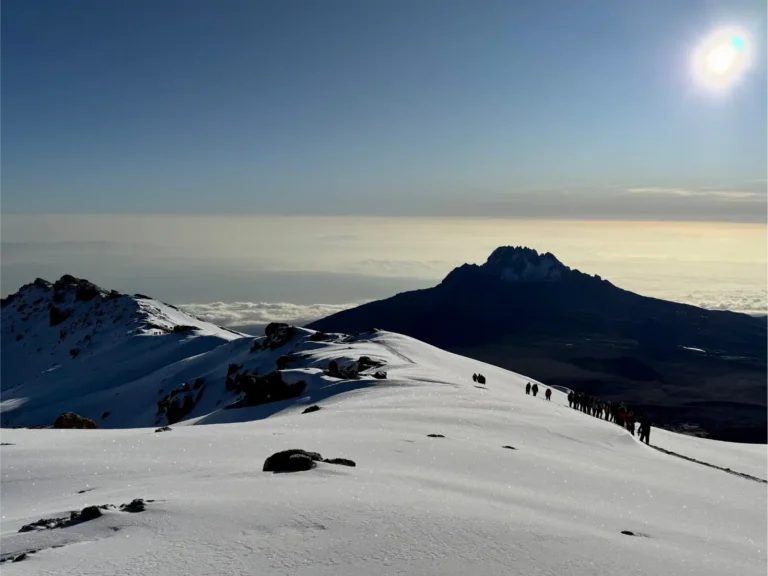
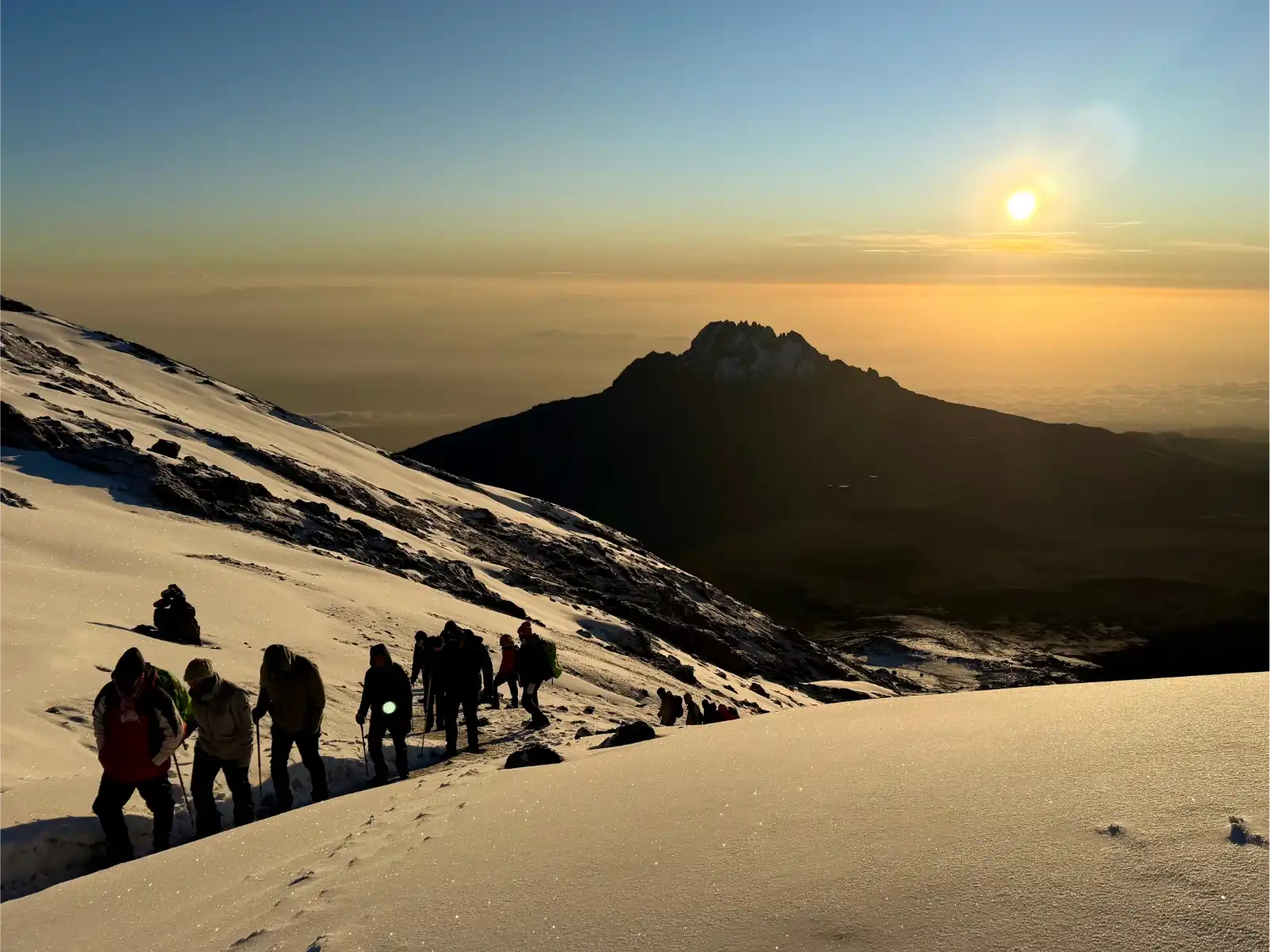
Summit night departs Barafu between midnight and 1am. The ascent to Stella Point on the crater rim (5,739 m) takes 5 to 7 hours on steep scree and rocky terrain. From Stella Point, a further 1-hour walk along the crater rim reaches Uhuru Peak (5,895 m) at sunrise. Descent follows the Mweka Route back to Moshi, completing the circuit.

Starts and ends in
Moshi
Duration
7 days, 6 nights
Difficulty
Challenging
Highest point
4,673 m
Best months
January to February, June to October, December

Trip highlights

  • Varied scenery: rainforest, heath and moorland, alpine desert and the glaciers of the summit
  • A "climb high, sleep low" day to Lava Tower (about 4,600 m) before sleeping at Barranco Camp
  • The Barranco Wall, a steep scramble with hands and feet but no ropes
  • Views of the summit and the southern glaciers from the edge of the Shira Plateau
  • Seven days rather than six, for better acclimatisation
  • Sunrise on the crater rim at Stella Point and the walk to Uhuru Peak

The route

  1. Moshi Day 1 start
  2. Mount Kilimanjaro Days 1 to 6
  3. Moshi Day 7

-3.0667,37.3592

Open in Google Maps

Day by day

Day 1 Machame Gate to Machame Camp Lunch, Dinner

Transfer from Moshi to Machame Gate (about 1,640 m) to register and meet the crew, then climb through tall rainforest, home to colobus monkeys and forest birds, to the camp in the heath zone.

Meals
Lunch, Dinner
Altitude
2,980 m
Walking time
5 to 7 hours
Day 2 Machame Camp to Shira Camp Breakfast, Lunch, Dinner

Climb through heather and moorland onto the edge of the Shira Plateau, with the first clear views of Kibo.

Meals
Breakfast, Lunch, Dinner
Altitude
3,840 m
Walking time
4 to 6 hours
Day 3 Lava Tower and down to Barranco Camp Breakfast, Lunch, Dinner

Climb to Lava Tower (about 4,600 m) for lunch, then descend to Barranco Camp below the Breach Wall: the key "climb high, sleep low" day.

Meals
Breakfast, Lunch, Dinner
Altitude
3,976 m
Walking time
6 to 8 hours
Day 4 Barranco Wall to Karanga Camp Breakfast, Lunch, Dinner

Scramble up the Barranco Wall with hands and feet, then follow the southern circuit over ridges and valleys to Karanga Camp.

Meals
Breakfast, Lunch, Dinner
Altitude
4,035 m
Walking time
4 to 5 hours
Day 5 Karanga Camp to Barafu Camp Breakfast, Lunch, Dinner

A short climb to the high camp at Barafu. Rest, eat early and prepare for the summit night.

Meals
Breakfast, Lunch, Dinner
Altitude
4,673 m
Walking time
3 to 4 hours
Day 6 Uhuru Peak and down to Mweka Camp Breakfast, Lunch, Dinner

Leave the high camp around midnight and climb the steep scree of the summit cone by head torch to Stella Point (5,739 m) on the crater rim, then follow the rim to Uhuru Peak (5,895 m), ideally around sunrise. After time at the top, descend to the high camp for a rest and continue down to Mweka Camp.

Meals
Breakfast, Lunch, Dinner
Altitude
3,100 m
Walking time
10 to 15 hours in all
Day 7 Mweka Camp to Moshi Breakfast

Walk down through the rainforest to Mweka Gate, collect your summit certificate and transfer to Moshi.

Meals
Breakfast
Walking time
3 to 4 hours

What’s included

Included

  • All TANAPA park entry, camping, and rescue fees (paid by operator to TANAPA)
  • Certified and TANAPA-licensed mountain guide for the full duration
  • Assistant guides (1 per 3 trekkers on summit night)
  • Porters to carry group equipment (max 20 kg per porter: ethical load limit)
  • Mountain chef and full catering crew
  • All camping equipment: tents, sleeping mats, dining tent, portable toilet tent
  • All meals from Day 1 dinner through departure day breakfast
  • Emergency supplemental oxygen on summit night
  • Pulse oximeter monitoring throughout the climb
  • Return transfers between Moshi and Machame Gate
  • Summit certificate upon reaching Uhuru Peak

Not included

  • International flights to Kilimanjaro International Airport (JRO)
  • Tanzania visa fees (e-visa available online)
  • Personal travel insurance (required: must cover high-altitude trekking and evacuation)
  • Tips and gratuities for guides, porters, and crew (customary and important)
  • Personal hiking gear: boots, trekking poles, gaiters, sleeping bag, layered clothing
  • Altitude medication (Diamox): consult your doctor before travel
  • Alcoholic beverages and personal purchases
  • Hotel accommodation in Moshi before and after the climb

Choose your package

  • Bronze Package from · per adult US$ 2,200
  • Silver Package from · per adult US$ 3,200
  • Gold Package from · per adult US$ 4,800

Before you travel

Visa and entry

Most visitors need a visa, best applied for in advance through the Immigration Services Department's official e-visa portal; visas are also issued on arrival at the main entry points. Your passport should be valid for at least six months. Since…

Tanzania travel information

Best season

The main dry season runs from about June to October and is the best time for most parks. The short rains fall in November and December and the long rains from about March to May, when some southern and western…

Information changes. Always verify with the official portals, which each country page links to directly.

Questions about this trip

Why choose 7 days over 6 days on the Machame Route?

The extra day adds a dedicated rest and acclimatisation night at Karanga Camp (4,035 m) between Barranco and Barafu. This gives your body one additional night to adjust before the summit push. On the 6-day version you skip Karanga and go straight to high camp, increasing fatigue and AMS risk. Summit success rates are measurably higher on the 7-day itinerary. If time allows, always choose 7 days.

How difficult is the Barranco Wall?

The Barranco Wall is a near-vertical 300-metre scramble that requires using both hands and feet. It is not a technical climb: no ropes, harnesses, or prior climbing experience are required. However, it demands full concentration and a head for heights. The trail is well-used and there are good handholds throughout. Most trekkers find it the most exciting section of the entire route.

What is the best time of year to climb the Machame Route?

January to March and June to October are the two dry seasons with the best summit conditions. January to March offers the clearest skies and coldest temperatures. June to October is the most popular period. Avoid April to May (heavy rains, muddy trails) and November (short rains). The mountain can be climbed year-round but success rates drop significantly in the wet seasons.

Is the Machame Route suitable for first-time Kilimanjaro climbers?

Yes, it is one of the best first-time routes. The 7-day itinerary has a solid acclimatisation profile, excellent scenery, and a well-maintained trail. You need good general fitness and comfort hiking 6 to 8 hours per day with a daypack. No technical climbing experience is required. The main challenge is altitude, not terrain difficulty.

What gear do I need?

Layered insulation system (base layer, mid-layer fleece, down jacket), waterproof shell jacket and trousers, trekking boots with ankle support, trekking poles (strongly recommended), gaiters, warm hat and gloves, balaclava for summit night, headlamp, UV sunglasses, sleeping bag rated to -15°C, and SPF 50+ sunscreen. Gear can be rented in Moshi. Your guide will confirm the full kit list at briefing.

from · per adult US$ 2,200

Request a Quote

Rates By Exchange Rate API