• 7 days · 6 nights
  • Tanzania
  • Hiking and Trekking
  • Challenging
  • Adjustable

7-Day Kilimanjaro Climb: Rongai Route

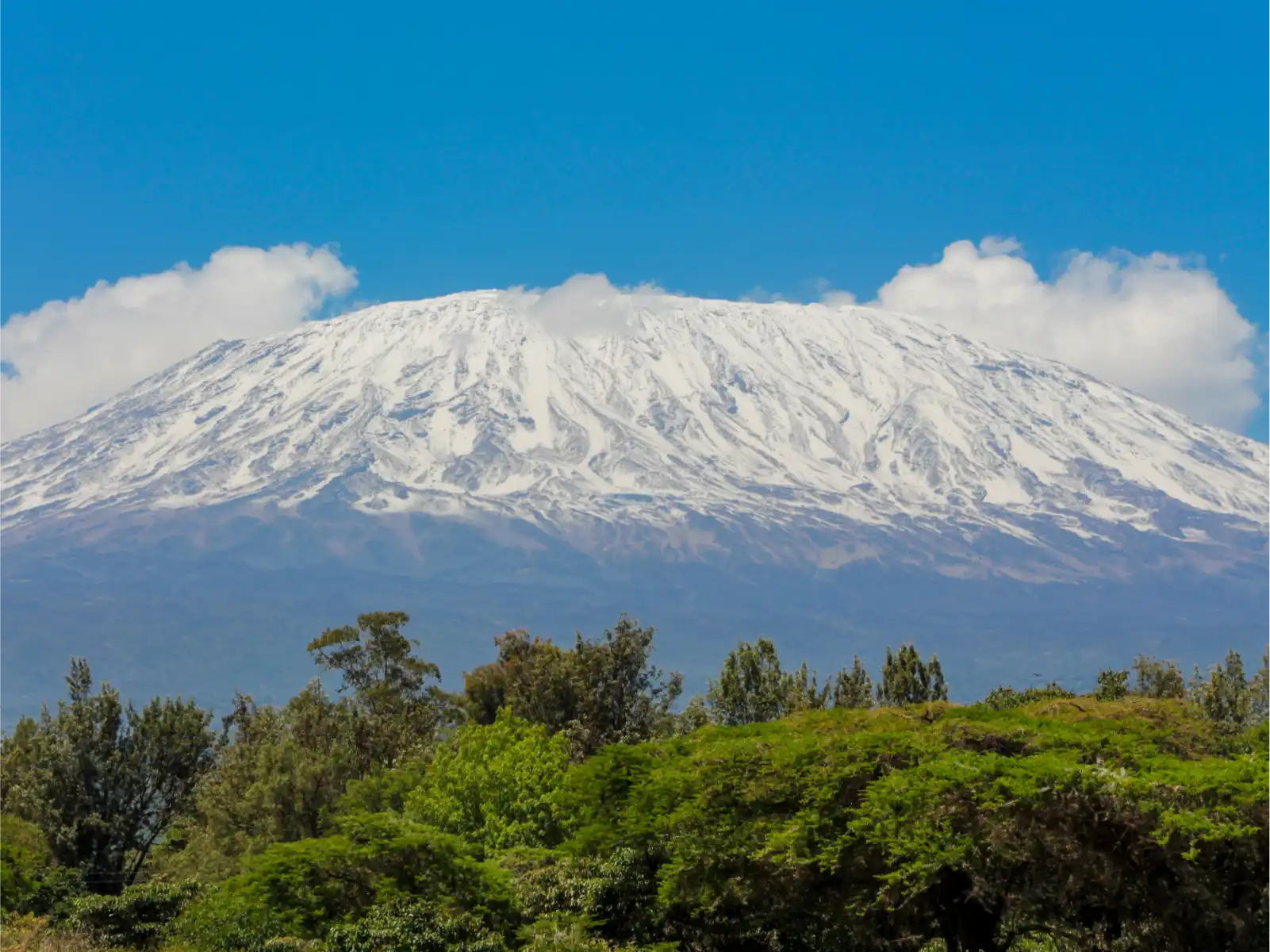
The only route that climbs Kilimanjaro from the north, starting near the Kenyan border: seven days through drier, quieter country with views over the plains of Kenya, an extra night at Mawenzi Tarn to acclimatise, and the summit by Gilman's Point, descending by the Marangu Route.

Route: Moshi to Moshi, by way of Mount Kilimanjaro

from · per adult · Bronze Package US$ 3,000

About this trip

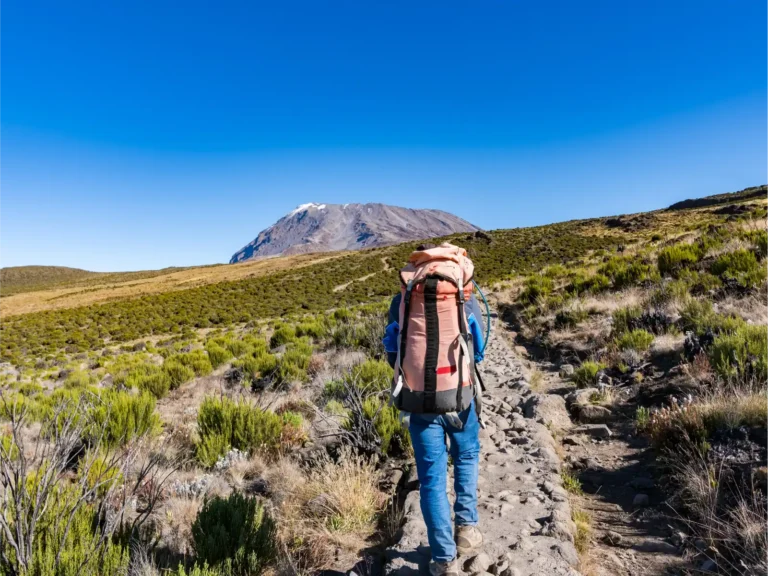
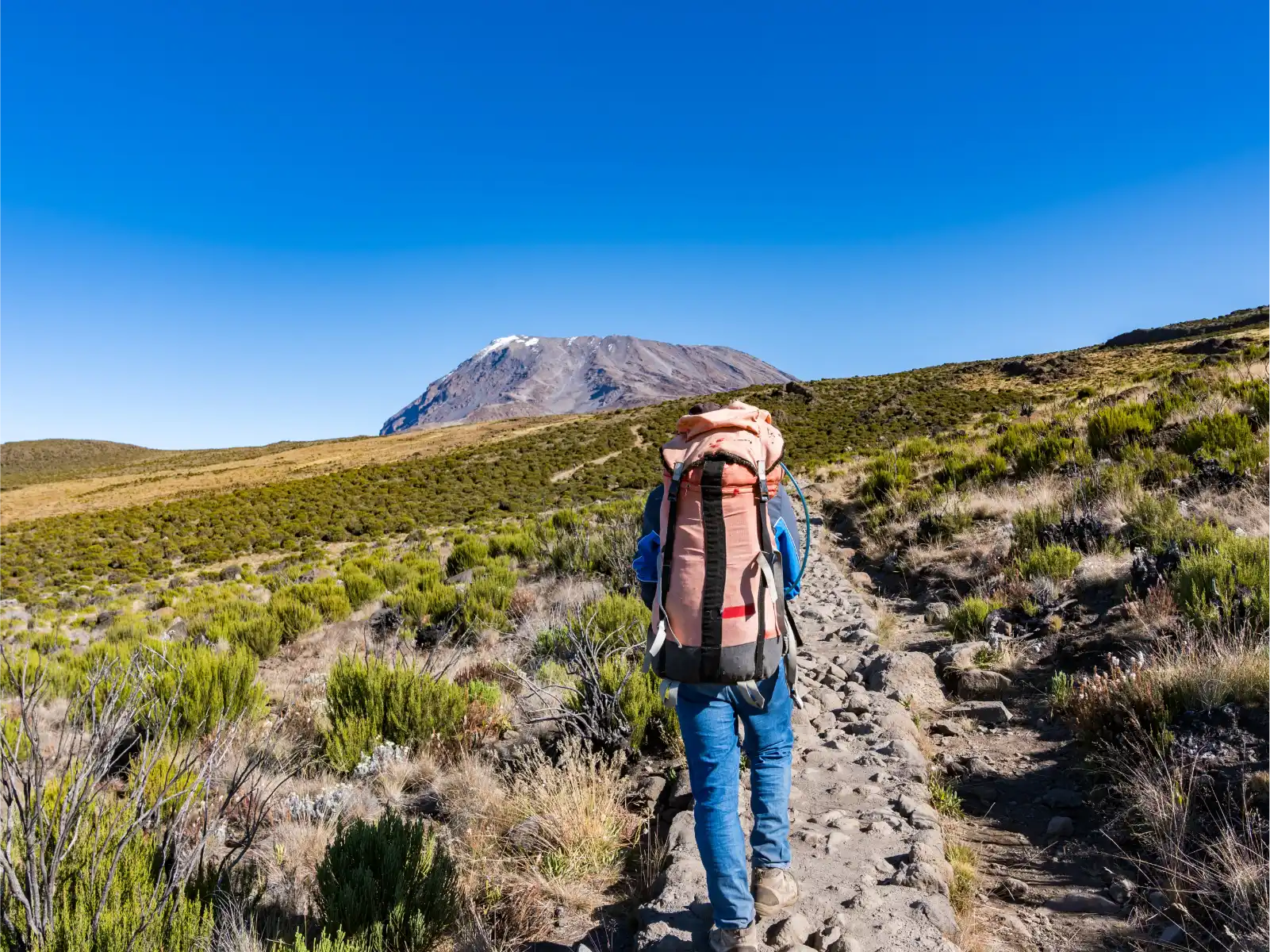
The Rongai Route begins at Rongai Gate (1,950 m), approximately 96 km from Moshi via a longer drive north toward the Kenyan border. Day one is a 3 to 4 hour walk through open pine plantations and farmland before entering the national park proper, reaching First Cave Camp (2,600 m). The vegetation is markedly drier and more open than the southern routes, more reminiscent of the Kenyan moorland than the lush Kilimanjaro rainforest.

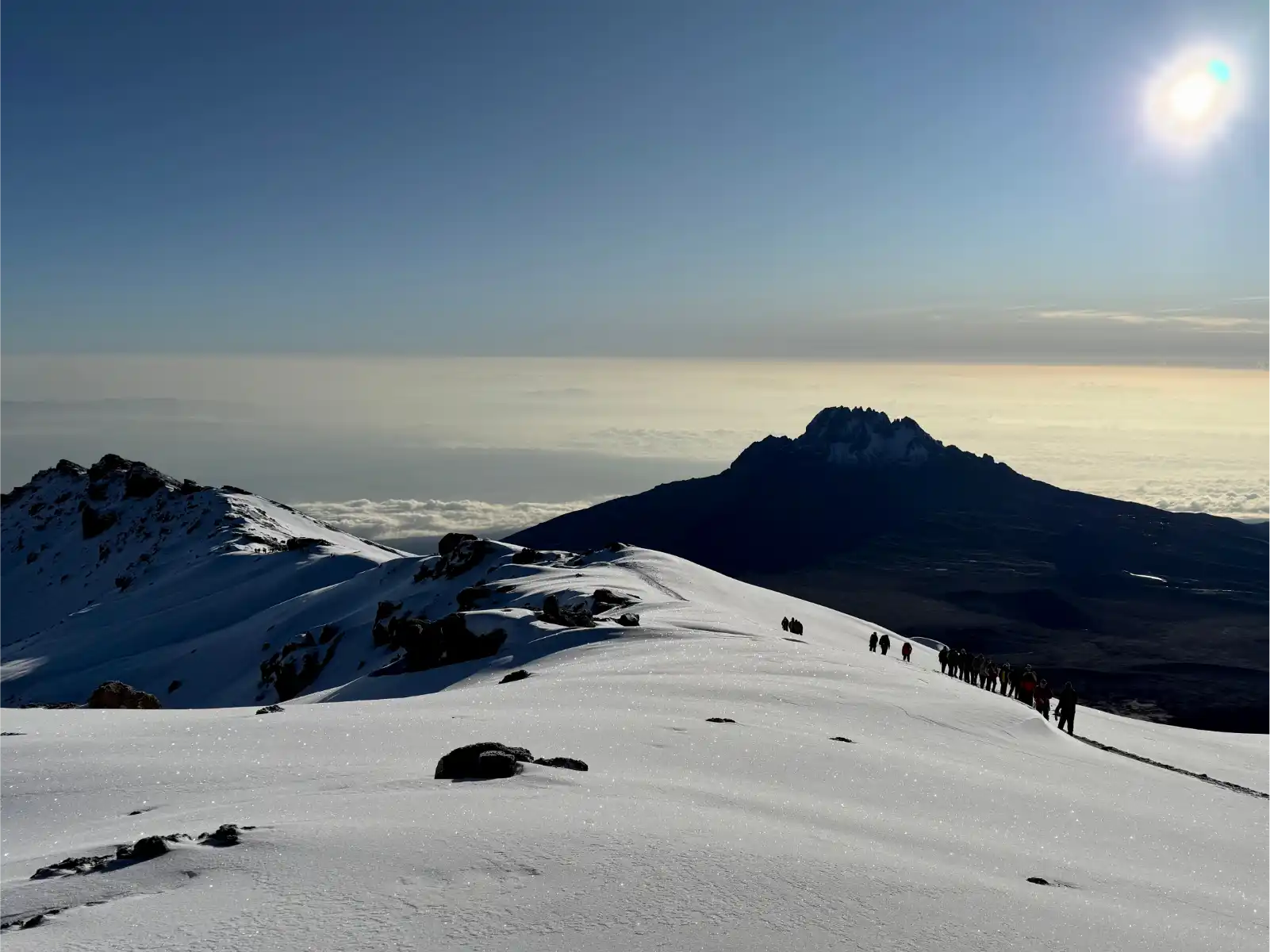
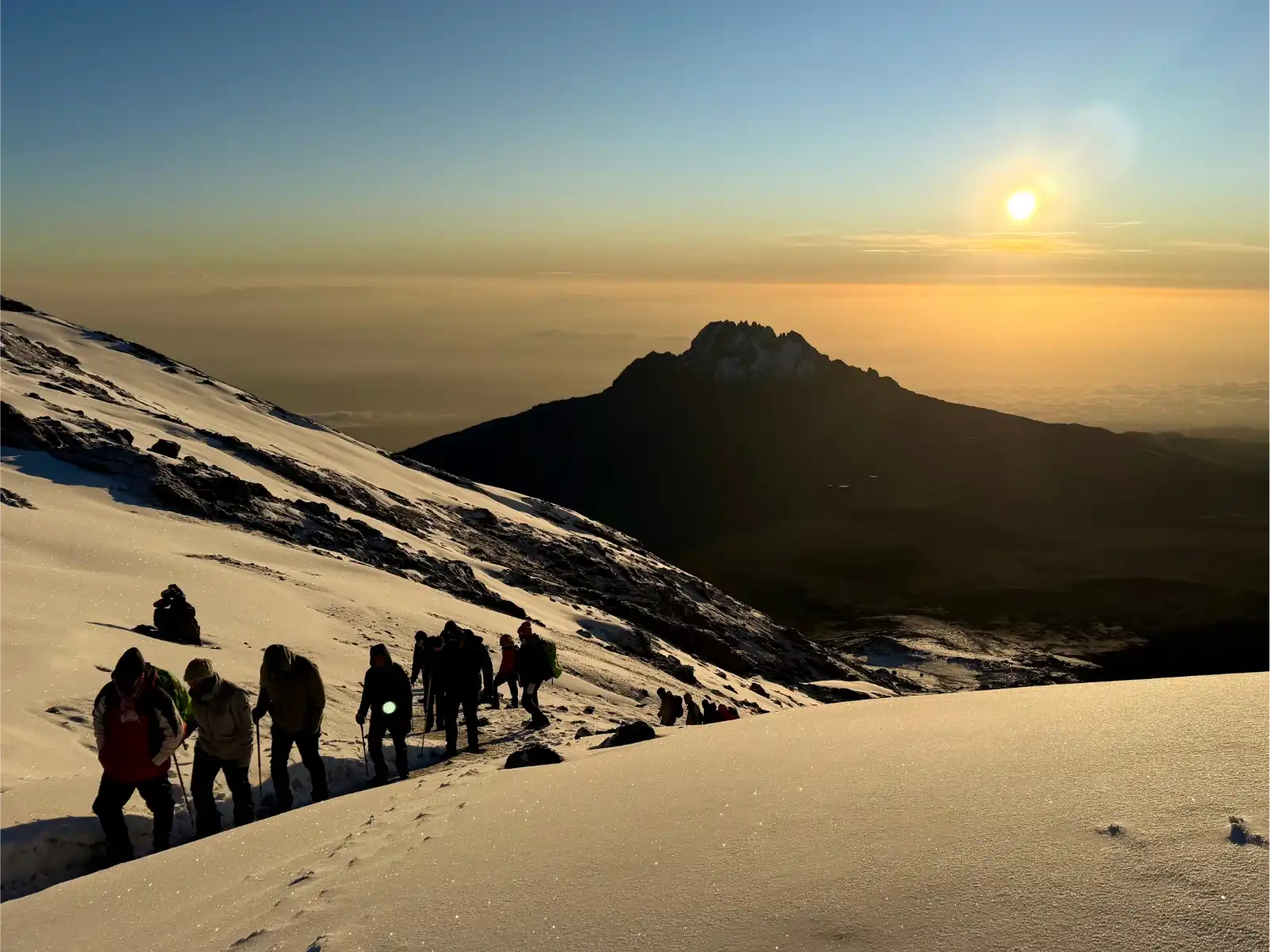
Days two and three ascend through Kikelelwa Camp (3,600 m) and Mawenzi Tarn Camp (4,330 m), approaching from the northeastern flank with excellent views of Mawenzi Peak (5,149 m) across the Saddle. The scenery here (a rugged, volcanic landscape with alpine desert and scattered giant groundsels) is among the least-visited terrain on the mountain.

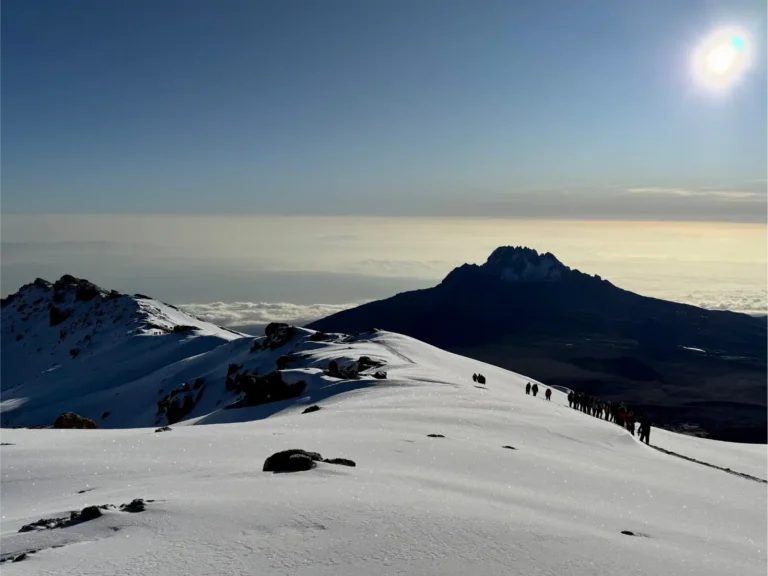
Day four crosses The Saddle to Kibo Hut (4,703 m) or School Hut (4,750 m), the alternative high camp used by Rongai trekkers. The route joins the main Kibo circuit here. Summit night begins between midnight and 1am, ascending the northeastern face of Kibo to Gilman's Point (5,685 m) on the crater rim. The final 1.5 to 2 hour walk along the crater rim reaches Uhuru Peak (5,895 m).

Descent follows the Marangu Route back to the southeastern Marangu Gate, creating a satisfying cross-mountain traverse. Most trekkers complete the Rongai Route in 6 days, though a 7-day option with an extra acclimatisation night at Mawenzi Tarn Camp is available and recommended for those who prefer a slower ascent profile.

Starts and ends in
Moshi
Duration
7 days, 6 nights
Difficulty
Challenging
Highest point
4,703 m
Best months
January to February, June to October, December

Trip highlights

  • The only northern approach, with a different landscape and far fewer groups
  • Views across the plains of Kenya and the Amboseli basin
  • The drier side of the mountain, a good choice in the wetter months
  • Mawenzi Tarn, a camp beneath the spires of Mawenzi, with an acclimatisation day there
  • The summit by Gilman's Point on the crater rim
  • A traverse of the mountain, descending by the Marangu Route

The route

  1. Moshi Day 1 start
  2. Mount Kilimanjaro Days 1 to 6
  3. Moshi Day 7

-3.0667,37.3592

Open in Google Maps

Day by day

Day 1 Rongai Gate to First Cave Camp Lunch, Dinner

A long drive from Moshi round the mountain to Rongai Gate (about 1,950 m) near the Kenyan border, then a gentle walk through farmland and forest to the first camp.

Meals
Lunch, Dinner
Altitude
2,600 m
Walking time
3 to 4 hours
Day 2 First Cave Camp to Kikelelwa Camp Breakfast, Lunch, Dinner

Climb steadily through open moorland, past Second Cave, with wide views north over the plains.

Meals
Breakfast, Lunch, Dinner
Altitude
3,600 m
Walking time
6 to 7 hours
Day 3 Kikelelwa Camp to Mawenzi Tarn Breakfast, Lunch, Dinner

A short, steep climb to a camp beside a small lake beneath the jagged spires of Mawenzi.

Meals
Breakfast, Lunch, Dinner
Altitude
4,330 m
Walking time
3 to 4 hours
Day 4 Acclimatisation day at Mawenzi Tarn Breakfast, Lunch, Dinner

A walk higher up the slopes of Mawenzi and back, then rest.

Meals
Breakfast, Lunch, Dinner
Altitude
4,330 m
Walking time
2 to 3 hours
Day 5 Mawenzi Tarn to Kibo Hut Breakfast, Lunch, Dinner

Cross the Saddle, a high alpine desert, to Kibo Hut at the foot of the summit cone. Rest and eat early.

Meals
Breakfast, Lunch, Dinner
Overnight
Kibo Hut
Altitude
4,703 m
Walking time
5 to 6 hours
Day 6 Uhuru Peak and down to Horombo Hut Breakfast, Lunch, Dinner

Start around midnight and climb to Gilman's Point (5,685 m) on the crater rim, then along the rim to Uhuru Peak (5,895 m). Descend to Kibo Hut and on to Horombo Hut on the Marangu Route.

Meals
Breakfast, Lunch, Dinner
Overnight
Horombo Hut
Altitude
3,720 m
Walking time
11 to 15 hours in all
Day 7 Horombo Hut to Moshi Breakfast

Walk down through the forest to Marangu Gate and transfer to Moshi.

Meals
Breakfast
Walking time
5 to 6 hours

What’s included

Included

  • All TANAPA park entry, camping, and rescue fees
  • Certified and TANAPA-licensed mountain guide for the full duration
  • Assistant guides on summit night
  • Porters to carry group equipment (ethically capped at 20 kg per porter)
  • Mountain chef and full catering crew
  • All camping equipment: tents, sleeping mats, dining tent, portable toilet tent
  • All meals from Day 1 dinner through departure day breakfast
  • Emergency supplemental oxygen on summit night
  • Pulse oximeter monitoring throughout the climb
  • Return transfers between Moshi and Rongai Gate
  • Summit certificate upon reaching Uhuru Peak

Not included

  • International flights to Kilimanjaro International Airport (JRO)
  • Tanzania visa fees
  • Personal travel insurance (required: must cover high-altitude trekking and evacuation)
  • Tips and gratuities for guides, porters, and crew
  • Personal hiking gear: boots, poles, gaiters, sleeping bag (-15°C rated), warm layers
  • Altitude medication (Diamox): consult your doctor before travel
  • Alcoholic beverages and personal purchases
  • Hotel accommodation in Moshi before and after the climb

Choose your package

  • Bronze Package from · per adult US$ 3,000
  • Silver Package from · per adult US$ 3,000
  • Gold Package from · per adult US$ 4,500

Before you travel

Visa and entry

Most visitors need a visa, best applied for in advance through the Immigration Services Department's official e-visa portal; visas are also issued on arrival at the main entry points. Your passport should be valid for at least six months. Since…

Tanzania travel information

Best season

The main dry season runs from about June to October and is the best time for most parks. The short rains fall in November and December and the long rains from about March to May, when some southern and western…

Information changes. Always verify with the official portals, which each country page links to directly.

Questions about this trip

Why choose the Rongai Route over the southern routes?

Three reasons: it is drier year-round, making it the best option during the March to May rainy season when Machame and Lemosho are muddy and wet; it is quieter, with far fewer trekkers than the southern circuit; and it offers a completely different perspective of the mountain, the open northern moorland and Kenyan plains views are not available from any other route.

Is the drive to Rongai Gate worth it?

Yes. The gate is about 96 km from Moshi, roughly 2 hours by road. The drive itself passes through the Kenyan border area with views of Amboseli and is an experience in itself. Your TripGenius Travel vehicle handles all transfers. Factor in an early departure from Moshi on Day 1.

What is the best time of year for the Rongai Route?

January to March and June to October for clearest conditions. The Rongai's major advantage is its viability in March to May when the southern routes are at their wettest, the northern aspect stays significantly drier. If you are climbing between March and May, Rongai or Northern Circuit are the recommended choices.

How does the summit approach on the Rongai Route differ from Machame?

ongai trekkers summit via Gilman's Point on the northeastern crater rim and walk west along the rim to Uhuru Peak, a 1.5 to 2 hour crater rim traverse. Machame trekkers reach Stella Point on the southern rim and walk east to Uhuru, just 1 hour. The Rongai approach is longer along the rim but starts from a different high camp and a different angle on the mountain.

What gear do I need?

Same kit as all Kilimanjaro routes: sleeping bag rated to -15°C, layered insulation, waterproof shell, trekking boots, poles, warm hat, gloves, balaclava, headlamp, UV sunglasses, and SPF 50+. The Rongai's drier conditions mean waterproof gaiters are less critical than on the rainier southern routes, but bring them anyway for summit night.

from · per adult US$ 3,000

Request a Quote

Rates By Exchange Rate API