• 6 days · 5 nights
  • Tanzania
  • Hiking and Trekking
  • Challenging
  • Adjustable

6-Day Kilimanjaro Climb: Marangu Route

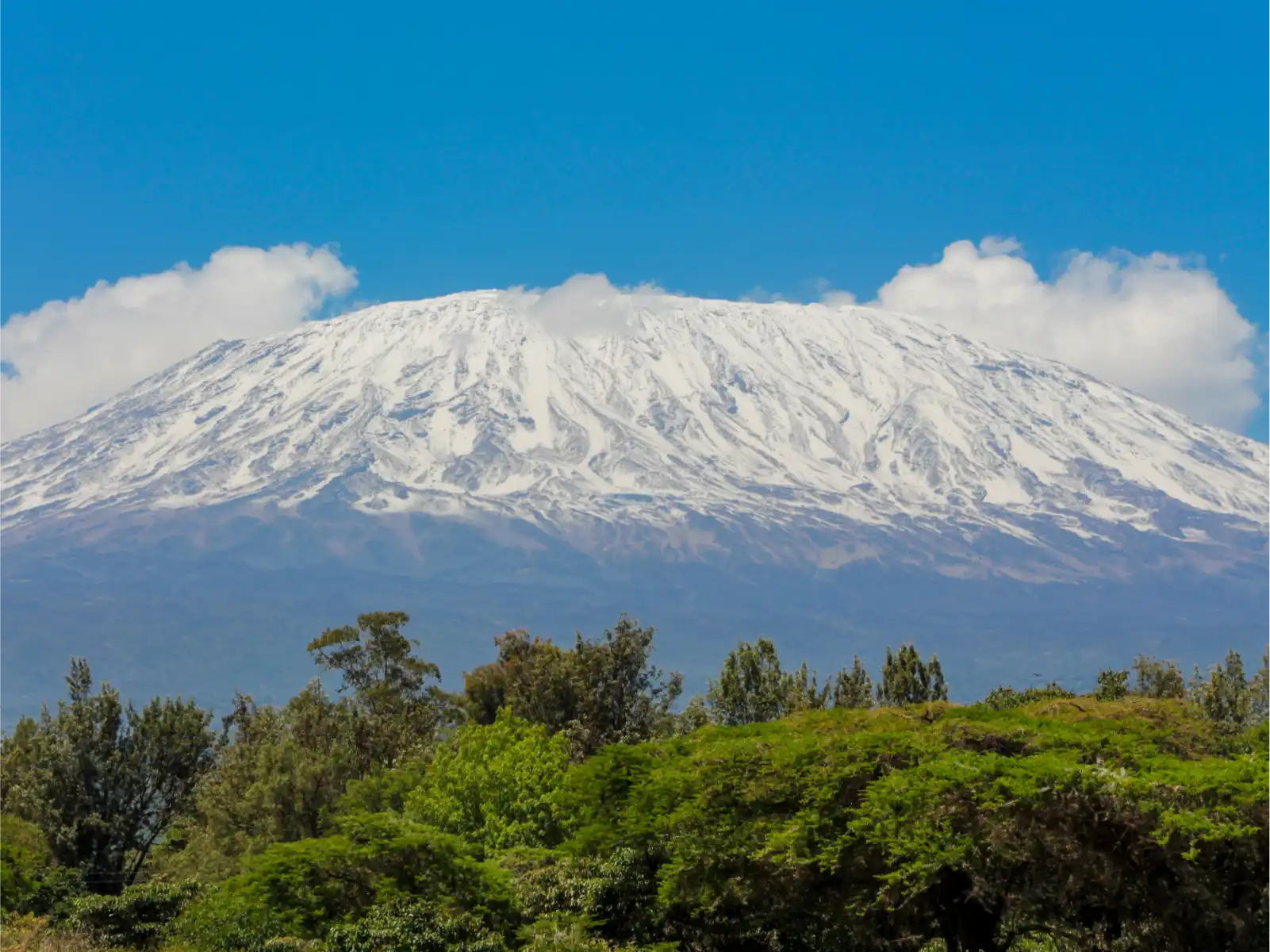
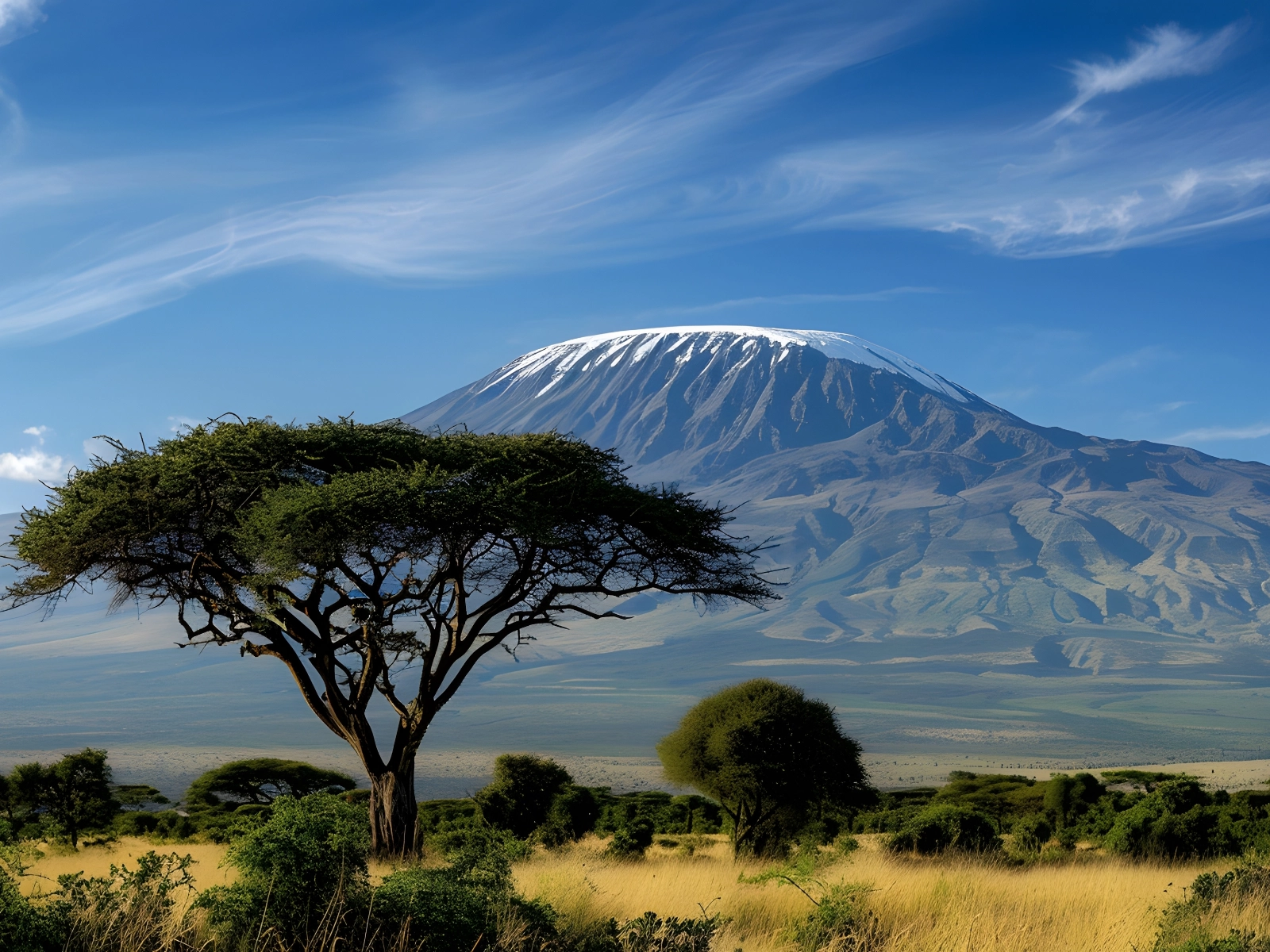
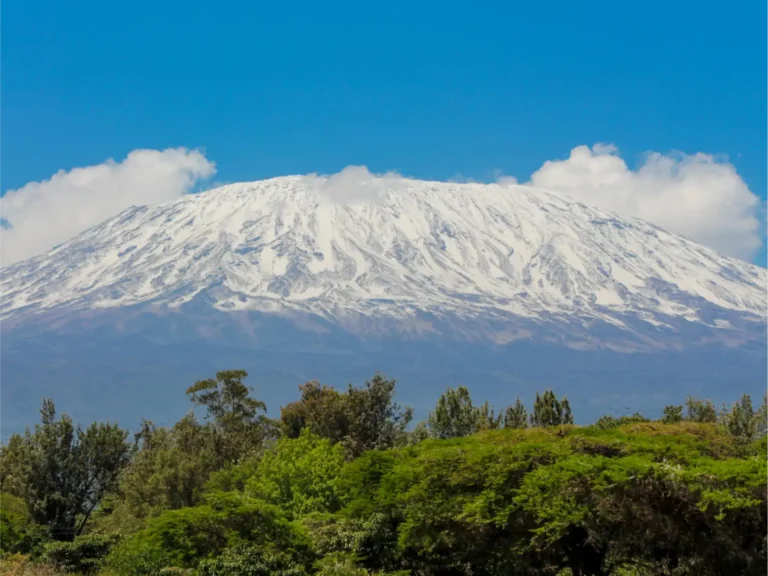
Kilimanjaro's oldest route and the only one with huts instead of tents: six days from Marangu Gate by Mandara, Horombo and Kibo huts to Gilman's Point and Uhuru Peak (5,895 m), with an extra acclimatisation day at Horombo and the descent on the same path.

Route: Moshi to Moshi, by way of Mount Kilimanjaro

from · per adult · Bronze Package US$ 1,800

About this trip

The Marangu Route begins at Marangu Gate (1,879 m), approximately 39 km from Moshi, the closest gate to town. Day one climbs 5 to 7 hours through montane rainforest to Mandara Hut (2,720 m). The rainforest here is rich in birdlife, including Hartlaub's turaco and cinnamon-chested bee-eater. A short detour to the volcanic Maundi Crater is possible in the afternoon.

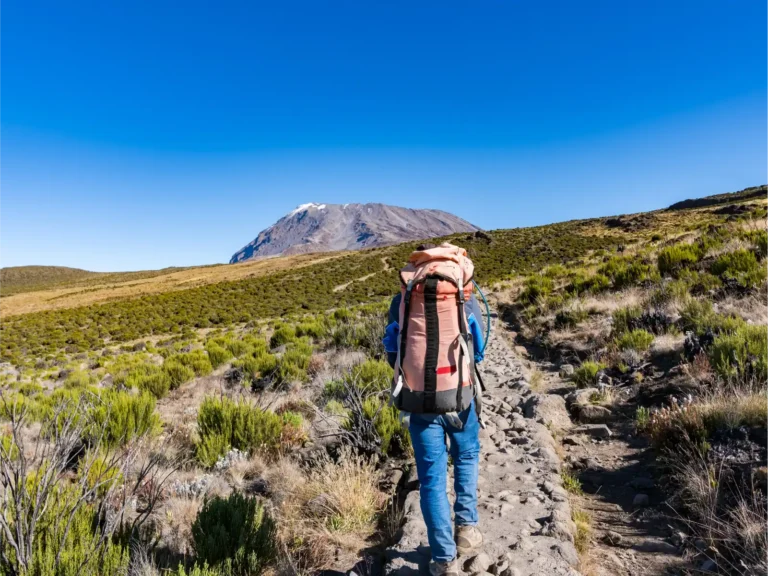
Day two exits the forest into open moorland and heathland, passing the heath zone with giant senecios (groundsels) and lobelias before reaching Horombo Hut (3,720 m), the largest and most social hut complex on the route. On the 6-day version, trekkers spend two nights here, using the extra day for an acclimatisation walk toward Mawenzi Peak (5,149 m).

Day three (or four on 6-day) crosses The Saddle: a wide, flat, and wind-exposed moorland at approximately 4,500 m separating Mawenzi from Kibo. This is one of the starkest and most otherworldly landscapes on the mountain. Kibo Hut (4,703 m) is reached by early afternoon and is used for rest before the midnight summit departure.

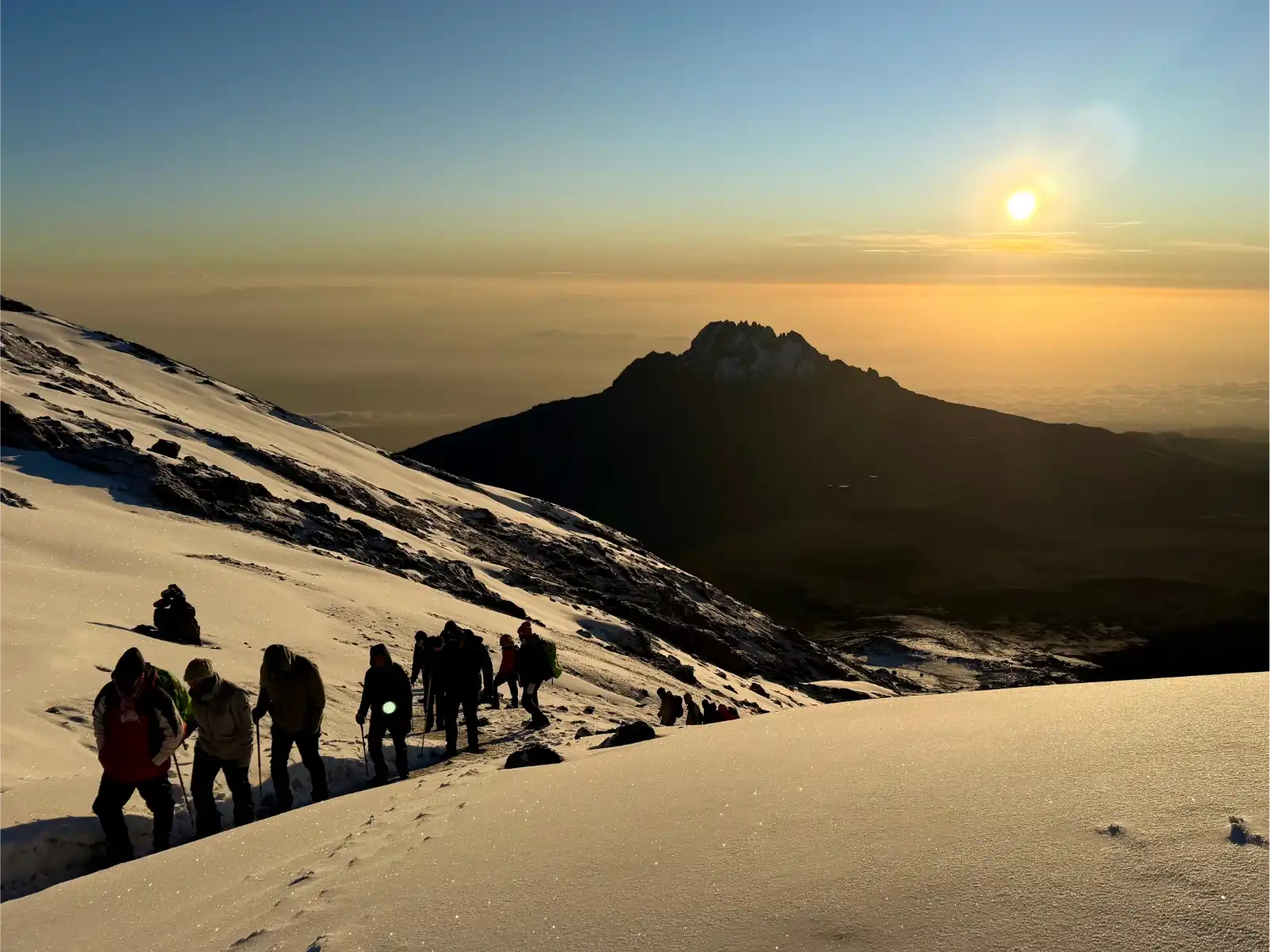
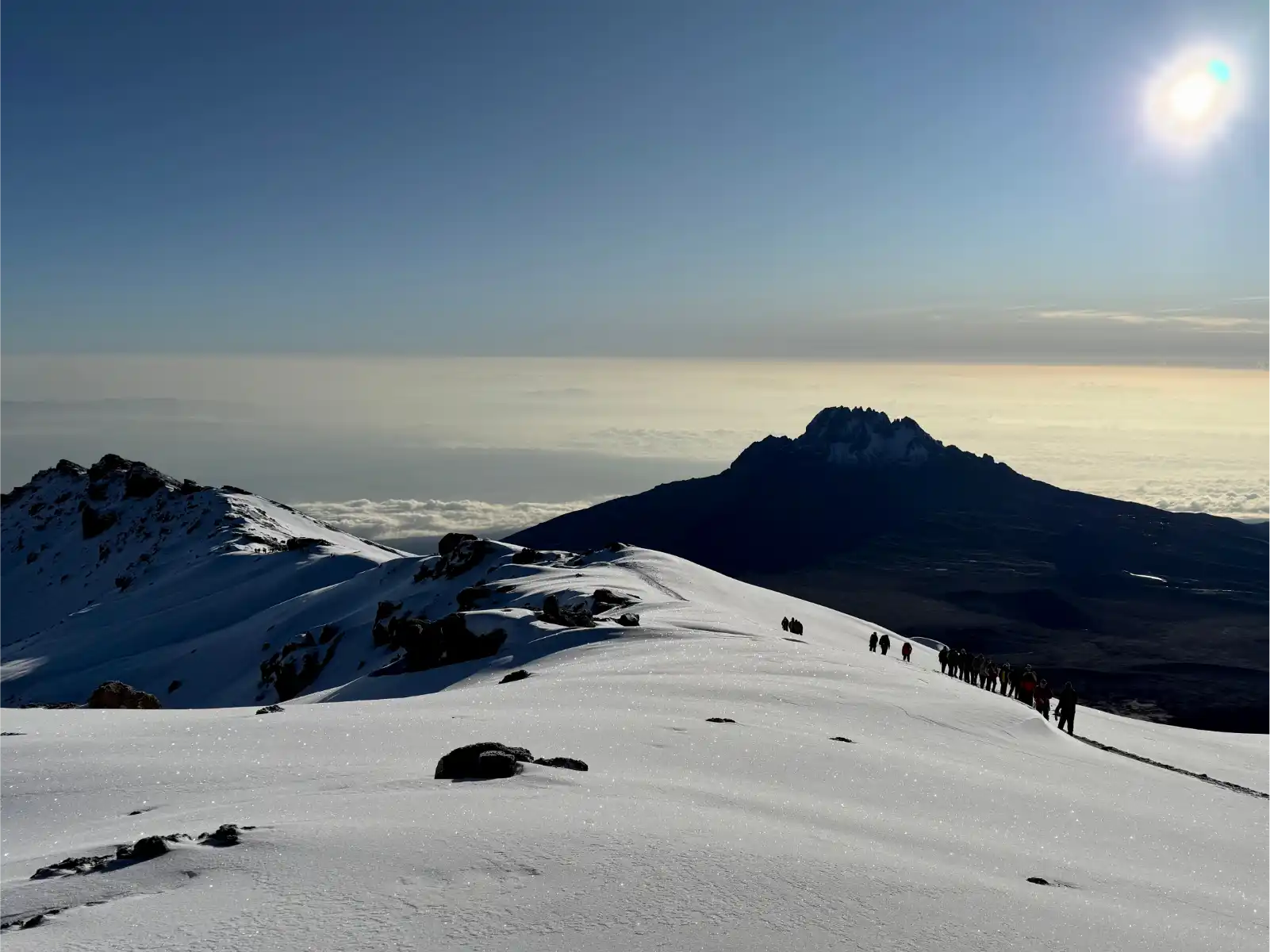
Summit night begins between midnight and 1am from Kibo Hut. The trail climbs steeply through scree on the Kibo cone to Gilman's Point (5,685 m) on the crater rim, approximately 5 to 6 hours.
From Gilman's, the crater rim walk west to Uhuru Peak (5,895 m) takes a further 1.5 to 2 hours.
The same Marangu Route path is used for descent, returning to Marangu Gate on the final day.

Starts and ends in
Moshi
Duration
6 days, 5 nights
Difficulty
Challenging
Highest point
4,703 m
Best months
January to February, June to October, December

Trip highlights

  • Dormitory huts at Mandara (2,720 m), Horombo (3,720 m) and Kibo (4,703 m): no tents
  • A steady, well-made path, the most gradual on the mountain
  • Montane rainforest with colobus monkeys and forest birds on the first day
  • An acclimatisation day at Horombo, with a walk towards Mawenzi
  • The crossing of the Saddle, a high, open desert between Mawenzi and Kibo
  • The summit by Gilman's Point (5,685 m) and the crater rim to Uhuru Peak

The route

  1. Moshi Day 1 start
  2. Mount Kilimanjaro Days 1 to 5
  3. Moshi Day 6

-3.0667,37.3592

Open in Google Maps

Day by day

Day 1 Marangu Gate to Mandara Hut Lunch, Dinner

Transfer from Moshi to Marangu Gate (about 1,879 m), then walk through rainforest to Mandara Hut. In the afternoon there is time for a short walk to Maundi Crater.

Meals
Lunch, Dinner
Overnight
Mandara Hut
Altitude
2,720 m
Walking time
4 to 6 hours
Day 2 Mandara Hut to Horombo Hut Breakfast, Lunch, Dinner

Leave the forest for heath and moorland with giant groundsels and lobelias, with Kibo and Mawenzi in view, to Horombo Hut.

Meals
Breakfast, Lunch, Dinner
Overnight
Horombo Hut
Altitude
3,720 m
Walking time
5 to 7 hours
Day 3 Acclimatisation day at Horombo Breakfast, Lunch, Dinner

A walk higher up towards Mawenzi and back helps your body adjust before the climb continues.

Meals
Breakfast, Lunch, Dinner
Overnight
Horombo Hut
Altitude
3,720 m
Walking time
3 to 4 hours
Day 4 Horombo Hut to Kibo Hut Breakfast, Lunch, Dinner

Cross the Saddle, the wide, wind-swept desert between Mawenzi and Kibo, to Kibo Hut at the foot of the summit cone. Rest and eat early.

Meals
Breakfast, Lunch, Dinner
Overnight
Kibo Hut
Altitude
4,703 m
Walking time
5 to 7 hours
Day 5 Uhuru Peak and down to Horombo Hut Breakfast, Lunch, Dinner

Start around midnight and climb the steep scree to Gilman's Point (5,685 m) on the crater rim, then follow the rim to Uhuru Peak (5,895 m). Descend to Kibo Hut and continue to Horombo Hut.

Meals
Breakfast, Lunch, Dinner
Overnight
Horombo Hut
Altitude
3,720 m
Walking time
11 to 15 hours in all
Day 6 Horombo Hut to Moshi Breakfast

Walk down past Mandara Hut to Marangu Gate, collect your summit certificate and transfer to Moshi.

Meals
Breakfast
Walking time
5 to 6 hours

What’s included

Included

  • All TANAPA park entry, hut accommodation, and rescue fees
  • Certified and TANAPA-licensed mountain guide for the full duration
  • Assistant guides on summit night
  • Porters to carry group and personal equipment (ethically capped loads)
  • Mountain cook and catering crew
  • All meals from Day 1 dinner through departure day breakfast
  • Emergency supplemental oxygen on summit night
  • Pulse oximeter monitoring throughout the climb
  • Return transfers between Moshi and Marangu Gate
  • Summit certificate upon reaching Uhuru Peak

Not included

  • International flights to Kilimanjaro International Airport (JRO)
  • Tanzania visa fees
  • Personal travel insurance (required: must cover high-altitude trekking and evacuation)
  • Tips and gratuities for guides, porters, and crew
  • Personal hiking gear: boots, trekking poles, warm layers, sleeping bag (-15°C rated)
  • Altitude medication (Diamox): consult your doctor before travel
  • Alcoholic beverages and personal purchases
  • Hotel accommodation in Moshi before and after the climb

Choose your package

  • Bronze Package from · per adult US$ 1,800
  • Silver Package from · per adult US$ 2,500
  • Gold Package from · per adult US$ 3,800

Before you travel

Visa and entry

Most visitors need a visa, best applied for in advance through the Immigration Services Department's official e-visa portal; visas are also issued on arrival at the main entry points. Your passport should be valid for at least six months. Since…

Tanzania travel information

Best season

The main dry season runs from about June to October and is the best time for most parks. The short rains fall in November and December and the long rains from about March to May, when some southern and western…

Information changes. Always verify with the official portals, which each country page links to directly.

Questions about this trip

Why does the Marangu Route have a lower summit success rate than other routes?

he standard 5-day itinerary is too short for most bodies to acclimatise to nearly 6,000 m.
The route also ascends and descends by the same path, which limits the "climb high, sleep low" opportunities built into routes like Machame and Lemosho. Choosing 6 days and adding an acclimatisation day at Horombo significantly improves success rates and is the version TripGenius Travel recommends.

Do I need to bring a sleeping bag on the Marangu Route?

Yes. The huts provide mattresses and basic blankets, but a sleeping bag rated to at least -10°C is strongly recommended, temperatures at Kibo Hut (4,703 m) drop well below freezing on summit night. The huts are not heated. Sleeping bags can be rented in Moshi if you prefer not to travel with one.

What is the best time of year to climb the Marangu Route?

January to March and June to October. The Marangu's southeastern approach makes it one of the wetter routes during the November and April to May rainy seasons, the trail through the rainforest section becomes slippery and the scree on the upper mountain is difficult in wet conditions. The dry seasons give the best underfoot conditions and clearest summit views.

Is the Marangu Route suitable for beginners?

It is the most accessible route in terms of gradient and logistics, but altitude is the challenge on Kilimanjaro regardless of the path. No route is easy at nearly 6,000 m. The Marangu is the right choice if you prefer hut accommodation over camping and want the most straightforward terrain. Ensure you choose the 6-day option and have solid general fitness.

What gear do I need?

Sleeping bag rated to -10°C minimum, layered insulation (base layer, fleece, down jacket), waterproof shell, trekking boots, trekking poles (helpful on the scree ascent), warm hat, gloves, headlamp, UV sunglasses, and SPF 50+. The Marangu is the only route where you don't carry a tent, so your pack can be lighter, but summit night warmth is non-negotiable.

from · per adult US$ 1,800

Request a Quote

Rates By Exchange Rate API