
Aberdare National Park
1 trip
A specialist replies within 12 hours
Indicative prices, converted from US dollars. Your choice is remembered in this browser.
Kenya's only tropical rainforest, the eastern edge of the great Guineo-Congolian forest: primates, forest birds and butterflies found nowhere else in the country, explored on foot.
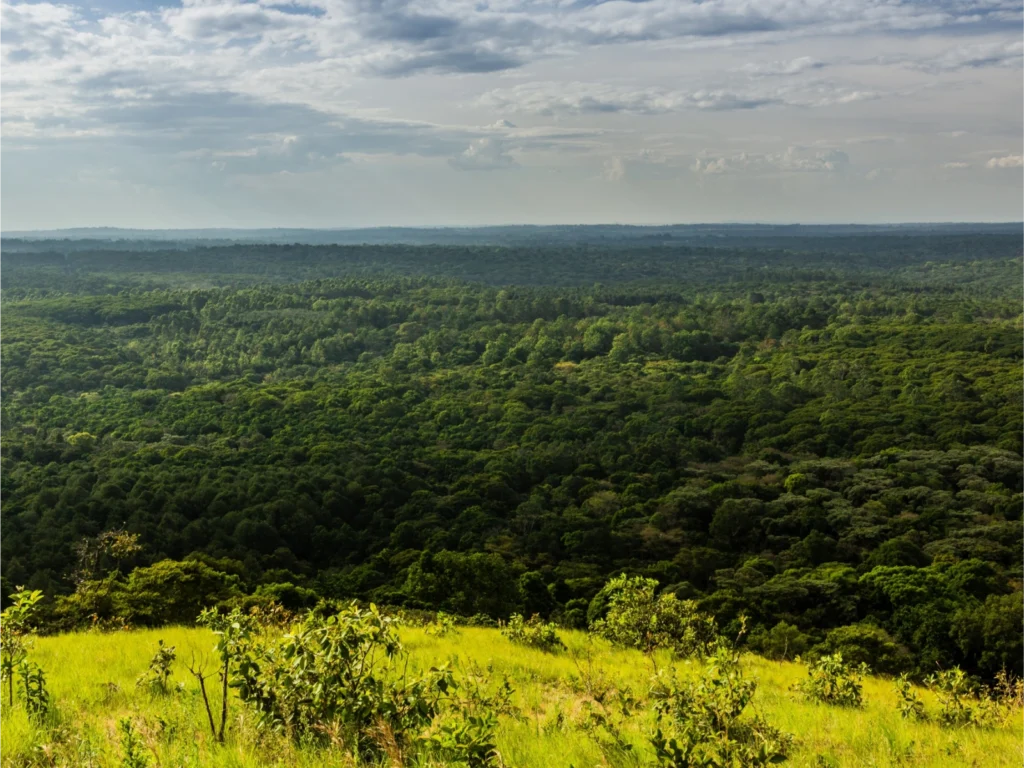
Kakamega Forest, in western Kenya north of Kisumu, is the country's only tropical rainforest and the easternmost remnant of the Guineo-Congolian forest that once stretched across central Africa. Part of it is protected as the Kakamega Forest National Reserve, managed by the Kenya Wildlife Service; the rest is a forest reserve under the Kenya Forest Service.
Because it belongs to the forests of central Africa, Kakamega holds many species seen nowhere else in Kenya. Several hundred bird species have been recorded, among them the great blue turaco, the blue-headed bee-eater and the black-and-white casqued hornbill, and it is one of the country's top birdwatching sites. Primates include De Brazza's, red-tailed and blue monkeys, black-and-white colobus and the nocturnal potto. The forest is also famous for its butterflies, of which there are hundreds of species, and for its snakes, chameleons and frogs.
The forest is explored on foot with local guides, on trails that lead to viewpoints such as Lirhanda Hill and Buyangu Hill, best at dawn, and on night walks. Kakamega is about an hour's drive from Kisumu, whose airport has flights from Nairobi, and combines well with Kisumu and Lake Victoria, Ruma National Park or Mount Elgon. See birdwatching in Kenya.
More than a thousand species in a single country: flamingos on the Rift Valley lakes, fish eagles at Naivasha and Baringo, forest specialities at Kakamega and birds found…
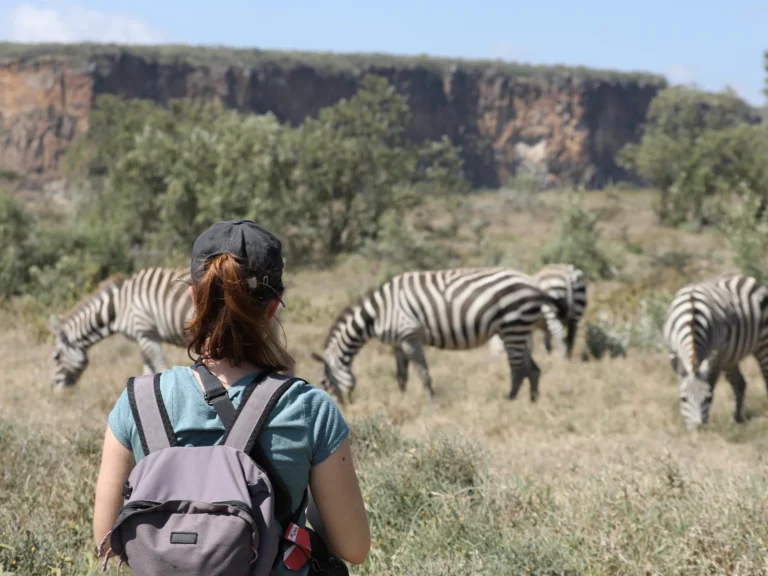
Leave the vehicle behind and explore the bush on foot with an expert guide and an armed ranger, reading tracks and noticing the small things a game drive…
Best time December to February
Warm and humid, with rain possible in any month; the wettest period is from about April to May and the driest from December to February. Early mornings are best for birds and primates.
0.2917,34.8561
Entry rules and fees for Kakamega Forest National Reserve, from the authority that sets them.
Information changes. Always verify with the official portal. We link to it directly, never to third-party visa sites.
1 trip
4 trips
Tailor-made
Tailor-made
Free quote. No commitment. Tell us your dates, a rough budget and who is coming.
TripGenius travel experts
We reply within 12 hours.
Shape your trip in 3 taps