
Aberdare National Park
1 trip
A specialist replies within 12 hours
Indicative prices, converted from US dollars. Your choice is remembered in this browser.
A forested mountain rising out of the northern desert, with crater lakes, elephants in the mist and the legend of Ahmed, the great tusker.
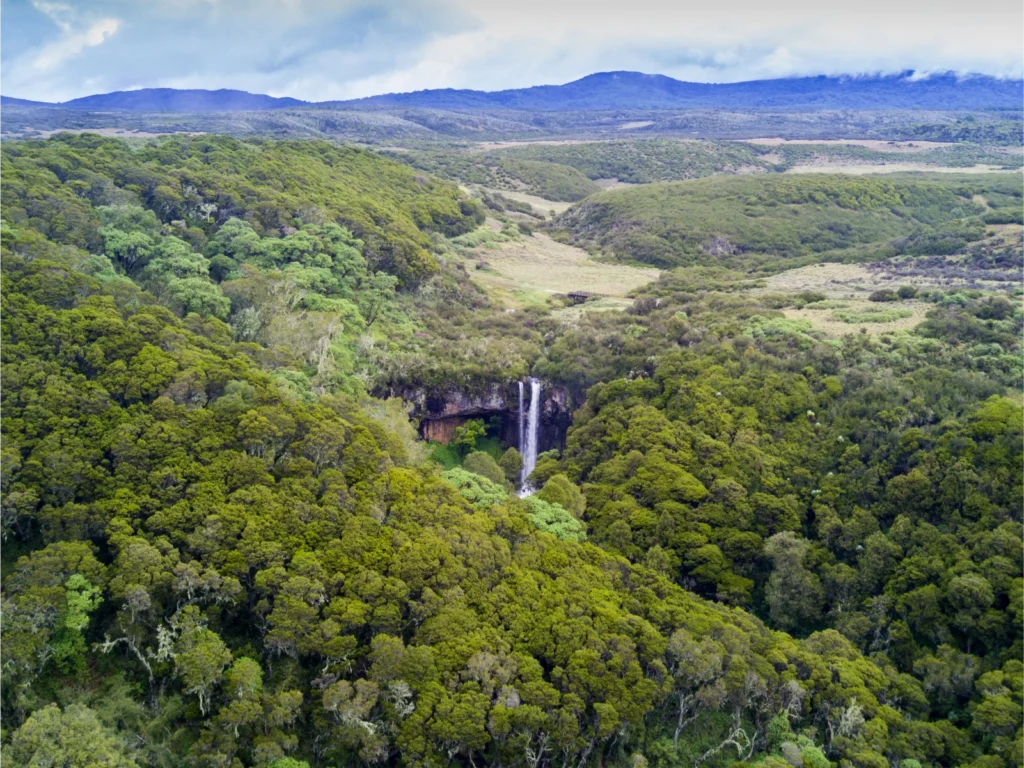
Marsabit National Park and Reserve cover Mount Marsabit, a shield volcano that rises out of the desert about 560 km north of Nairobi, beside the town of Marsabit. The mountain catches mist and rain, so its upper slopes carry dense forest, an island of green in very dry country, with volcanic craters, some of them holding lakes.
The best known is Lake Paradise, in a forest-ringed crater where elephants, buffalo and greater kudu come to drink. Marsabit's elephants are famous for their tusks: the most celebrated, a bull named Ahmed, was protected by presidential decree in the 1970s and became a national symbol. The forest also holds leopards, bushbuck and many birds, and the reserve's lower country has Grevy's zebras and reticulated giraffes.
Marsabit is a stop on the long road north towards the Chalbi Desert and Ethiopia, and is visited mainly by travellers on overland journeys through northern Kenya. Facilities are basic and the distances long. See Lake Turkana and Sibiloi National Park for the far north.
Best time June to September
Cooler and wetter on the mountain than in the desert around it, often misty in the mornings. Travel is easiest in the dry months.
2.3831,37.9831
Entry rules and fees for Marsabit National Park, from the authority that sets them.
Information changes. Always verify with the official portal. We link to it directly, never to third-party visa sites.
1 trip
4 trips
Tailor-made
Tailor-made
Free quote. No commitment. Tell us your dates, a rough budget and who is coming.
TripGenius travel experts
We reply within 12 hours.
Shape your trip in 3 taps