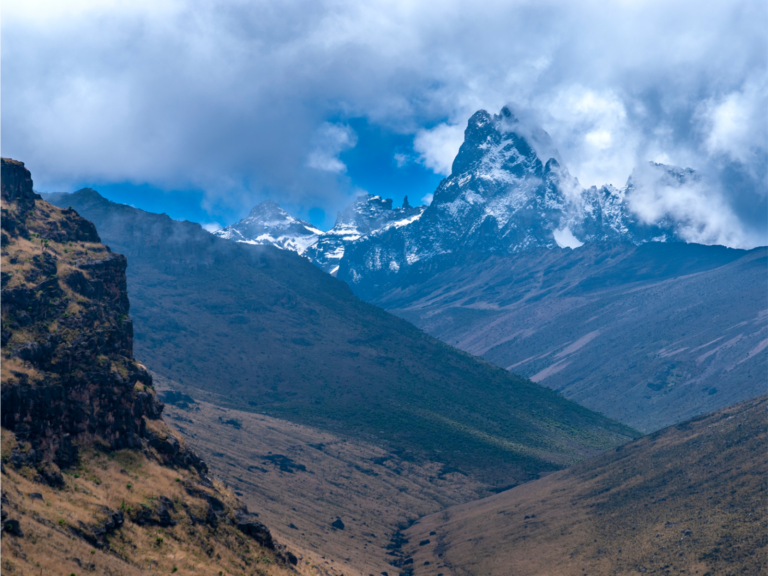
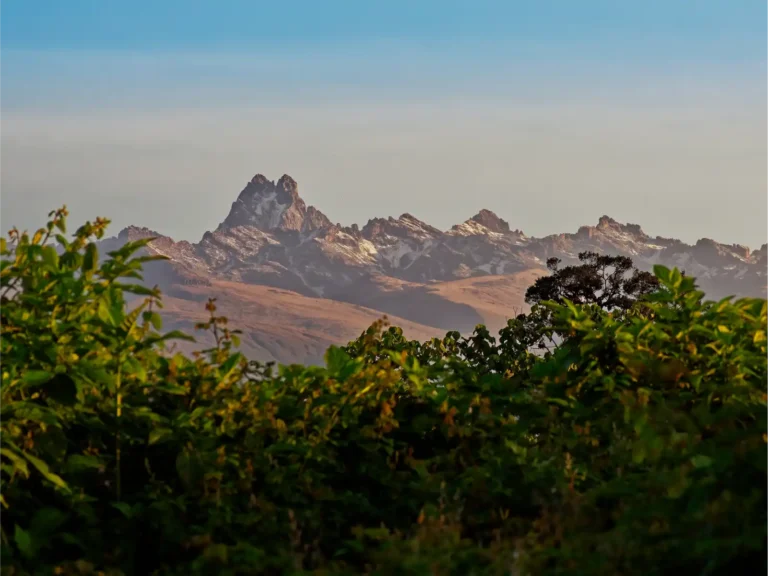
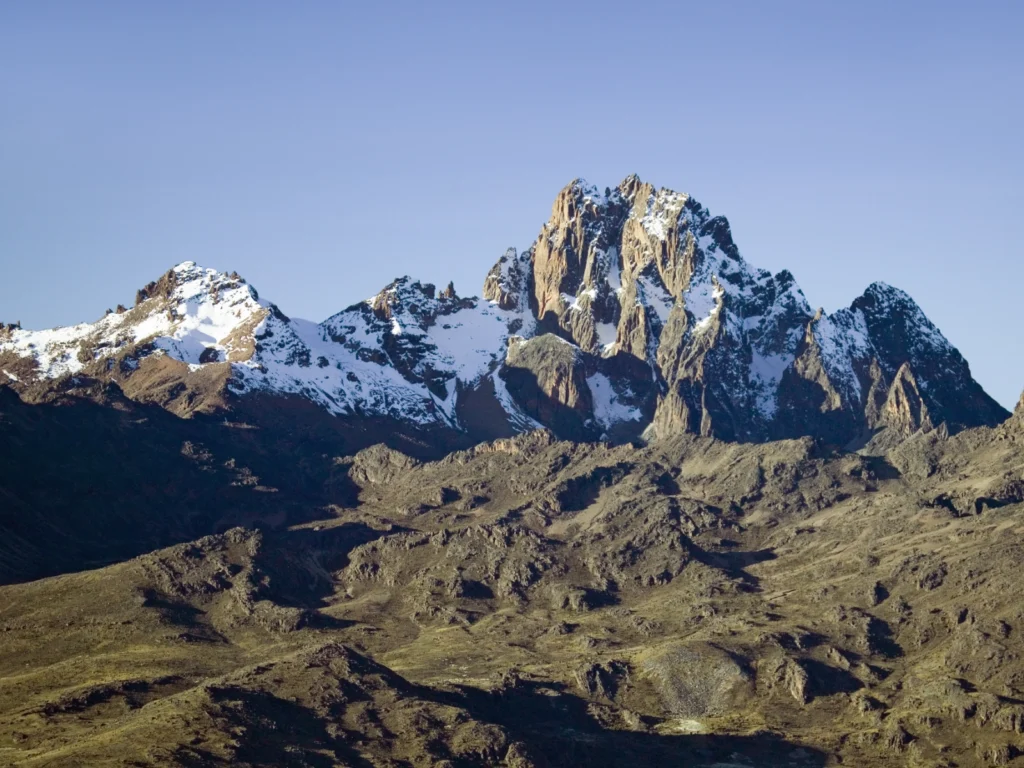
Mount Kenya is the second-highest mountain in Africa after Kilimanjaro, an ancient and deeply eroded volcano about 150 km north-north-east of Nairobi whose summit stands just south of the equator. The country takes its name from it. The mountain and its forests became a national park in 1949 and a UNESCO World Heritage Site in 1997; Lewa Wildlife Conservancy and the Ngare Ndare Forest were added in 2013. The park is managed by the Kenya Wildlife Service, and the forest reserve around it by the Kenya Forest Service.
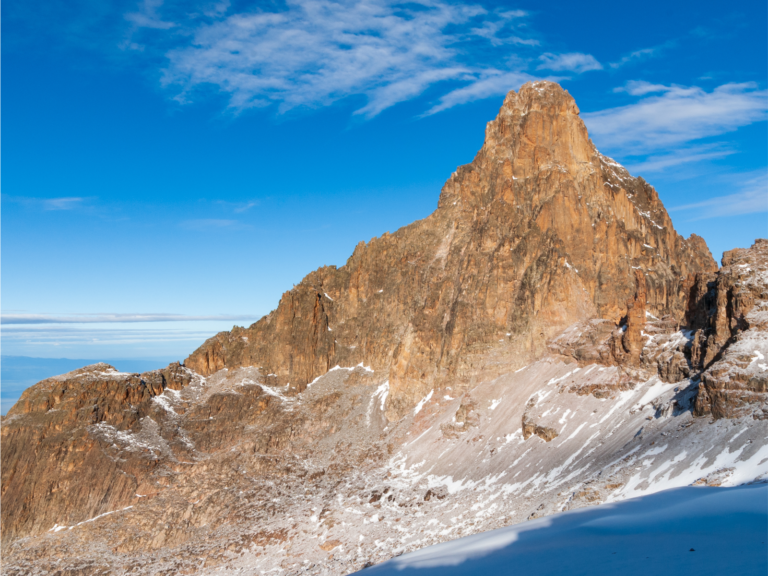
Its three main summits are very different undertakings. Batian (5,199 m) and Nelion (5,188 m) are twin towers of rock that can only be reached by technical climbing. Point Lenana (4,985 m) is the highest point a trekker can reach without ropes, and it is the goal of most people who climb the mountain.
Routes to Point Lenana
Treks to Point Lenana take four to nine days, sleeping in huts or camps and reaching the summit at dawn. Six routes lead up through the forest:
- Sirimon, from the north-west near Nanyuki: the driest side of the mountain, with a steady climb through moorland and the Mackinder Valley to Shipton's Camp at about 4,200 m. It gives the best acclimatisation of the main routes.
- Naro Moru, from the west: the shortest and steepest route, through forest to the Met Station at about 3,050 m, across the waterlogged Vertical Bog and up the Teleki Valley to Mackinder's Camp at about 4,200 m.
- Chogoria, from the east: widely thought the most beautiful route, past Lake Ellis, the Gorges Valley, Lake Michaelson and the cliffs of the Temple. It is often climbed as part of a traverse, descending by another route.
- Burguret, from the west: a wild and little-used path through dense forest and bamboo.
- Timau, from the north: a quiet route through farmland and open moorland.
- Kamweti, from the south: the least used of all, through thick forest on the wettest side of the mountain.
High on the mountain, the Summit Circuit path loops around the central peaks, so you can climb by one route and descend by another and see the peaks from every side.
Point Lenana or the twin peaks
Point Lenana is a trek, not a climb. The final ascent, usually started in the small hours from Shipton's, Mackinder's or Minto's camp, is steep and on loose scree, rock and sometimes snow or ice, but it needs no ropes or climbing skills.
Batian and Nelion are mountaineering objectives. Nelion is usually climbed by its Normal Route on the south-east face, a long multi-pitch rock climb of about grade IV that was first climbed by Eric Shipton and Percy Wyn-Harris in 1929; it is in best condition in the dry months around January and February. Batian is usually climbed by the North Face Standard Route from about July to September, when the sun warms that side of the mountain. Both need multi-pitch rock-climbing experience, a qualified mountain guide and several nights of acclimatisation. See our technical climb of Batian and Nelion.
Altitude and acclimatisation
The high camps all lie at about 4,200 m or higher, and the summit morning adds nearly 800 m more. Altitude sickness is the main risk on Mount Kenya, and the shorter routes gain height quickly. Routes that climb more gradually, such as Sirimon, and itineraries with an extra night on the way up, give your body more time to adjust and improve your chances of reaching Point Lenana comfortably. Walk slowly, drink plenty and tell your guide at once about a severe headache, vomiting or breathlessness at rest; the treatment for serious symptoms is to go down.
When to climb
The best months are January and February, and from late June to October; July to September is the busiest period. The long rains of April and May and the short rains of November make the forest paths muddy and bring cloud and snow to the high ground, and few people climb then. Whatever the month, plan for freezing nights near the summit and for cloud building up by midday.
Plants and wildlife
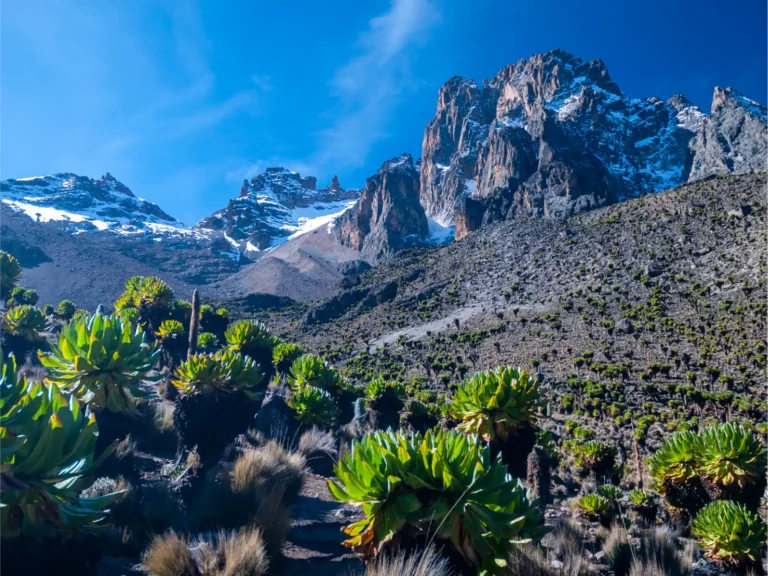
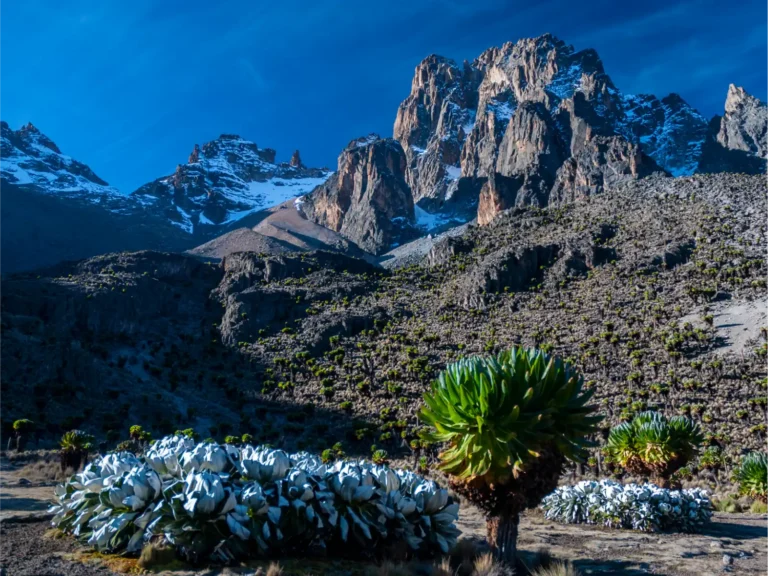
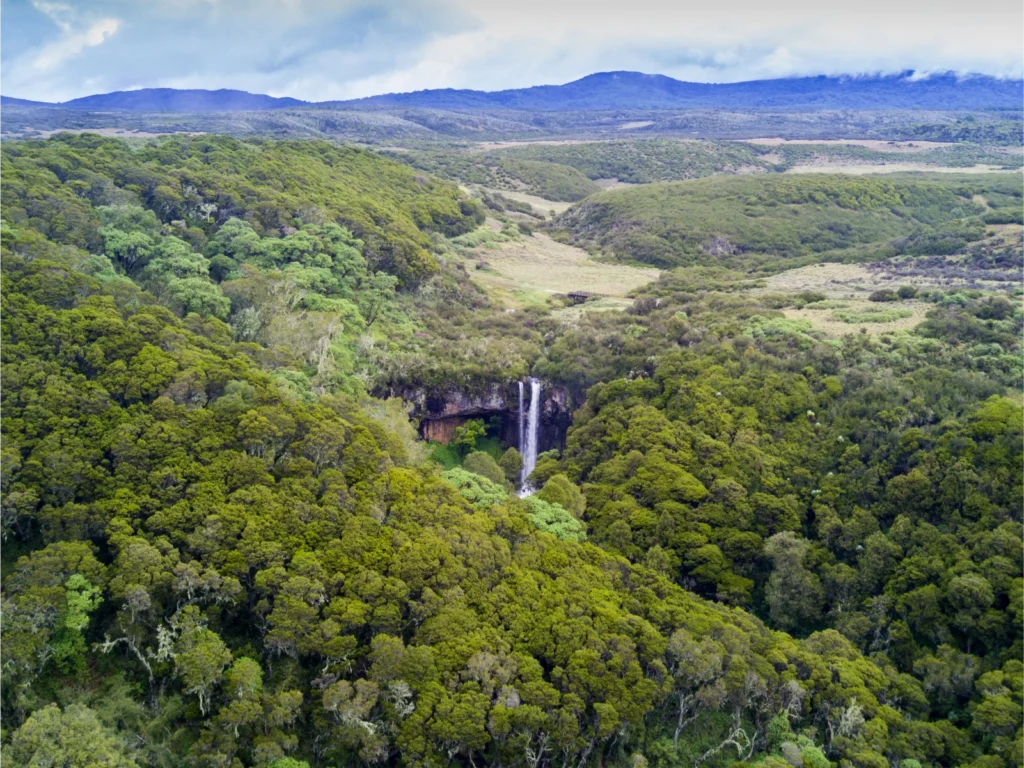
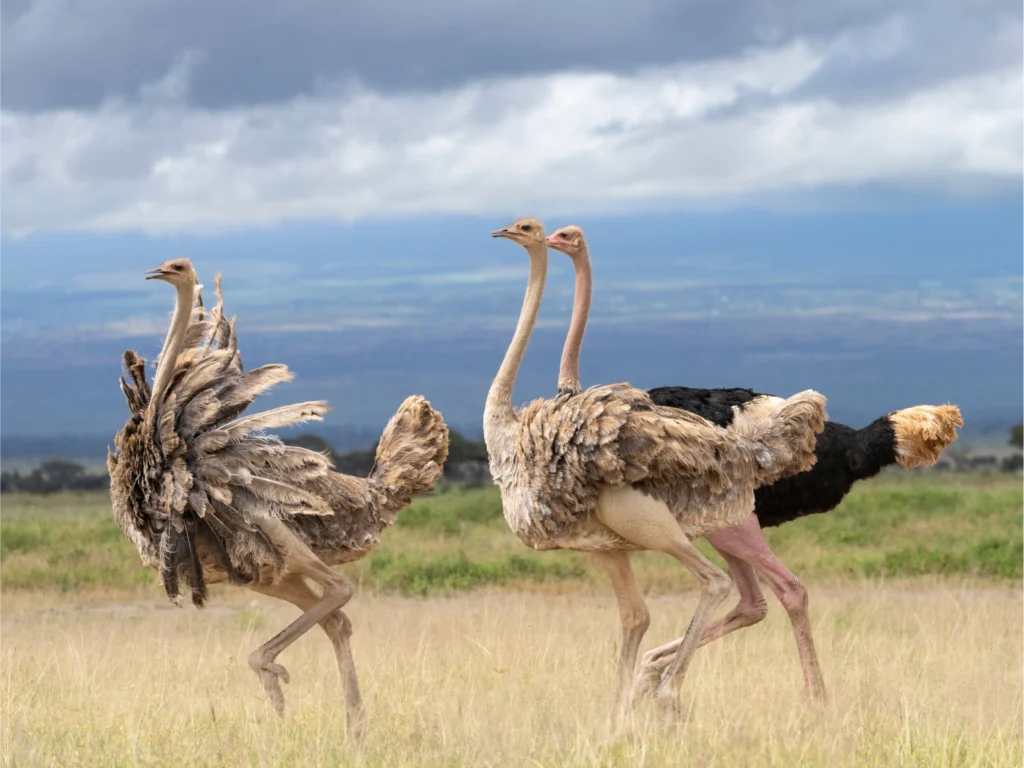
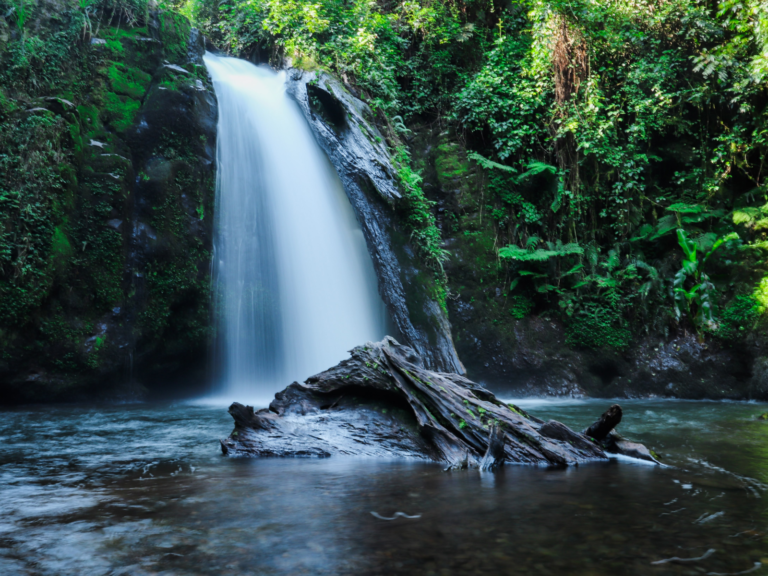
The routes climb through distinct belts of vegetation: farmland and montane forest of cedar, camphor and podocarpus on the lower slopes; bamboo, especially on the wetter southern and eastern sides; giant heather; and, higher still, the afro-alpine moorland, where giant groundsels and giant lobelias grow, some of them found nowhere else. Elephants and buffalo live in the forest, along with colobus and Sykes's monkeys, bushbuck and many forest birds. On the moorland, rock hyraxes gather around the camps and the scarlet-tufted sunbird feeds at the lobelias. Small glaciers, the largest of them the Lewis and Tyndall glaciers, still cling to the peaks, but they are shrinking fast.
Preparing for the climb
You do not need climbing experience for Point Lenana, but you do need good general fitness for several days of walking of four to eight hours, followed by a long summit morning at altitude. Regular hill walking in the weeks before you travel makes a real difference. Pack for temperatures well below freezing: warm layers, an insulated jacket, waterproofs, gloves and a hat, broken-in boots, a head torch and a warm sleeping bag. Travel insurance that covers trekking at altitude and emergency evacuation is essential.
Mount Kenya or Kilimanjaro?
Kilimanjaro is higher, at 5,895 m, and its summit is reached on foot. Point Lenana is about 900 m lower than Kilimanjaro's summit, Mount Kenya sees far fewer climbers, and its scenery of jagged peaks, tarns and glacial valleys is quite different. Some climbers trek on Mount Kenya first to acclimatise before Kilimanjaro. See hiking and trekking in Kenya for shorter hikes and how to choose a route.

 5 days, 4 nights
Adjustable