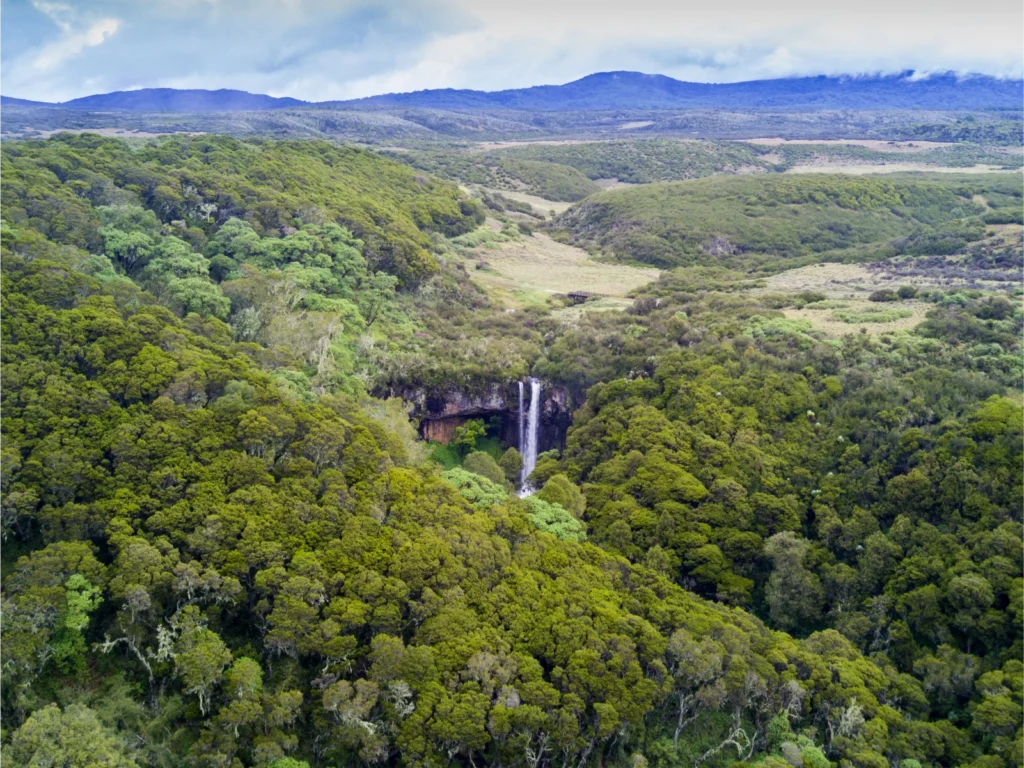
Tsavo East is the larger half of the Tsavo Conservation Area, which together with Tsavo West and the ranches around them covers about 22,000 km². The main road and railway between Nairobi and Mombasa divide the two parks. Tsavo East is flatter and drier: open plains of grass and thornbush under a huge sky, cut through by the Galana River.
What you see
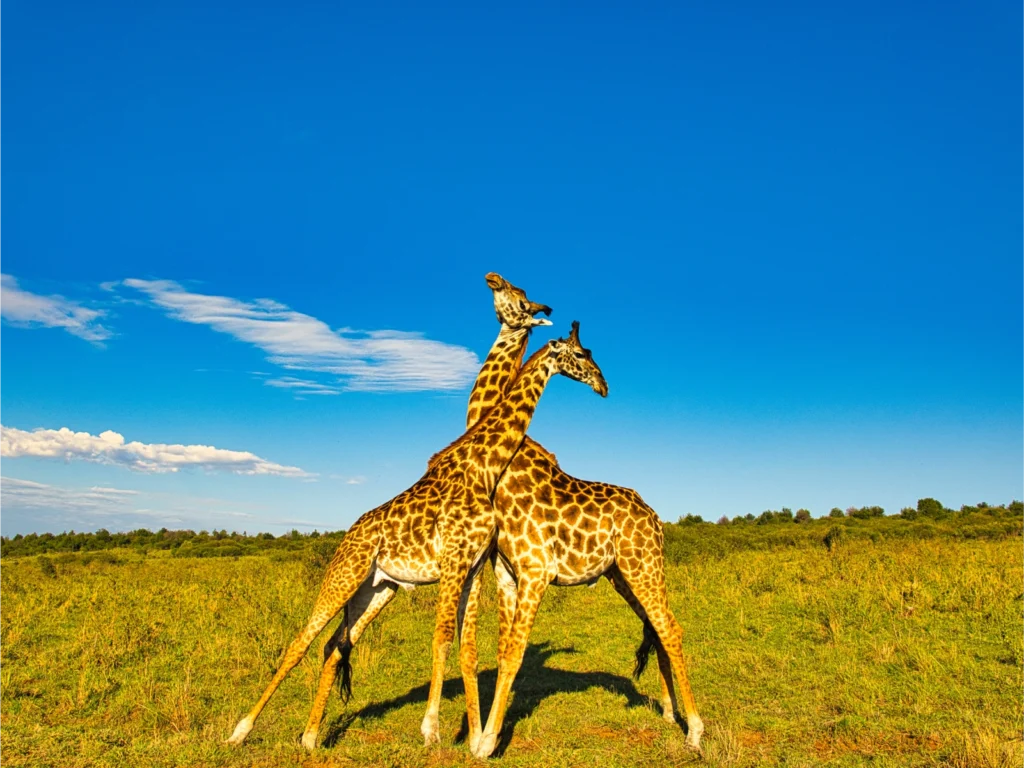
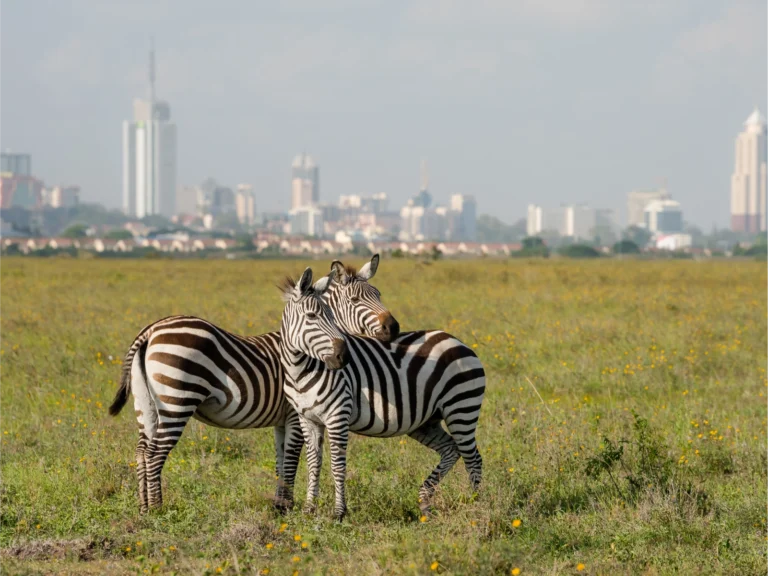
The park is known for its elephants, which dust themselves in the red soil and look rust-coloured from a distance. Lions, cheetahs, buffalo, zebras, giraffes and lesser kudu are found across the plains, along with dry-country species such as gerenuk, fringe-eared oryx and the rare hirola, a critically endangered antelope reintroduced here. The Galana River draws animals to drink and is lined with doum palms; at Lugard Falls it runs through a narrow channel of water-worn rock, and Crocodile Point downstream is aptly named.
Mudanda Rock, a long ridge of granite above a natural dam, is a vantage point for elephants coming to drink in the dry season. The Yatta Plateau, one of the longest lava flows in the world, runs along the park's western edge.
Planning a visit
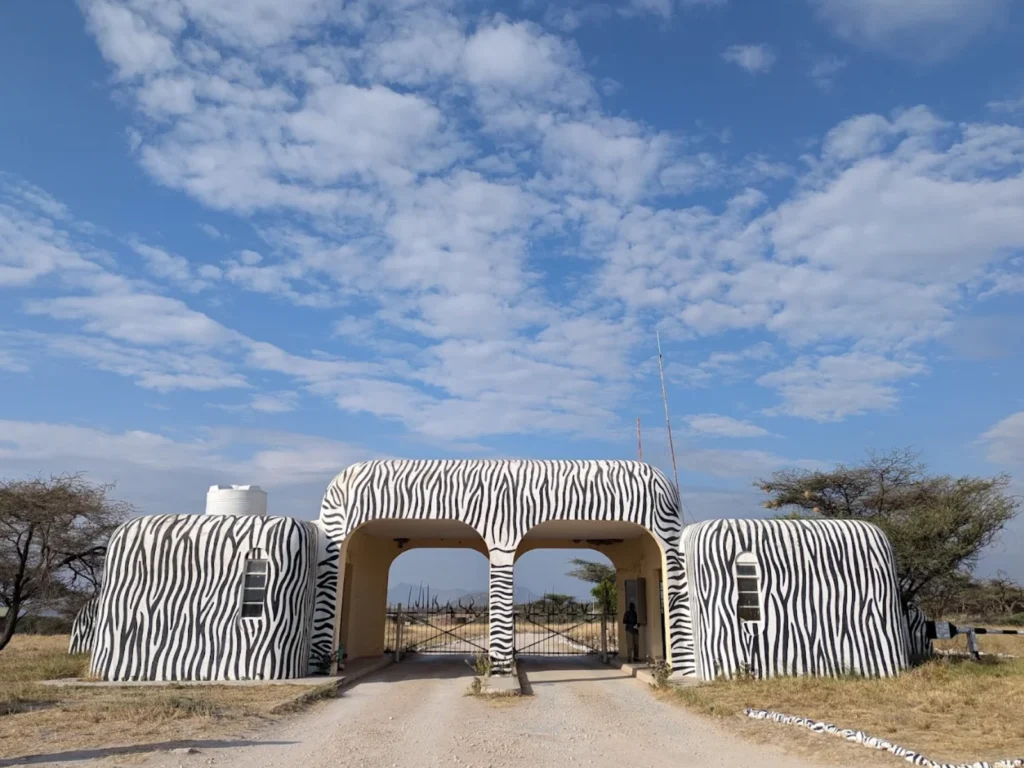
Most visitors see only the south of the park, within reach of the Voi gate; the north, beyond the Galana, is wilder and rarely visited. Tsavo East is within easy reach of the coast, which makes it the classic short safari from Mombasa or the beaches of Diani. Our five-day Tsavo and Salt Lick safari from Mombasa combines it with Tsavo West and the Taita Hills Wildlife Sanctuary, and the six-day Amboseli and Tsavo safari starts from Nairobi.

 5 days, 4 nights
Adjustable