• 1 day
  • Uganda
  • Adventure Travel
  • Easy
  • Adjustable

Mabamba Swamp Shoebill Birdwatching Tour from Entebbe

A morning by motorised canoe from Entebbe across Lake Victoria to the papyrus channels of Mabamba Swamp, a Ramsar wetland, to look for the shoebill and other waterbirds with a local guide.

Route: Entebbe to Entebbe

from · per adult · Bronze Package US$ 105

About this trip

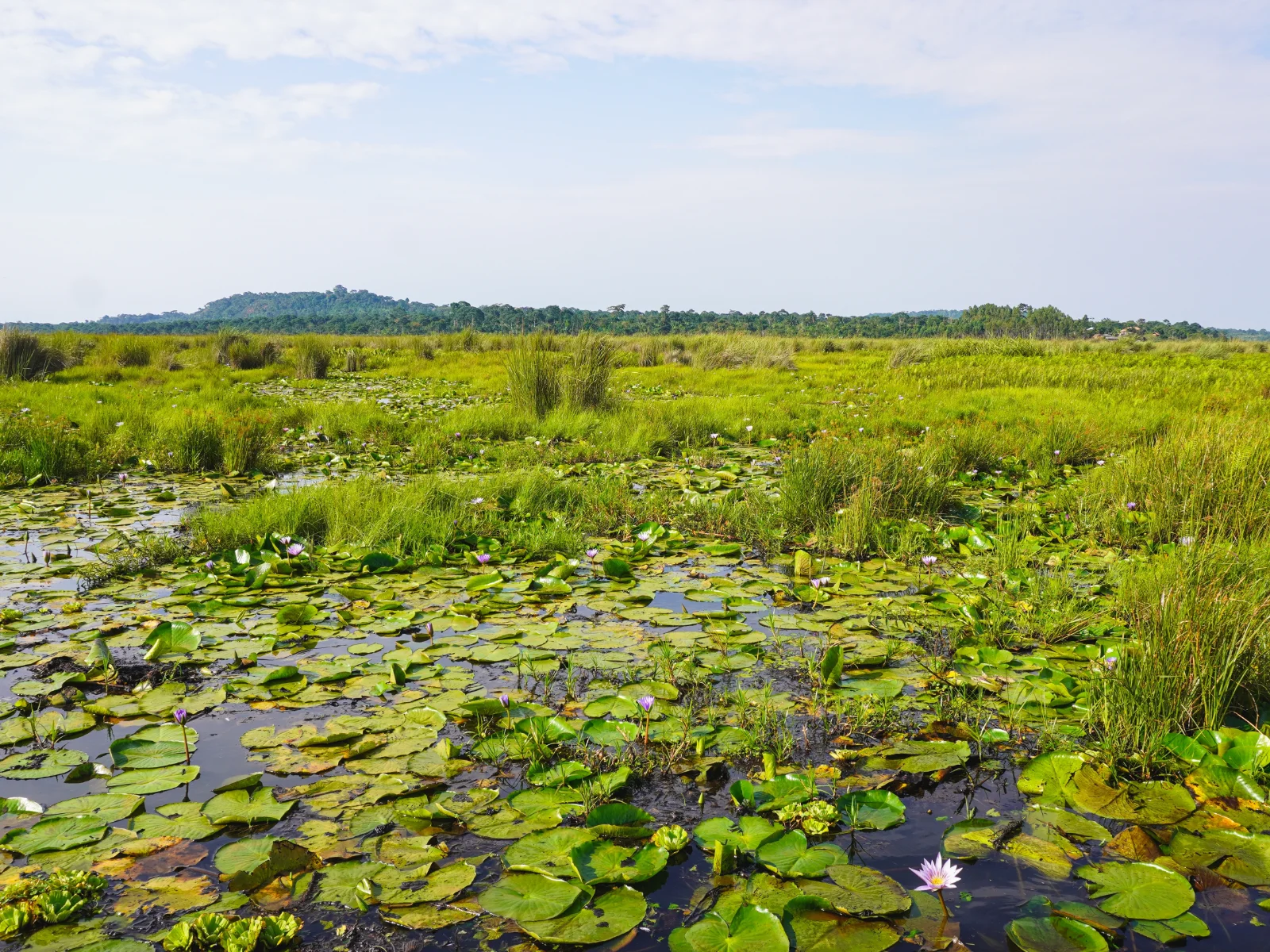
Mabamba Swamp is one of Africa's most celebrated birding destinations and the best place in Uganda, and arguably in all of East Africa, to observe the shoebill stork (Balaeniceps rex) at close range in a natural setting. The wetland sits on the northwestern shores of Lake Victoria, reached by a 30 to 45 minute motorised canoe crossing from Nakiwogo Pier in Entebbe. It is designated a Ramsar Wetland of International Importance for its exceptional biodiversity and its role as a critical habitat for globally significant bird populations.

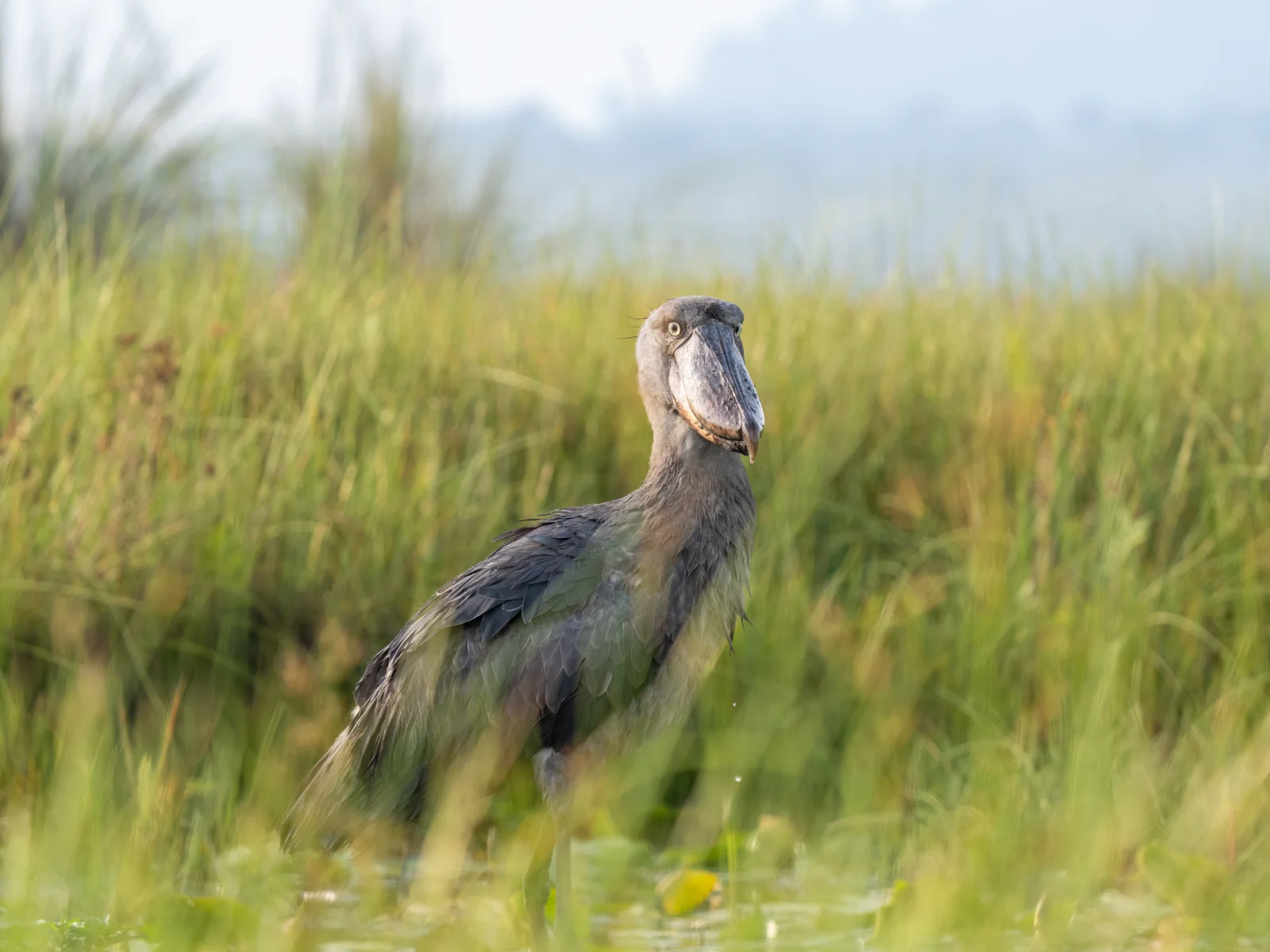
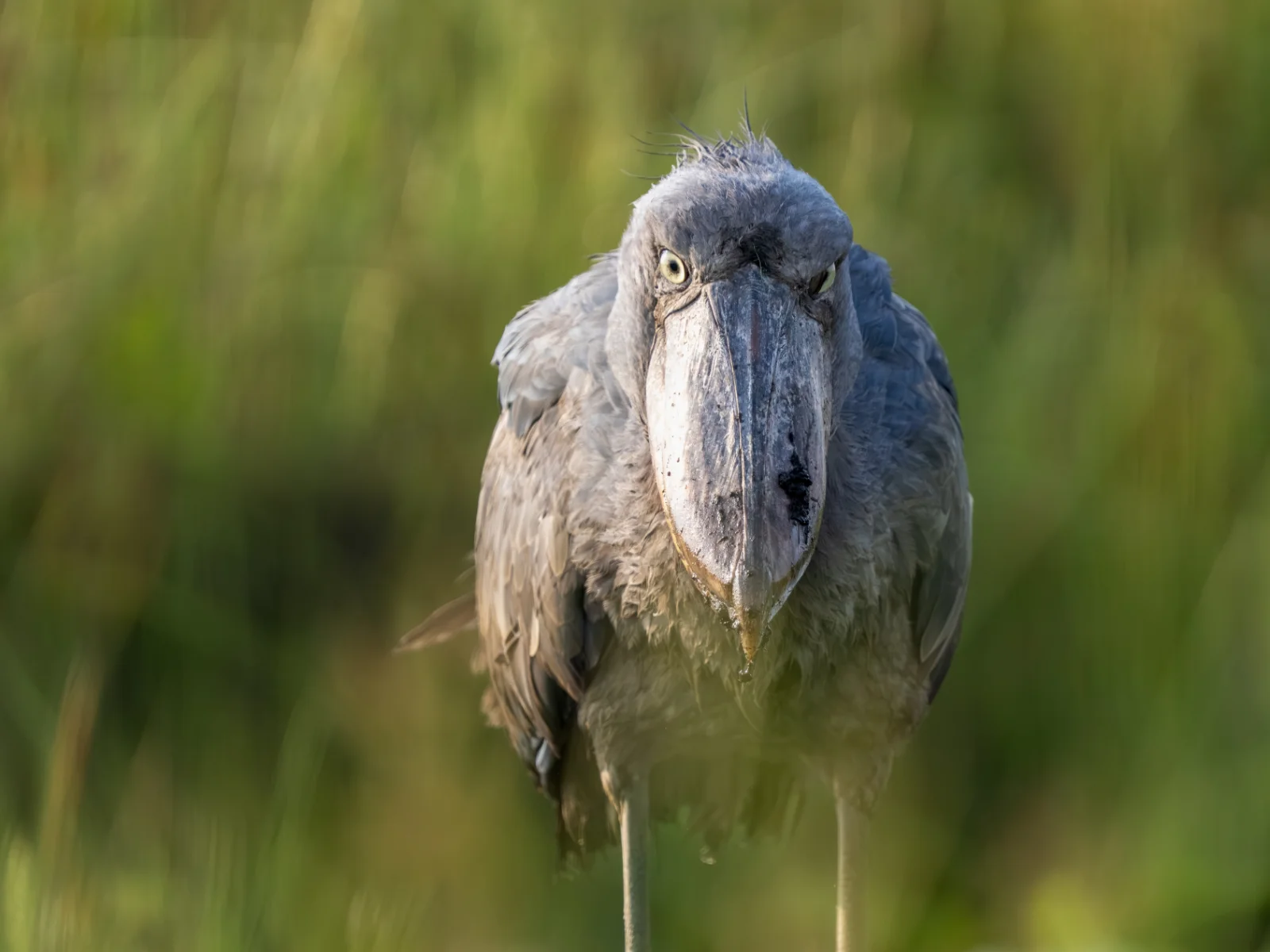
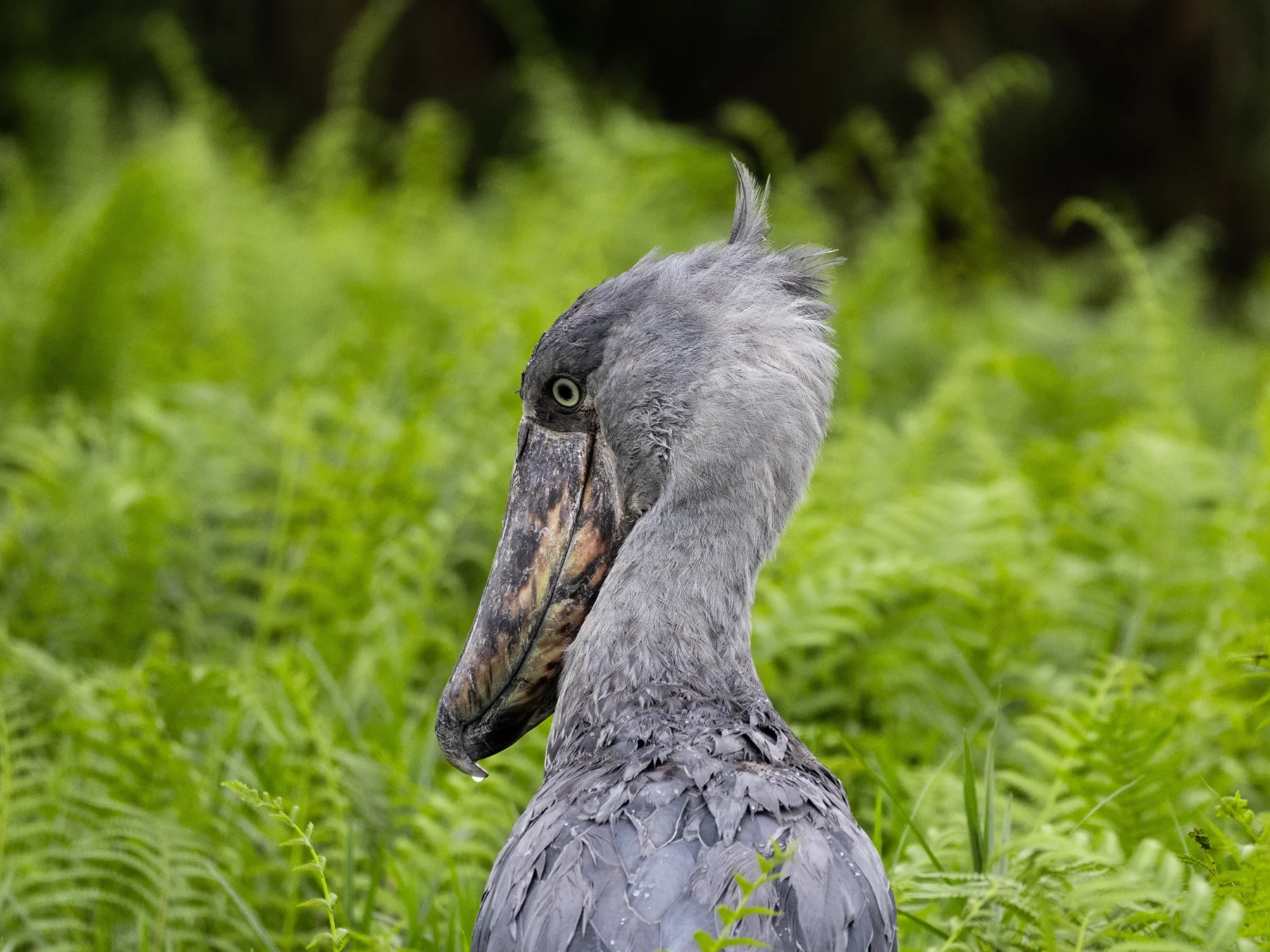
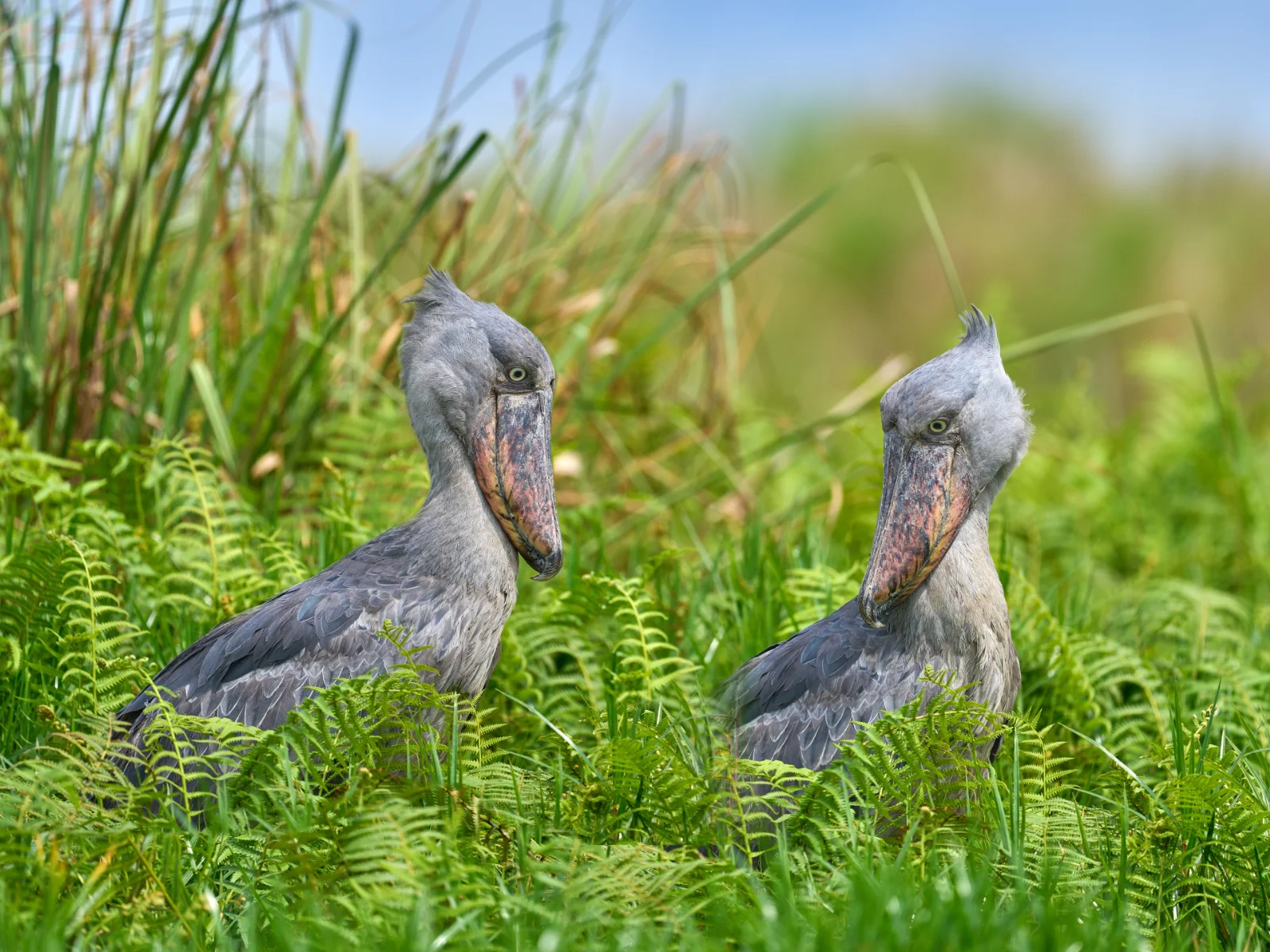
The shoebill (Balaeniceps rex) is a large, prehistoric-looking wading bird endemic to the freshwater swamps of tropical central and east Africa. It stands up to 1.5 metres tall, carries a wingspan of up to 2.5 metres, and is named for its extraordinary bill, as large as a Dutch clog, with a hooked tip designed to grip lungfish and other large prey. The IUCN classifies the shoebill as Vulnerable, with a global wild population estimated at 5,000 to 8,000 individuals. Uganda holds the world's largest known population, and Mabamba's papyrus swamp, where the bird hunts by standing motionless for extended periods before striking with explosive speed, consistently delivers some of the best shoebill sightings in Africa. Skilled local guides navigate the narrow papyrus channels and read the bird's behavioural cues with precision developed over years of daily exposure.

The wetland also supports over 260 bird species. Beyond the shoebill, a morning in Mabamba typically produces African jacanas walking on floating vegetation, malachite and pied kingfishers hovering over the channels, blue-breasted bee-eaters perching in the papyrus fringe, purple herons stalking the reed edge, grey-crowned cranes, African fish eagles calling overhead, and a parade of weavers, warblers, and sunbirds in the vegetation. For serious birders, Mabamba regularly produces sightings of species that require papyrus habitat: including the papyrus gonolek, white-winged warbler, and Carruthers's cisticola.

The experience is fundamentally different from a vehicle-based game drive: you sit low in a narrow canoe, the guide paddles silently through channels barely wider than the boat, and you are essentially at eye level with the wetland itself. The silence, the papyrus smell, and the sudden appearance of a 1.5-metre shoebill standing three metres from the canoe is one of the most distinctive wildlife encounters available anywhere in East Africa.

Starts and ends in
Entebbe
Duration
1 day
Difficulty
Easy
Best months
January to February, July to September, December

Trip highlights

  • Close views of the shoebill (*Balaeniceps rex*) in its papyrus swamp habitat, at one of the best places in Africa to see it
  • Motorised canoe crossing of Lake Victoria from Nakiwogo Pier, Entebbe, scenic views across the world's second-largest freshwater lake by area
  • Navigate Mabamba's papyrus channels by canoe with a skilled local guide who reads shoebill behaviour precisely
  • Look out for many other birds, including African jacanas, malachite kingfishers, blue-breasted bee-eaters, purple herons and grey crowned cranes
  • Mabamba Swamp is a Ramsar Wetland of International Importance, one of Africa's most significant protected wetland ecosystems
  • Perfect half-day activity before or after Entebbe International Airport arrivals/departures

Day by day

Day 1 Mabamba Swamp Shoebill Birding Tour

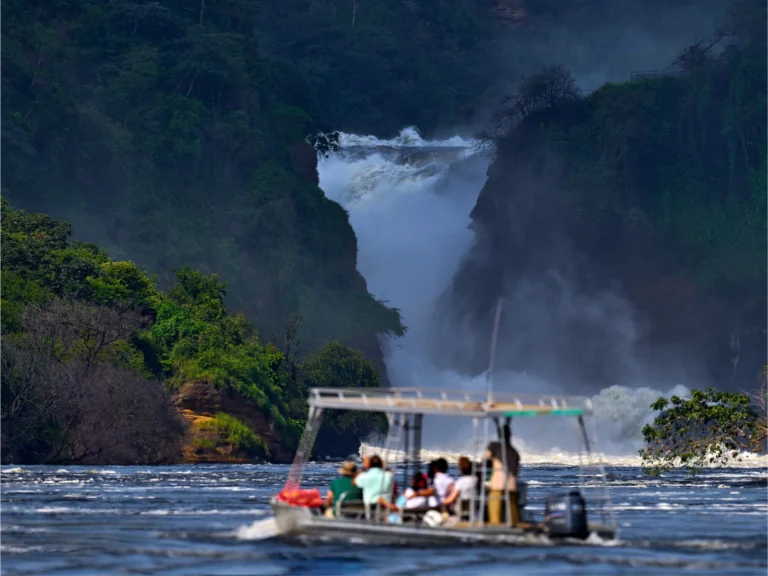
Your guide picks you up from your Entebbe hotel in the early morning, the 6:00 to 10am window is when birds are most active and the shoebill is most likely to be hunting and visible before retreating to shaded vegetation in the midday heat. Drive to Nakiwogo Pier on the Entebbe peninsula (10 to 20 minutes). Board the motorised canoe for the crossing of Lake Victoria's western arm to Mabamba's edge (30 to 45 minutes). The Lake Victoria crossing offers wide-angle views over the world's second-largest freshwater lake by area, a flat, glittering expanse with papyrus-fringed shores and fishing communities along the banks.

Arrive at Mabamba and transfer to a narrow traditional canoe guided by a local Mabamba specialist. These guides navigate the wetland daily and track individual shoebill territories with the precision of someone who has watched the same bird for years. The canoe enters the papyrus channels, narrow passages barely wider than the boat, where the papyrus walls rise two metres on either side and the water is dark and still. Within the channels, the guide reads the tracks, droppings, and foraging signs that indicate where the shoebill has been hunting. When a shoebill is located (often standing motionless on a papyrus mat, waiting for a lungfish to surface) the guide manoeuvres the canoe within 3 to 8 metres and holds position while the bird hunts, rests, and occasionally looks directly at the visitors with its pale yellow eyes.

After the shoebill encounter, the guide continues through the channels for general birding: African jacanas dancing on lily pads, malachite kingfishers a blur of electric blue, pied kingfishers hovering above the water before diving, purple herons fishing the papyrus edge, and weaver colonies in the overhanging vegetation. Papyrus specialist species (papyrus gonolek (a brilliant red-and-black bird), white-winged warbler, and Carruthers's cisticola) are among the targets for birders with a Uganda list. Return by canoe to the pier and motor back to Nakiwogo. Drive back to your Entebbe hotel, arriving by 11am–noon.

What’s included

Included

  • Private vehicle from Entebbe hotel to Nakiwogo Pier and return
  • Motorised canoe: Nakiwogo Pier to Mabamba Swamp and return (Lake Victoria crossing)
  • Local canoe guide inside Mabamba Wetland (navigates papyrus channels and locates shoebill)
  • Professional English-speaking birding guide throughout
  • Mabamba Wetland entry and local guide fee
  • Packed breakfast snacks and drinks in vehicle (Silver and Gold; Bronze bring own)
  • Extended canoe session (Silver)
  • Private canoe hire, binocular/field guide loan, post-tour species checklist, and Entebbe Botanical Gardens stop (Gold)
  • Hotel pickup and drop-off in Entebbe or Kampala
  • Bottled water in vehicle

Not included

  • Meals (Bronze and Silver: bring your own snacks; Gold includes packed breakfast)
  • Tips and gratuities (recommended: USD 5 to 10/person for guide; USD 3 to 5 for local canoe guide)
  • Souvenirs
  • Uganda e-visa, applied for online at visas.immigration.go.ug before travel
  • Yellow fever vaccination: strongly recommended, although Uganda stopped requiring the certificate for entry in October 2026; some countries, Tanzania among them, still ask for it from travellers arriving from Uganda
  • Travel insurance
  • Personal binoculars (available for loan in Gold Package)
  • Personal items

Choose your package

  • Bronze Package from · per adult US$ 105
  • Silver Package from · per adult US$ 165
  • Gold Package from · per adult US$ 250

Before you travel

Visa and entry

Most visitors need a visa, applied for online through the official e-visa portal before travel; do not rely on getting one on arrival. The portal also offers the East Africa Tourist Visa, covering Uganda, Rwanda and Kenya; check its current…

Uganda travel information

Best season

Uganda lies on the equator, and much of it is high, so it is warm rather than hot. The driest months, from about December to February and June to September, are best for gorilla trekking and game viewing; the rains…

Information changes. Always verify with the official portals, which each country page links to directly.

Questions about this trip

Is the shoebill stork guaranteed to be seen?

No wildlife sighting can be guaranteed in absolute terms, but Mabamba Swamp offers among the highest shoebill sighting rates of any site in Africa. The local canoe guides work these channels every day and know the individual birds' territories, preferred hunting spots, and daily movement patterns. Across all visits with experienced local guides, shoebill sightings at Mabamba are extremely consistent, morning visits in good conditions have a very high success rate. The shoebill hunts by standing motionless in the papyrus for extended periods, which makes it easier to locate and observe once found than more active species. Your guide will tell you honestly on arrival what conditions are like and where the birds were seen most recently.

What is the IUCN status of the shoebill?

The shoebill (Balaeniceps rex) is classified as Vulnerable by the IUCN Red List, not Endangered, as it is sometimes described in tourism materials. The global wild population is estimated at 5,000 to 8,000 mature individuals, with the stronghold in South Sudan, Uganda, and the Democratic Republic of Congo. The Vulnerable classification reflects ongoing population pressures from habitat loss (papyrus swamp drainage), hunting, and human disturbance to nesting sites. Uganda holds the world's largest accessible shoebill population, and Mabamba Swamp is one of the species' most important remaining strongholds. Conservation fees paid through visits like this one contribute directly to the local Mabamba community's incentive to protect the wetland.

How does the canoe experience work, is it safe?

You begin on a motorised canoe for the open Lake Victoria crossing to Mabamba, a stable, flat-bottomed vessel with seating for 4 to 6 passengers. Inside the wetland, the guide transfers you to a narrow traditional canoe that fits 2 to 3 passengers and manoeuvres through channels barely wider than the boat. The channels are shallow (0.5 to 1.5 metres) and calm, there is no current or wave action inside the papyrus. The canoes are low and can feel unstable if passengers move suddenly, but they are used daily for birding and are appropriate for visitors who are comfortable sitting still in a small boat. Lifejackets are available. If you have concerns about small boat comfort, advise the guide at booking.

Is this suitable for non-birders?

Absolutely, the shoebill is visually extraordinary enough to captivate anyone, not just birders. Standing 1.5 metres tall with a prehistoric face and a bill the size of a boot, the shoebill is one of Africa's most unusual animals. The canoe experience itself, gliding silently through papyrus channels on Lake Victoria at sunrise, is a distinctive and calming experience regardless of your interest in birds. Many visitors who describe themselves as non-birders report the Mabamba tour as one of the highlights of their Uganda trip.

How close do you get to the shoebill?

Experienced local guides typically position the canoe within 3 to 8 metres of a shoebill on a good sighting. Because the shoebill hunts by standing motionless, it is not disturbed by the canoe's slow approach and often allows extended observation at close range. On excellent sightings, the bird may be facing the canoe, allowing full-face views of the extraordinary bill. On average sightings, the bird is seen in profile at 8 to 15 metres. Your guide follows established protocols to avoid disturbing the bird's hunting behaviour.

from · per adult US$ 105

Request a Quote

Rates By Exchange Rate API