Aberdare National Park protects the high ground of the Aberdare Range, a line of mountains east of the Rift Valley and west of Mount Kenya. Above about 3,000 m the park is open moorland of tussock grass and giant heather; below it, dense bamboo and montane forest run down to the Salient, a lower spur on the eastern side where most of the game viewing happens.
Wildlife
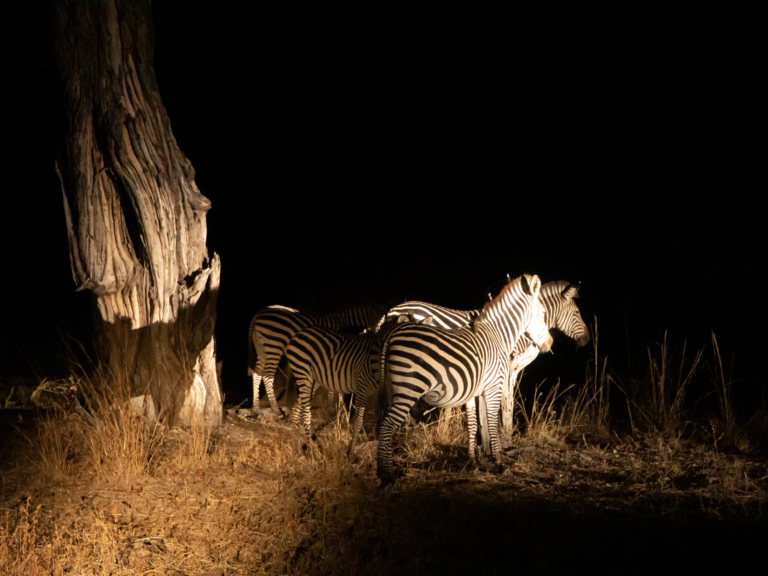
The forest holds elephants, buffalo, black rhinos, leopards, giant forest hogs, bushbuck and black-and-white colobus monkeys. It is also one of the last refuges of the mountain bongo, a rare forest antelope that is very seldom seen. Animals are harder to spot here than on the open plains, which is why the Aberdares are famous for tree hotels: lodges built above waterholes and salt licks, floodlit at night, where you watch from the balconies as elephants, buffalo and sometimes rhinos and leopards come to drink. Treetops, the best known, is where Princess Elizabeth was staying in 1952 when she became Queen.
Waterfalls and moorland
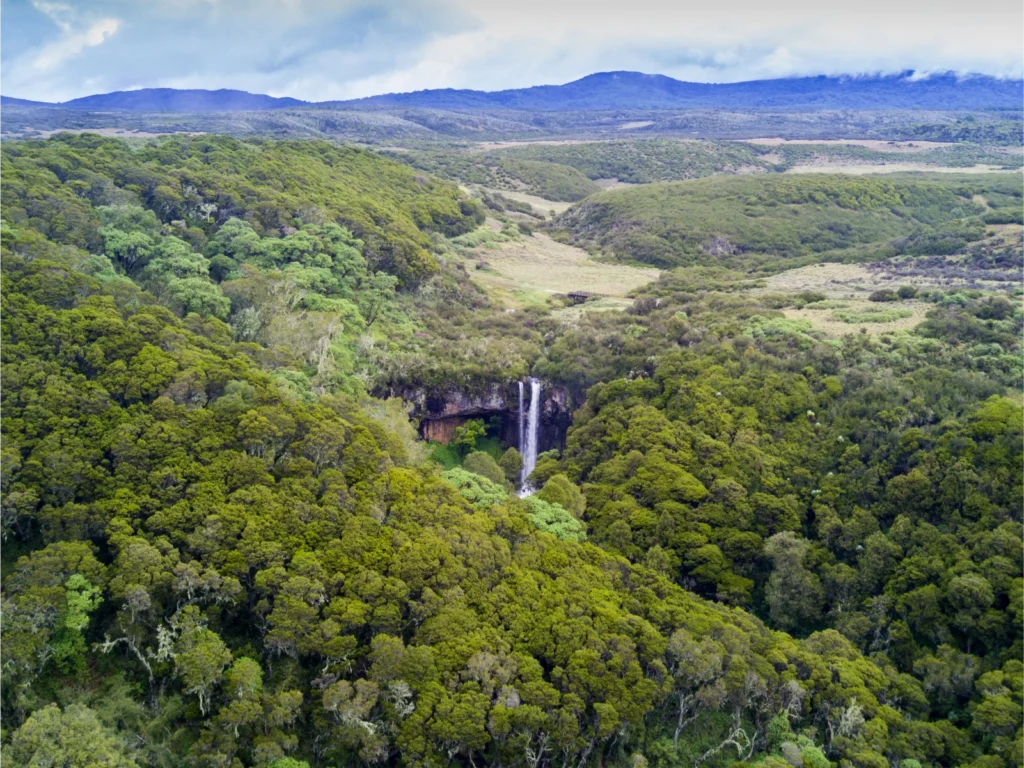
On the moorland, Karuru Falls drops in three steps into a forested gorge and is one of the highest waterfalls in Kenya; Gura Falls and Chania Falls are nearby. The high plateau is cold and often misty, with views to Mount Kenya on clear mornings.
Planning a visit
The park is reached from Nyeri, about three hours from Nairobi, and is often combined with Lake Nakuru or the Laikipia Plateau. Our four-day Lake Nakuru, Maasai Mara and Aberdare safari ends with a day in the forest.

 4 days, 3 nights
Adjustable